Choosing a reliable Crank Shaft wholesale supplier requires more than comparing unit prices. Crankshafts operate under repeated bending, torsional loads, and cyclic combustion forces, making material quality, machining accuracy, heat treatment, and fatigue resistance critical to engine performance. For distributors, equipment maintenance providers, and industrial operators, inconsistent crankshaft quality can lead to premature wear, unexpected downtime, costly replacements, and inventory complications. A dependable wholesale sourcing strategy must therefore combine technical verification with batch consistency, application compatibility, and predictable supply.
Jiangsu Sawei Equipment Technology Co., Ltd., through its SAWEI Accessories & Spare Parts Solutions platform, focuses on integrated spare-parts solutions for industries including metallurgy, cement and building materials, fertilizer production, and heavy shipping. Its approach emphasizes engineering communication, systematic evaluation, and technical improvement. These principles are relevant when sourcing crankshafts and other critical moving components for equipment where reliability and lifecycle cost matter as much as the initial purchase price.
Why Crankshaft Quality Matters in Bulk Procurement
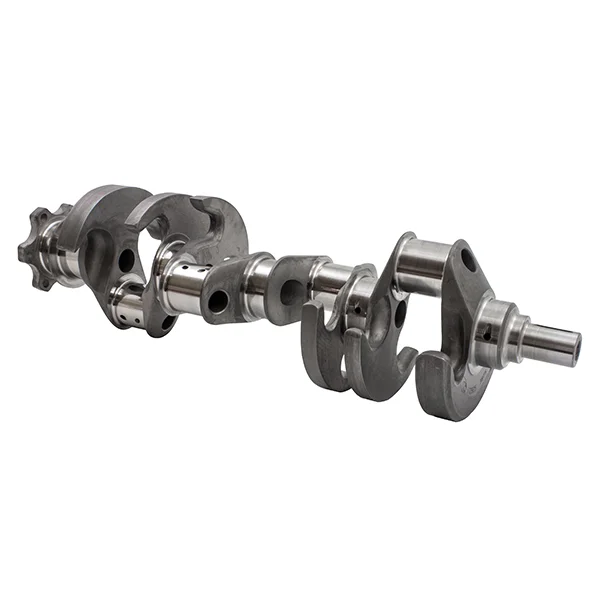
A crankshaft converts reciprocating piston motion into rotational movement in an engine. During operation, its main journals, crankpins, webs, fillets, and oil passages experience different mechanical and lubrication conditions. A defect in any critical area can affect fatigue life, bearing performance, or overall engine reliability.
For wholesale buyers, the challenge is ensuring that every unit in a shipment meets the required specification. A sample that performs well does not guarantee that an entire batch has consistent material properties, journal dimensions, or heat-treatment results. Supplier evaluation should therefore cover both the manufacturing process and the inspection system used to control production variation.
Application identification is the starting point. Crankshafts for different engines can vary in overall length, stroke, journal diameters, bearing widths, oil-hole arrangement, counterweight geometry, and mounting interfaces. Even components that appear similar may not be interchangeable. Before requesting a quotation, confirm the engine manufacturer, engine model, part number, applicable revision, and any relevant serial-number range.
Where an original part number is unavailable, dimensional drawings and a verified physical sample can help establish the required configuration. However, visual similarity alone is not sufficient for approving a replacement component.
Material Selection and Heat Treatment
Crankshaft material selection depends on engine design, operating loads, manufacturing method, and required service life. Common material categories include forged steel, cast steel, and ductile iron, although the appropriate choice depends on the specific application and original engineering requirements.
Forged steel crankshafts are often selected for demanding applications because the forging process can provide favorable material continuity and mechanical properties when properly controlled. Cast crankshafts can be suitable for many applications when the material grade, casting quality, and design are appropriate. Neither manufacturing route should be judged independently of the component's intended load conditions and validated specifications.
Heat treatment is equally important. Depending on the design, processes may be used to achieve the required strength, hardness, wear resistance, and fatigue performance. Induction hardening may be applied to selected journal or fillet areas, while other heat-treatment routes depend on the material and engineering specification.
Wholesale buyers should request the applicable material grade, heat-treatment requirements, hardness criteria, and supporting inspection records. Hardness readings alone cannot establish overall crankshaft quality: a component may meet a surface-hardness requirement but still have defects, dimensional deviations, or inadequate core properties. The verification method should match the critical characteristics of the specific part.
Dimensional Accuracy and Journal Finish
Crankshaft dimensions directly affect bearing clearance, lubrication, vibration, and alignment. Main journals support the rotating assembly, while crankpins connect to the connecting rods. Their diameters, roundness, cylindricity, surface finish, and positional relationships must meet the relevant drawing requirements.
A journal that is undersized may produce excessive clearance, while an oversized journal can restrict the oil film or prevent correct assembly. Taper and out-of-round conditions can create uneven bearing contact, leading to localized wear and potentially reducing service life.
Surface finish is another critical factor. Journal grinding and polishing must produce the specified finish without introducing unacceptable grinding damage or thermal effects. Fillet geometry also deserves attention because stress concentrations can contribute to fatigue cracking under repeated loads.
Inspection should use suitable calibrated instruments and documented procedures. Depending on the specification, verification may include journal diameter measurements, runout checks, dimensional relationships, surface-finish assessment, and visual examination. Critical dimensions should be recorded against the approved drawing rather than accepted solely through a general visual inspection.
For bulk orders, a defined inspection plan helps ensure that dimensional variation remains within agreed limits across the batch. Sampling frequency and acceptance criteria should reflect the component's criticality, production history, and customer requirements.
Fatigue Resistance and Non-Destructive Testing
Crankshafts experience repeated loading throughout their service life. Small defects near fillets, oil passages, or other highly stressed regions may become crack initiation points under cyclic operation. Fatigue resistance therefore depends on several interacting factors, including material quality, surface condition, heat treatment, geometry, and manufacturing consistency.
Non-destructive testing may be appropriate where required by the component specification or risk profile. Magnetic particle inspection is commonly used to detect surface and near-surface discontinuities in suitable ferromagnetic materials. Other methods may be selected according to the material, geometry, defect type, and applicable standard.
The existence of a testing certificate is not sufficient by itself. Buyers should confirm which component was tested, which method was used, the inspection coverage, the acceptance criteria, and whether the record can be traced to the delivered batch. Any required testing should be agreed upon before production or shipment.
For replacement crankshafts used in critical industrial equipment, this traceability can be particularly valuable because a failure may affect not only the component but also connected bearings, connecting rods, and the wider rotating assembly.
Managing Crank Shaft Wholesale Orders
Bulk sourcing introduces commercial considerations that extend beyond the component itself. Different engine models may require multiple part numbers, while demand can fluctuate according to maintenance schedules, fleet size, and equipment utilization. An effective wholesale arrangement should balance availability with the risk of holding slow-moving inventory.
A practical purchasing specification should include the part number, engine application, approved material and manufacturing requirements, dimensional tolerances, surface treatment, inspection documentation, packaging method, order quantity, and delivery schedule. If substitutions are permitted, the conditions for approving an alternative should be explicit.
Packaging should protect precision-machined journals and other critical surfaces from corrosion, impact, and contamination during storage and transport. Protective caps, suitable anti-corrosion measures, and separation between components may be appropriate depending on shipment conditions. Packaging requirements should also support part identification and traceability after receipt.
Lead time needs to be evaluated against the complete supply process, including material procurement, manufacturing, heat treatment, machining, inspection, and shipment. A low quoted price may not represent the best overall value if the delivery schedule is unreliable or the documentation is inadequate for incoming inspection.
For recurring orders, forecast sharing and agreed reorder points can help improve supply planning. Maintaining a clear record of approved revisions and past deliveries also reduces the risk of ordering an obsolete or incompatible component.
Evaluating a Crankshaft Wholesale Supplier
A capable supplier should be able to explain how the crankshaft is manufactured, which critical characteristics are controlled, and what evidence is available to demonstrate conformity. Buyers should evaluate the supplier's ability to provide consistent specifications, reliable inspection records, responsive technical communication, and appropriate packaging.
For industrial equipment operators, the broader spare-parts context also matters. A crankshaft replacement may need to be coordinated with bearings, seals, connecting components, lubrication requirements, and maintenance windows. Engineering review can help identify related parts that should be inspected or replaced during the same maintenance event.
SAWEI Accessories & Spare Parts Solutions emphasizes a systematic approach to spare-parts evaluation and engineering collaboration across heavy industrial sectors. For a specific crankshaft sourcing project, the actual supply scope, manufacturing qualifications, inspection capabilities, and traceability arrangements should be confirmed directly rather than assumed from the platform's broader service positioning.
Building a More Reliable Wholesale Sourcing Strategy
The most effective Crank Shaft wholesale strategy connects technical specifications with consistent batch quality and realistic supply planning. Confirming part compatibility, material requirements, heat treatment, journal accuracy, fatigue-related inspection, and traceability before ordering reduces the risk of costly discrepancies after delivery.
For high-duty equipment, the decision should consider the full cost of component failure, including maintenance labor, production interruption, and potential damage to connected assemblies. A supplier that can provide documented conformity and clear engineering communication offers a stronger basis for long-term cooperation than one evaluated on price alone.
By establishing a complete specification and an agreed quality-control process, wholesale buyers can improve purchasing consistency, manage inventory more effectively, and reduce avoidable risks when sourcing crankshafts for industrial and engine applications.
www.swasps.com
Jiangsu Sawei Equipment Technology Co., Ltd.