A Harness industry strapping machine is an automated solution for securing wires, cables, and electrical harnesses with consistent fastening quality and controlled installation force. In automotive manufacturing, industrial control systems, home appliances, and electrical equipment production, wire harnesses often contain multiple conductors, branch connections, connectors, and protective sleeves. Securing these components manually with nylon cable ties can create variations in tightening force, tie position, and installation time. An automated cable tie machine helps standardize the fastening process, reduce repetitive manual operations, and improve assembly efficiency.
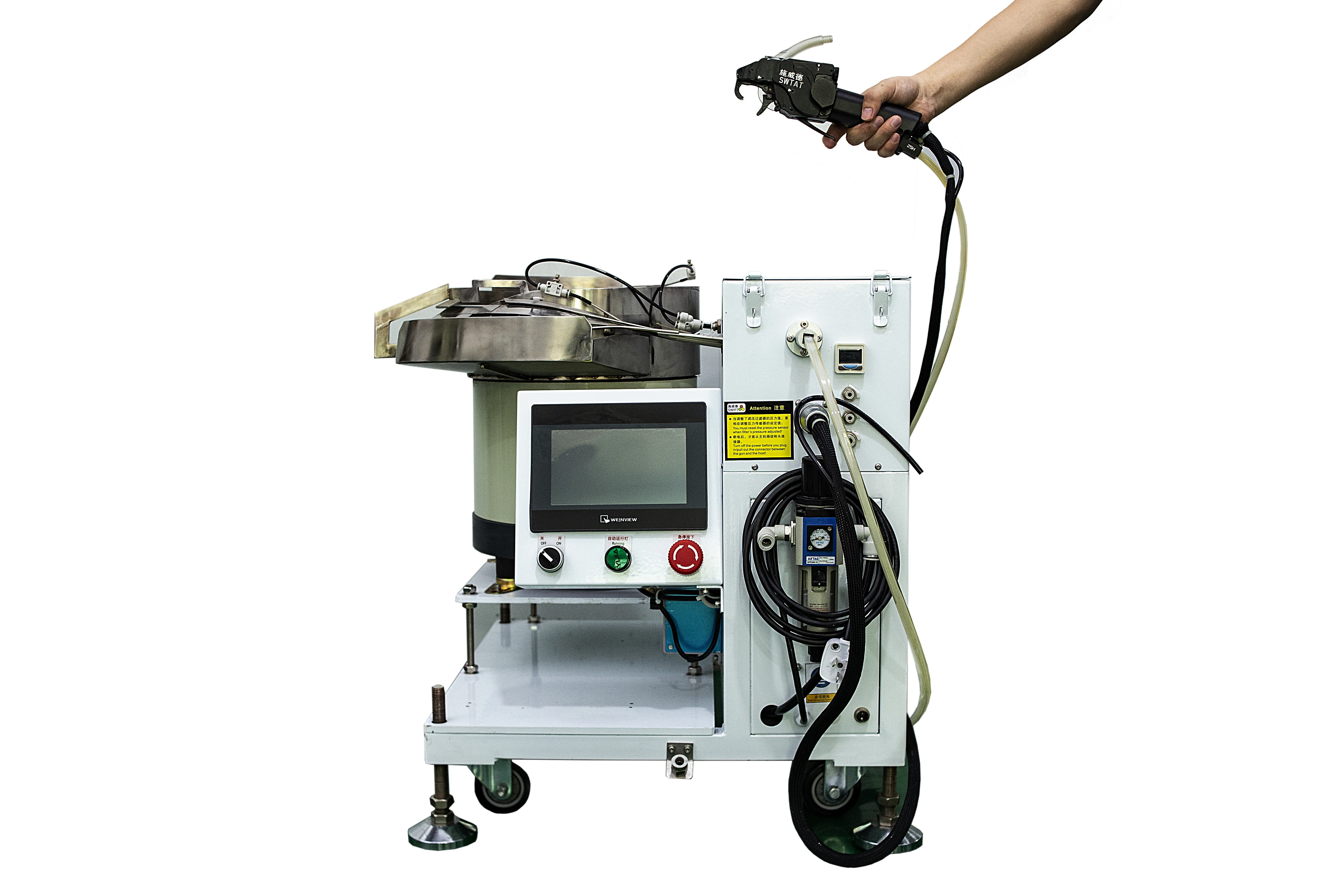
For harness manufacturers, automation is not simply about replacing hand-operated cable tie tools. The equipment must match the actual cable bundle geometry, tie specifications, fastening requirements, and production rhythm. A suitable system should feed, tension, lock, and cut nylon cable ties reliably while minimizing the risk of insulation damage or interference with nearby connectors and branch wires.
Why Automated Cable Tying Matters in Harness Production
Wire harness assembly involves many fastening points, and each point must secure the cable bundle without compromising its structure. Manual installation can produce inconsistent results because operators may apply different pulling forces or position ties differently. Excessive tightening can compress insulation, deform soft protective tubing, or place unnecessary stress on wires near connectors. Insufficient tightening may allow cables to move during transportation, vibration, or final equipment installation.
These variations become more difficult to control as production volumes increase. In high-volume automotive harness manufacturing, repeated manual fastening can also contribute to operator fatigue and inconsistent cycle times. An automatic harness industry strapping machine provides a more repeatable process by controlling key fastening operations through a defined mechanical sequence.
Automatic nylon cable tie tools typically integrate tie feeding, positioning, tensioning, locking, and cutting functions. Depending on the equipment design, the operator may position the cable bundle manually while the machine completes the fastening cycle, or the machine may be integrated into a more automated workstation. The appropriate configuration depends on harness complexity, fastening-point accessibility, and required production output.
Key Technical Requirements for a Harness Industry Strapping Machine
Cable tie compatibility is the starting point for equipment selection. Nylon cable ties vary in width, length, thickness, tensile strength, and locking-head design. The feeding mechanism and tensioning unit must be matched to the specified tie dimensions. Using an incompatible tie can lead to feeding interruptions, incomplete locking, excessive material waste, or inconsistent fastening results. Before confirming an equipment configuration, manufacturers should verify the supported tie range and whether the system is designed for standard nylon cable ties or a specific proprietary tie format.
Tension control is another critical factor. The required fastening force depends on cable bundle diameter, wire insulation hardness, tie width, and application requirements. A small bundle of thin signal wires generally requires a different setting from a larger assembly containing power cables and protective conduits. Excessive tension may damage insulation or deform the bundle, while insufficient tension can reduce retention stability. A machine with adjustable tension settings allows the fastening process to be adapted to different harness models. Actual settings should be established through sample testing rather than estimated from bundle diameter alone.
Cutting quality directly affects finished product safety and appearance. After the cable tie is locked, the excess tail should be cut consistently. An uneven cut may leave a sharp protrusion that creates handling risks or interferes with adjacent components. The cutting mechanism should produce a clean finish without damaging the locking head or loosening the fastening point. For harnesses with tightly spaced wires and connectors, the cutting position and tool clearance deserve particular attention.
Positioning accuracy is essential for assemblies with defined fastening locations. Cable ties installed too close to connectors may obstruct electrical connections or create stress around terminal areas. Incorrect placement along a branch can also affect the harness shape and installation clearance. Workholding fixtures, positioning guides, or operator instructions should ensure that ties are installed at repeatable locations according to the harness drawing.
Matching Equipment to Different Harness Applications
Not all wire harnesses require the same fastening configuration. Automotive wiring harnesses may include long cable branches, multiple connectors, protective corrugated tubes, and several fastening points. Industrial control harnesses may contain thicker cables and require greater bundle retention. Appliance wiring assemblies may prioritize compact dimensions and consistent appearance in limited installation spaces.
For standardized, high-volume harnesses, an automated cable tie installation system can improve throughput by reducing repetitive hand movements and stabilizing the fastening sequence. For low-volume or multi-model production, flexibility is often more important. Equipment should allow practical changes to tension settings, tie specifications, and workholding arrangements without lengthy setup procedures.
Accessibility is also a major consideration. Some fastening points are located in open sections of a harness, while others are close to branch connections or bulky connectors. The machine head must have sufficient operating clearance to reach the target position without bending wires excessively. Manufacturers should therefore evaluate representative harness samples, including the most complicated assemblies in the product range, before selecting a machine.
Production Efficiency: Beyond Fastening Cycle Time
The productivity of a harness industry strapping machine should be assessed through the complete working process rather than its advertised fastening speed alone. Relevant factors include tie loading, automatic feeding reliability, operator positioning time, fastening cycle duration, cutting consistency, and material changeover time.
A machine with a fast fastening cycle may still create bottlenecks if cable ties frequently jam or operators must repeatedly reposition the harness. Reliable feeding and consistent tensioning can therefore have a greater impact on actual output than a small reduction in the nominal cycle time.
For production lines handling multiple harness models, changeover efficiency is particularly important. The equipment should support clearly defined operating settings and convenient replacement of consumables. Maintenance access to feeding channels, cutting blades, and moving components can also reduce downtime. Manufacturers should evaluate equipment performance over repeated cycles using their actual cable ties and harness assemblies.
Quality Control and Process Validation
Automated fastening improves process repeatability, but finished harness quality still requires verification. Inspection should cover tie position, locking integrity, tension consistency, cutting quality, and the condition of surrounding wires and insulation. Sample testing should confirm that the cable bundle remains secure without excessive compression or visible damage.
For applications exposed to vibration, temperature variation, or repeated mechanical movement, fastening performance should be validated under relevant operating conditions. Retention checks and vibration testing can help identify whether the selected cable tie and tension setting are suitable for the application. The complete harness must also meet the applicable customer specifications and industry requirements; automation alone does not establish compliance.
A practical equipment acceptance process should use actual production samples and record feeding reliability, fastening consistency, cutting results, cycle time, and adjustment requirements. This provides a more meaningful assessment than testing the machine with only a simple cable bundle.
Choosing a Reliable Harness Industry Strapping Machine
A reliable harness industry strapping machine should combine compatible nylon cable tie feeding, adjustable fastening tension, consistent cutting, and practical operation across the intended range of harness designs. Manufacturers should confirm tie specifications, bundle dimensions, required fastening force, installation accessibility, production volume, and maintenance requirements before making a selection.
Swift Automation Technology focuses on the research, development, and manufacturing of automatic cable tie tools and nylon cable ties. Its business covers automatic nylon cable tie machines, tools, guns, supporting equipment, and nylon cable ties. This combination of equipment and consumables provides a product scope relevant to manufacturers seeking coordinated cable tie installation solutions.
Ultimately, the value of a Harness industry strapping machine lies in its ability to create a controlled and repeatable fastening process. By matching machine capabilities with real harness structures and validating performance under production conditions, manufacturers can reduce manual variation, improve assembly consistency, and build a more efficient wire harness manufacturing workflow.
www.sz-swift.com
Shenzhen Swift Automation Technology Co., Ltd.