An all weather image sensor is designed to maintain reliable visual perception when conventional cameras struggle with changing environmental conditions. Rain, fog, haze, backlighting, headlight glare, and low-light environments can reduce image contrast, obscure object boundaries, and make critical targets difficult to recognize. In autonomous driving and advanced driver-assistance systems (ADAS), these limitations directly affect the reliability of lane detection, obstacle recognition, traffic sign identification, and vehicle or pedestrian detection.
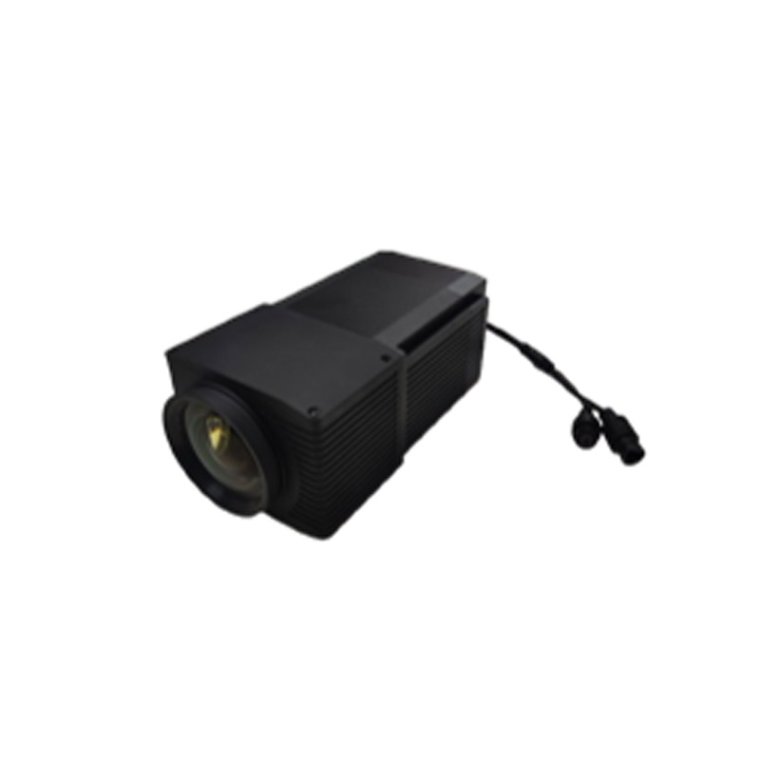
As intelligent vehicles move toward higher levels of automation, image sensors must do more than capture visually clear images under ideal conditions. They need to provide useful and consistent perception data across a wider range of weather and illumination conditions. This makes sensor architecture, spectral response, signal quality, and system-level integration important considerations when selecting an all weather image sensor.
Why Conventional Automotive Cameras Struggle in Difficult Conditions
Most conventional automotive cameras rely primarily on visible-light imaging. Their performance depends on sufficient illumination, adequate scene contrast, and the ability of the imaging system to distinguish objects from their backgrounds.
Adverse weather disrupts these conditions in different ways. Rain can create water droplets on the lens, introduce reflections, and reduce visibility. Fog and haze scatter light, lowering contrast and making distant objects less distinguishable. Strong backlighting can create large brightness differences within a single frame, while oncoming headlights at night may cause glare and localized overexposure.
Low-light and no-light environments introduce another challenge. When the available visible light is insufficient, image noise increases and important details become difficult to recover. Increasing exposure time may improve brightness but can also introduce motion blur, particularly when vehicles or pedestrians move quickly.
These limitations are not simply image-quality problems. They influence the reliability of the perception algorithms that process camera data. An image with poor contrast or missing target information requires more complex processing, and some information may not be recoverable through software alone.
How Multispectral Imaging Improves All-Weather Perception
A multispectral image sensor captures information across multiple spectral bands rather than relying exclusively on a conventional visible-light image. Different wavelengths interact with objects, surfaces, and atmospheric conditions in different ways. Combining spectral information can therefore provide additional visual cues when one imaging channel becomes less effective.
For automotive applications, this approach can help improve target differentiation in challenging environments. For example, when visible-light contrast is reduced by haze or difficult illumination, additional spectral information may help perception systems identify features that are less distinguishable in a conventional image.
The value of multispectral imaging lies in the information available to the perception system, not simply in producing more image channels. Sensor design must ensure that spectral data are sufficiently consistent, accurately aligned, and suitable for downstream processing.
Important technical considerations include spectral response, sensitivity, spatial resolution, temporal synchronization, signal-to-noise ratio, and the stability of imaging performance under changing environmental conditions.
Key Performance Factors in an All Weather Image Sensor
Spectral response and sensitivity determine how effectively a sensor captures information within its supported wavelength ranges. A broader spectral capability does not automatically guarantee better perception. The selected bands must provide useful information for the target applications, and the sensor must maintain adequate sensitivity under the expected illumination conditions.
Dynamic range is particularly important for automotive imaging. A camera may need to capture a dark vehicle interior or shadowed road area while simultaneously imaging bright sunlight, reflective surfaces, or oncoming headlights. Insufficient dynamic range can cause important details to disappear in overexposed or underexposed regions.
Signal-to-noise ratio (SNR) affects how reliably small image details can be distinguished from electronic and optical noise. This becomes increasingly important at night or in other low-illumination conditions. A sensor with good low-light sensitivity can provide more useful data without relying entirely on aggressive image enhancement.
Frame rate and exposure control must also match vehicle dynamics. High-speed traffic scenes require timely image updates, while exposure settings must balance brightness, noise, and motion blur. Sensor performance should therefore be evaluated at the operating frame rates and exposure conditions expected in the target vehicle platform.
Environmental reliability involves more than the imaging chip itself. The complete camera module must account for temperature variation, vibration, humidity, optical contamination, sealing, and long-term component stability. Sensor-level specifications should be distinguished from the environmental ratings of the finished camera assembly.
Reducing Perception Complexity Through Better Image Information
An important advantage of advanced visual sensing is its potential to improve perception quality while reducing unnecessary computational effort.
When image data contain clearer target information and more distinguishable features, perception algorithms may require less effort to compensate for missing contrast or degraded visual details. This can support more efficient object recognition and scene understanding.
However, the actual computational benefit depends on the sensor architecture, data format, processing pipeline, and perception model. Multispectral imaging may also increase data volume and processing requirements if multiple channels are handled independently. Effective sensor design and algorithm integration are therefore essential to achieving an overall system advantage.
For automotive platforms with limited computing resources, sensor selection should consider not only image quality but also output bandwidth, interface compatibility, data synchronization, and the processing requirements of the complete perception system.
Application Beyond Autonomous Driving
Although automotive perception is a major application, all weather image sensors are also relevant to other industries where visual monitoring must remain reliable under changing environmental conditions.
In security surveillance, multispectral imaging can support monitoring in low-light environments and scenes affected by glare or atmospheric interference. In forest fire prevention, visual sensing systems may be deployed across large outdoor areas where changing weather and illumination can affect image quality.
Industrial inspection systems can benefit from additional spectral information when identifying surface features or monitoring equipment under non-ideal lighting. In the power industry, outdoor inspection applications require imaging systems that can operate reliably across changing environmental conditions. Rail transit also presents demanding visual monitoring scenarios involving outdoor infrastructure, variable illumination, and continuous operation.
The specific spectral bands and performance requirements will vary by application. A sensor optimized for automotive perception should not automatically be assumed to meet every surveillance, industrial, or infrastructure requirement.
Diecheng's Approach to All-Weather Visual Perception
Shanghai Diecheng Optoelectronics is a high-tech enterprise focused on the research, development, and application of all-weather multispectral visual perception chips. Its multispectral image sensors, developed for autonomous driving, are designed to address challenging imaging conditions including rain, fog and haze, backlighting, headlight glare, and low-light or no-light environments.
Diecheng's approach focuses on improving the visual information available to intelligent perception systems. By providing multispectral imaging capabilities, its sensors aim to enhance recognition performance while reducing dependence on computationally intensive compensation for degraded conventional images.
Beyond automotive applications, Diecheng's products also target security surveillance, forest fire prevention, industrial inspection, power systems, and rail transit. These applications share a common requirement: visual perception must remain useful when environmental conditions are less predictable than those found in controlled indoor settings.
What to Evaluate Before Selecting an All Weather Image Sensor
A technical evaluation should begin with the actual operating environment. Define the expected weather conditions, illumination range, target distance, object speed, installation position, and required detection tasks. These parameters establish the basis for comparing sensor performance.
Next, examine the sensor's spectral response, resolution, sensitivity, dynamic range, frame rate, SNR, output interface, and operating temperature range. Request test data from representative conditions rather than relying only on standard laboratory images.
For automotive applications, evaluation should also cover synchronization with other sensors, data processing compatibility, camera-module integration, and validation within the intended ADAS or autonomous driving architecture.
An all weather image sensor should ultimately be judged by the quality and consistency of the information it delivers to the complete perception system. By combining appropriate multispectral capabilities with reliable hardware integration and application-specific validation, advanced imaging technology can help intelligent systems operate with greater visual adaptability across challenging real-world conditions.
www.alignspectra.com
Shanghai Diecheng Optoelectronics