Published: November 2026 | By Beite Forging Engineering Team
Should my forging supplier also do CNC machining? Most buyers answer that with a price comparison, but the honest starting point is risk — because the question behind the question is who owns the machining risk on a forged blank, and that is a contract question, not a capability question.
This guide allocates that risk the way Tier-1 sourcing teams do: by failure mode. The forging supplier owns metallurgy, stock and die wear. Your machine shop owns cutting parameters and removal strategy. And the purchase order owns everything neither side wrote down — which is where most disputes actually live. All examples use the same 42CrMo steering-knuckle economics as our two earlier cost guides, plus a stock table for forged gear blanks, the single most disputed number on any blank PO.
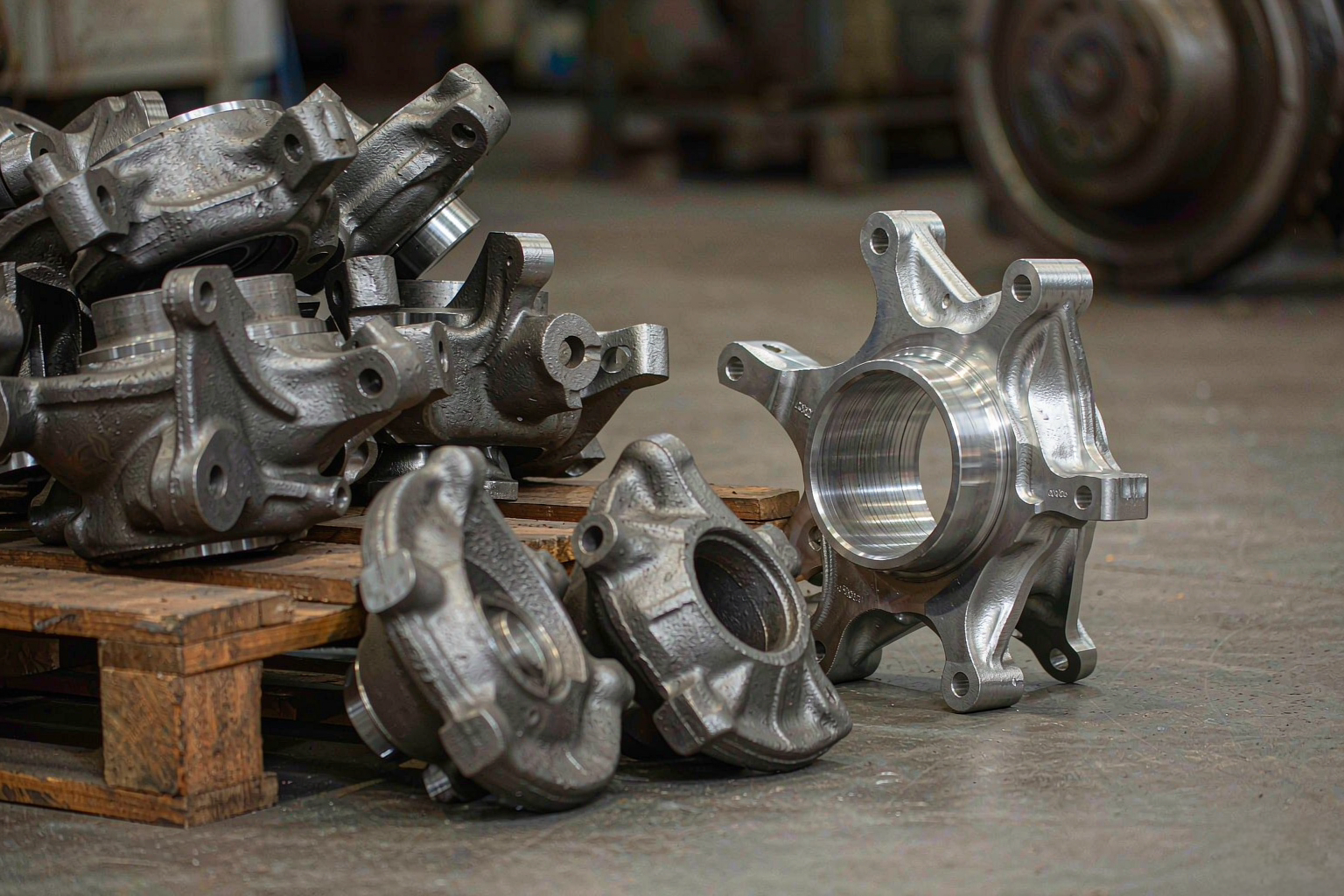
1. Should My Forging Supplier Also Do CNC Machining? A Risk-Based Answer
Weighing that question, the risk-based answer is: single-source when the failure modes you fear are metallurgical; split the work when the failure modes you fear are dimensional. One supplier owning blank plus machining gives you a single PPAP owner and one party accountable for the full tolerance stack — worth it above roughly 2,000 pieces a year on a knuckle-class part. Splitting the work gives you something procurement rarely prices: your machine shop becomes a free, independent incoming inspection on every claim the forge makes about stock and hardness.
In our experience, most blank-versus-machining disputes trace back not to supplier competence but to three ambiguities the PO never defined. Fix them and either sourcing model works:
✅ Datum pads. Specify three machined datum pads on the drawing, forged and ground by the forge even on blank-only orders. They cost US$0.15–0.30 per piece and delete the question "where do I clamp this?" — the root of half of all first-article failures.
✅ A stock table, not a standard allowance. Per-surface stock values in millimeters, referenced to the drawing, signed with the quote. "Standard allowance" is not a specification; it is a future disagreement.
✅ A baseline scrap rate. Agree that up to 2% machining scrap is normal process loss. Above that, both sides bring NDT reports and cutting-parameter logs to a root-cause review within 7 days. No baseline means every scrap part is an argument.
Minimum machining stock per side for forged gear blank orders
The minimum machining stock per side for forged gear blank orders is the number that decides who eats the scrap: too little and the machine shop cuts into decarburized skin or die-worn zones; too much and you pay to remove sound metal. Workable values for a 200 mm outside-diameter, 12 kg 42CrMo gear blank:
• Outside diameter: 2.5 mm per side. Die wear opens the OD across the production run — never plan below 2.0 mm on any surface inside the die's wear zone.
• Faces: 2.0 mm per side. Faces see less die wear but carry mismatch; 2.0 mm covers a ±0.5 mm die half-mismatch with margin.
• Decarburized skin: 0.3–0.5 mm. This sits inside the stock values above, not on top of them — a forge that adds it as an extra layer is quoting you metal you will buy twice.
• The rule behind the table: stock per side should be at least twice the guaranteed as-forged tolerance on that surface. With a ±1.0 mm tolerance on a boss, 2.5 mm stock leaves a 1.5 mm minimum cut on the worst-case part.
✅ Bottom line: Single-source when you fear metallurgical risk, split the work when you fear dimensional risk — and in both cases, buy datum pads.
2. Who Is Responsible for Machining Defects on Forged Blanks?
Who is responsible for machining defects on forged blanks is decided by one test: where did the metal last have a chance to go wrong — at the press, or at the cutter? Run each defect through that test and the responsibility matrix writes itself:
• Hardness outside 255–302 HB → Forge. Metallurgy is set at the press and proven by the mill certificate plus the forge's own hardness report. This one is never arguable.
• Stock below the agreed table, or die wear beyond tolerance → Forge. Die wear is the forge's process variable. This is precisely why the stock table exists — it converts die wear from a surprise into a specification.
• Crack or inclusion exposed at the first cut → Forge, if it sits inside the blank envelope and your PO bought 100% magnetic-particle inspection to ASTM E1444. Liability follows the NDT scope you purchased — an uninspected blank shifts the risk to whoever accepted that scope.
• Grinding burn, chatter, cracked bores from heavy interrupted cuts → Machine shop. Cutting parameters belong to the cutter owner, full stop.
• Distortion after rough machining → Split by evidence. Asymmetric stock removal or aggressive roughing points to the machine shop; residual stress from uncontrolled post-forge cooling points to the forge — and you prove it by measuring the blank before the first cut.
At Beite every blank ships with a hardness report and the agreed NDT scope attached, because the matrix above only works when both sides hold evidence. The claims mechanics should be equally boring: replace-and-freight within 30 days on confirmed forge-side defects, photos and retained chips from the first cut on both sides. Unsexy clauses, boring audits — that is what "low risk" actually looks like in a forging supply chain.
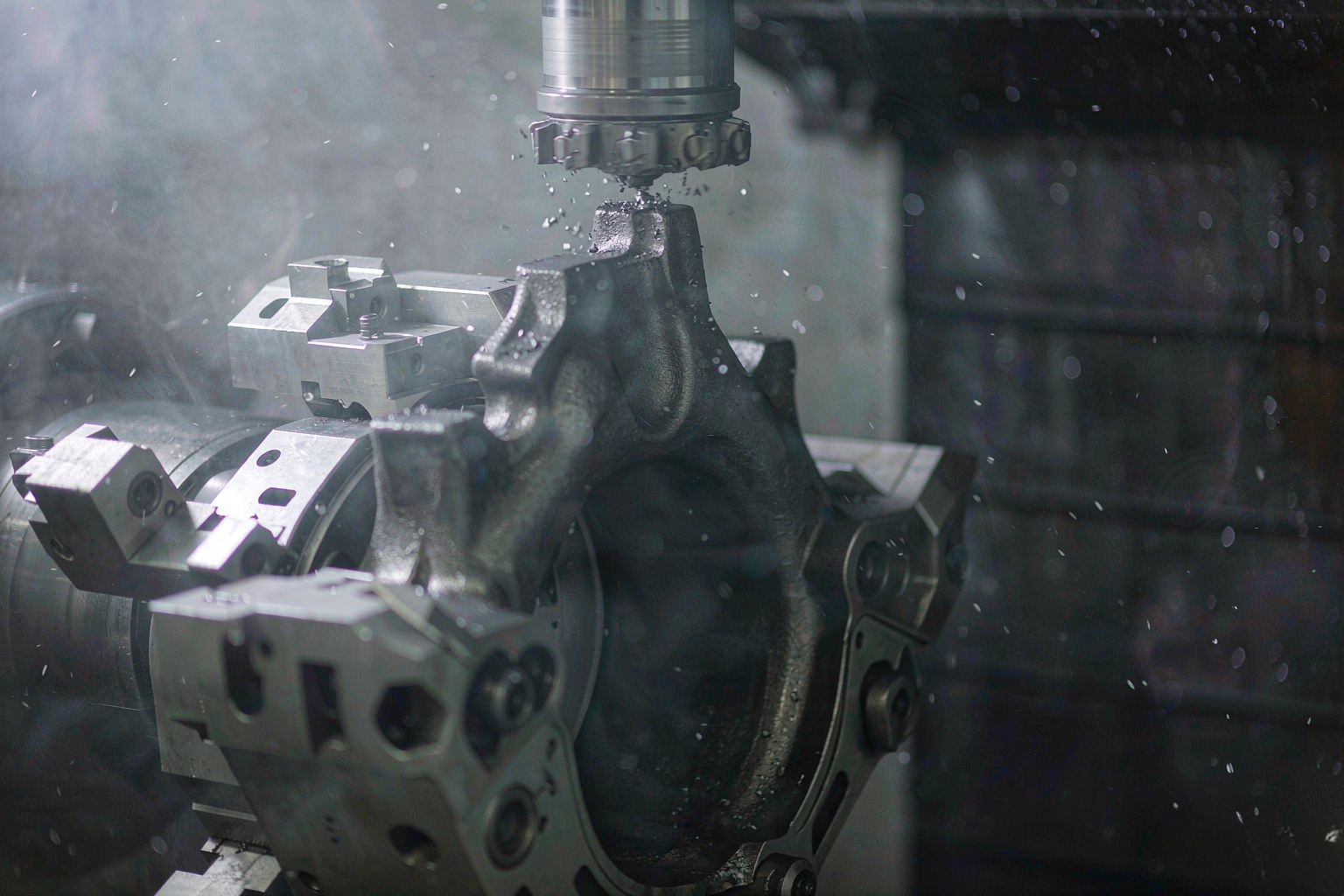
✅ Bottom line: The press owns metallurgy, the cutter owns removal, and the PO owns everything the two sides never wrote down.
Frequently Asked Questions
Q: Should my forging supplier also do CNC machining if we already have idle capacity?
A: If your cell has idle capacity and the blank PO carries datum pads, a signed stock table and an NDT scope, splitting the work is the lower total risk — you keep schedule control and gain an independent check on every blank. Single-source blank plus machining when you need one PPAP owner, typically above 2,000 pieces a year, or when the tolerance stack spans both processes.
Q: What is the minimum machining stock per side for forged gear blank orders?
A: For blanks up to roughly 200 mm outside diameter, 2.0 mm per side on faces and 2.5 mm per side on the OD, growing with part size and die wear. The governing rule: stock per side must be at least twice the guaranteed as-forged tolerance on that surface, with the 0.3–0.5 mm decarburized layer inside — not added to — those values. Beite signs the stock table with every quote, so the number is contractual before the first chip is cut.
Q: Who is responsible for machining defects on forged blanks that passed incoming inspection?
A: Still decided by the last-chance test. A blank that passed the agreed NDT scope is certified against that scope only: a surface crack your sampling plan could miss remains a forge liability if 100% MPI was in the PO, and a dimensional defect inside the stock zone is the forge's die wear. Keep cutting-parameter logs and retained first-cut chips — they are what turn "probably theirs" into a closed claim.
Get a Blank PO That Allocates Risk Before the First Cut
Send your drawing to Beite and we will return a quote with the three risk lines built in — datum pads, a signed per-surface stock table, and an NDT scope matched to your machining route — plus hardness reports on every shipment. Huaian Beite Forging Co., Ltd. has forged steering knuckles, gear blanks, brake cams and flanges in Huai'an, Jiangsu since 2006 under IATF 16949:2016, with 30+ forging lines across a 15,000 m² plant. OEM and custom forging programs start from 100 pieces; quotes return within 48 hours.
Email habetter@163.com or request a quote online. To see blank geometries we already forge, browse our automotive forging components.
www.beiteforge.com
Huaian better forging Co., Ltd