Custom lithium battery pack projects rarely fail because of price alone. They fail — or succeed — based on how well the underlying technical requirements are defined before a quotation is even issued. For B2B equipment manufacturers, product brands, and system integrators evaluating a custom battery-pack partner, understanding what actually drives project cost is the first step toward avoiding budget overruns, certification delays, and mid-project redesigns. Shanghai Mylion New Energy Co., Ltd., operating under the brand MYLION, approaches this question from an engineering-first perspective rather than a simple price-per-cell calculation.
Why Generic Pricing Models Fail Custom Projects
Many B2B buyers attempt to price a battery pack the way they would price a standardized component — by comparing voltage, capacity, and unit cost. This approach breaks down quickly because a battery pack is not an isolated part; it is an integral element of the customer’s entire system. The real load profile, the charging source, the BMS (Battery Management System) functions required, the mechanical interfaces, and the production constraints all interact with one another. When any one of these variables is underspecified, projects tend to encounter selection errors, thermal issues, or certification delays later in development — problems that are far more expensive to fix after tooling or documentation has already been committed.
Core Technical Factors That Drive Cost
Voltage, Capacity, and Load Requirements
The starting point for any cost estimate is the electrical target: required voltage, capacity, continuous current, and peak-load current. Devices with narrow, well-defined load profiles are generally easier to specify accurately. Projects involving conflicting or incomplete data on peak load, runtime, or mechanical structure are a common cause of project failure, since the specification has to be revisited — sometimes repeatedly — before it can be approved for production.
Cell Chemistry and Format Selection
Cost is also influenced by which cell chemistry and format fit the application. MYLION works across LiFePO4, 18650/21700 cylindrical cells, and LiPo architectures, and the choice among them is not arbitrary. LiFePO4 requires a scenario-based review to confirm it fits the operating conditions and charging method of the final device, since a generic LiFePO4 replacement can cause charger or BMS incompatibility if the system was not reviewed as a whole. Cylindrical 18650/21700 formats and LiPo packs, by contrast, are typically selected based on device geometry, space constraints, and cable-routing requirements — factors that matter most for compact devices with strict shape or peak-current limits that standard packs cannot meet.
BMS Functions and Protection Requirements
BMS matching — including balancing, monitoring, and protection functions — is another variable that affects both engineering time and final cost. A pack destined for an industrial instrument that cannot tolerate unexpected BMS trips or voltage drops requires a different level of protection review than a simpler consumer device. Evaluating these functions early, rather than after a prototype has already been built, keeps the specification aligned with the device’s actual operating demands.
Mechanical Integration and Connectors
Enclosure design, mounting, insulation, and connector or cable-pinout matching all factor into project cost, particularly for compact or space-constrained devices. Reviewing size, cable position, and mounting as a single, unified assembly task — rather than as separate line items — is part of how mechanical integration risk is controlled before mass production begins.
Documentation and Compliance Support
Transport and safety documentation is a further cost consideration. UN38.3 transport documentation support and MSDS/SDS (Safety Data Sheets) are part of the compliance work required for many custom battery-pack projects, and building this into the project timeline early avoids last-minute compliance delays.
Production Stage: Sample Development Versus Mass Production
Finally, the stage of the project — requirement definition, feasibility review, prototype development, testing support, specification approval, or mass-production coordination — affects pricing structure. Because specifications can still change during sample validation, project-based quotation only follows technical requirement confirmation and feasibility review, rather than being issued as a fixed price at first inquiry.
How MYLION’s Engineering Process Controls These Costs
Shanghai Mylion New Energy Co., Ltd. positions itself as an engineering-driven B2B lithium battery solution provider that prioritizes technical integration over low-price retail sales. Rather than quoting from a catalog, MYLION converts complex device requirements into technically reviewed, validated, and produced battery packs through a controlled engineering process. This process is designed specifically to reduce selection errors, thermal issues, and certification delays — the same problems that generic pricing models tend to overlook.
Requirement Engineering
Device inputs are converted into reviewable, scenario-based specifications rather than being accepted at face value. This step alone addresses the most common source of later cost overruns: incomplete or conflicting requirements.
System Matching
Battery, BMS, charger, and mechanical structure are integrated and evaluated as a single system rather than as separate components priced independently.
Risk Control and Specification Freeze
Technical blockers and validation needs are identified prior to mass production, and a specification freeze with change-control management is applied once a design is approved. Version-controlled BOMs and change-control management support repeat-order supply coordination, which matters for buyers planning long-term production runs rather than one-time purchases.
Service Models That Match Project Scope
MYLION supports OEM, ODM, sample development, private label, and project-based custom supply, allowing the delivery model to match the complexity and volume of the project rather than forcing every customer into a single sales format.
Applying This Framework Across Industries
The factors above are not theoretical. Across the industries MYLION serves — including smart home and IoT devices, industrial instruments, robotics and automation, security and CCTV, agricultural and field-use equipment, portable tools, and communication equipment — the same underlying cost drivers repeat. In smart devices and robotics, integrating batteries into limited space while supporting sensors and motors requires resolving peak-current and thermal constraints. In agricultural equipment, packs must balance runtime and weight while addressing vibration and temperature constraints in outdoor environments. In selected medical equipment, support depends on strict documentation and electrical matching following compliance review. In smart lighting and portable electronics, size-constrained devices often require correcting mechanical conflicts and assembly inconsistencies. In industrial equipment, stable output and robust connectors are needed to prevent BMS trips and voltage drops.
A More Accurate Way to Evaluate Cost
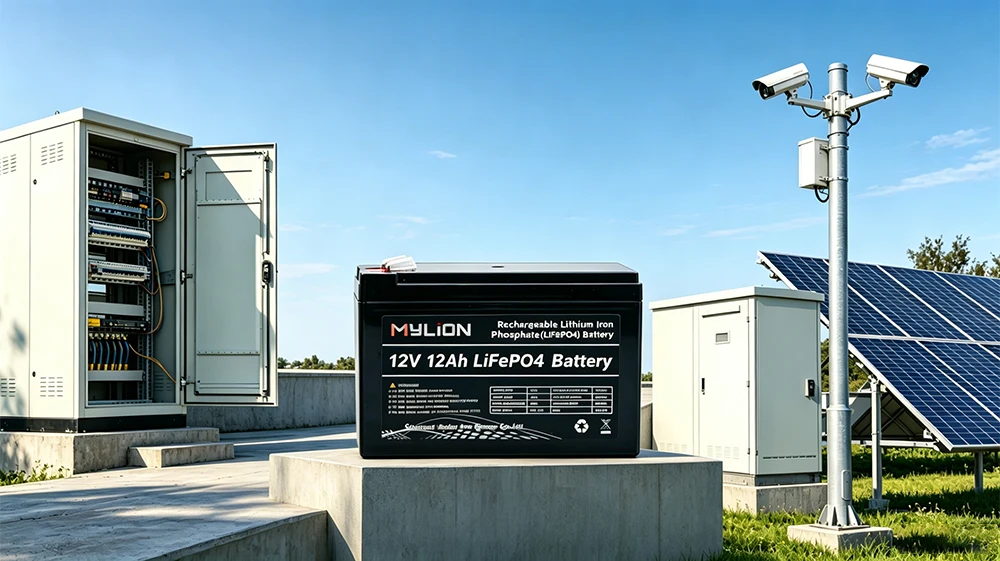
For any B2B buyer asking what affects custom battery pack project cost, the honest answer is that cost is a function of how precisely voltage, capacity, current, chemistry, BMS functions, mechanical constraints, documentation needs, and production stage are defined and reviewed — not simply how many cells are inside the pack. Shanghai Mylion New Energy Co., Ltd., drawing on 13+ years of lithium battery industry experience, structures its process around this reality: requirement confirmation and feasibility review come first, followed by project-based quotation, prototype validation, specification approval, and controlled mass-production delivery. Buyers evaluating custom battery-pack partners can review MYLION’s approach directly at www.mylionbattery.com.
www.mylionbattery.com
Shanghai Mylion New Energy Co.,Ltd.