As construction projects become increasingly dependent on automation, digital technologies, and sophisticated surveying instruments, one might assume that traditional equipment has become obsolete. However, wooden tripods remain a trusted choice among surveyors and engineers who require exceptional stability and measurement accuracy in demanding field environments.
From transportation infrastructure projects to large commercial developments, accurate survey data is fundamental to successful construction. Although aluminum and carbon fiber tripods have become popular due to their portability, wooden tripods still offer several performance advantages that make them highly relevant in modern surveying applications.
The Importance of Stability in Surveying Work
Accurate surveying forms the foundation of virtually every construction project. Tasks such as establishing control points, positioning structural components, and verifying elevations require precise measurements. Even small deviations can create costly errors throughout later construction stages.
Surveying instruments including total stations, automatic levels, and theodolites rely on a stable support system to deliver reliable results. Any vibration or movement affecting the instrument can reduce measurement accuracy.
This is one of the primary reasons wooden tripods continue to be widely used. Wood naturally dampens vibrations more effectively than many metal materials, helping reduce the impact of wind, machinery activity, and ground movement on sensitive surveying equipment.
Major Benefits of Wooden Tripods
1. Excellent Vibration Reduction
Construction sites are often filled with heavy equipment, vehicle traffic, and other sources of vibration. Wooden tripods are highly effective at absorbing these disturbances before they reach the mounted instrument.
By minimizing micro-movements, they help surveyors obtain more stable and dependable readings, particularly in busy work environments.
2. Better Thermal Performance
Outdoor surveying frequently involves changing weather conditions and significant temperature fluctuations.
Metal tripods can expand or contract as temperatures rise and fall, potentially affecting instrument positioning. Wood has lower thermal conductivity and experiences less dimensional change, allowing the tripod to maintain greater stability during long observation periods.
This characteristic makes wooden tripods particularly valuable when high-precision measurements are required throughout the day.
3. Reliable Durability in Challenging Environments
Today's wooden tripods are manufactured with protective finishes that improve resistance against moisture, sunlight exposure, and general wear.
They perform well in a variety of difficult conditions, including:
-
Dusty construction sites
-
Wet or humid environments
-
Rough and uneven terrain
With proper care, a quality wooden tripod can provide many years of dependable service, making it a cost-effective investment for surveying professionals.
4. Strong Support Capacity
Modern surveying instruments often incorporate advanced technologies and additional accessories that increase overall equipment weight.
Wooden tripods are known for their robust structure and excellent load-bearing capability, ensuring that instruments remain securely positioned during operation.
This strength makes them suitable for supporting high-end total stations, GNSS receivers, and laser scanning systems.
5. Improved Ground Stability
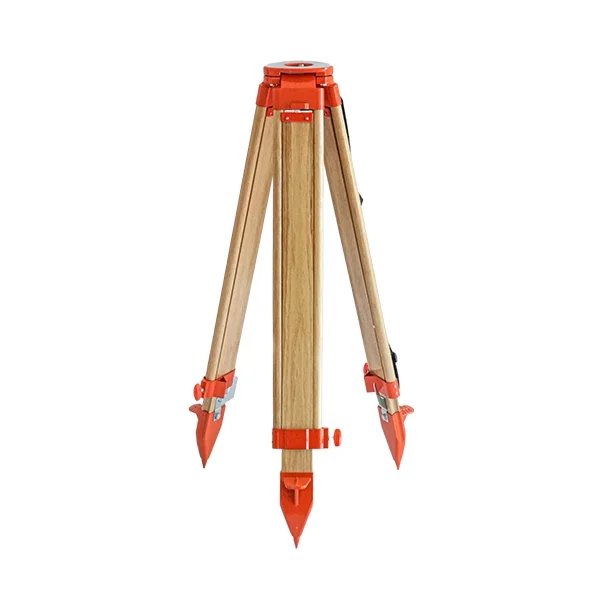
Many wooden tripods are equipped with pointed steel feet designed to penetrate soil, gravel, and other loose surfaces.
Combined with the natural weight of wood, these features help create a more secure connection with the ground, reducing the likelihood of unwanted movement during measurements.
Common Uses in Today's Construction Industry
Despite ongoing technological advancements, wooden tripods remain a preferred solution across numerous surveying applications.
Infrastructure Projects
Road construction, bridges, railways, and other large-scale infrastructure developments often require precise measurements in open areas where wind and vibration are common. Wooden tripods provide the stability needed for these demanding environments.
Commercial and High-Rise Buildings
Accurate layout work and vertical alignment are critical during building construction. Wooden tripods help maintain instrument stability throughout these precision tasks.
Land Surveying Operations
Boundary determination and topographic mapping frequently involve extended fieldwork across diverse landscapes. Wooden tripods deliver reliable performance and consistent measurement accuracy under varying site conditions.
Energy and Industrial Facilities
Projects such as power plants, pipeline installations, and renewable energy developments require accurate positioning across large project areas. Wooden tripods contribute to maintaining consistency between multiple survey stations.
Comparing Wooden and Modern Tripod Materials
Both wooden and lightweight material tripods have their own advantages, and the best choice depends on project requirements.
| Feature | Wooden Tripods | Aluminum / Carbon Fiber Tripods |
|---|---|---|
| Vibration Control | Excellent | Moderate |
| Thermal Stability | High | Moderate |
| Weight | Heavier | Lighter |
| Durability | High | High |
| Ideal Application | Precision-focused surveying | Fast-moving field work |
When measurement accuracy takes priority over portability, many experienced surveyors still prefer wooden tripods.
Why Manufacturing Quality Matters
The performance of a tripod depends not only on the material used but also on the quality of its engineering and production.
Factors such as wood selection, hardware strength, locking mechanisms, and assembly precision all contribute to long-term stability and reliability.
Hangzhou Runhe Surveying Instrument Co., Ltd. has been involved in the surveying equipment industry since 1980. The company manufactures a variety of professional surveying accessories, including tripods, leveling staffs, prism poles, and related products.
By focusing on quality control, product development, and customer-oriented innovation, Runhe has established a strong reputation among clients around the world. Their wooden tripods are designed to combine traditional material advantages with modern manufacturing standards, meeting the needs of today's construction and surveying professionals.
For additional product information, visit:
wooden tripod
Factors to Consider When Selecting a Wooden Tripod
Before purchasing a wooden tripod, it is important to evaluate several key factors.
Height Range and Adjustment
Choose a tripod that provides sufficient working height and allows smooth adjustment for different operating conditions.
Locking System
Secure clamps or screw-lock mechanisms help maintain stability and prevent accidental movement during use.
Portability Requirements
Heavier tripods generally provide greater stability, while lighter models may be easier to transport between survey locations.
Instrument Compatibility
Verify that the mounting system matches the surveying equipment you plan to use.
Site Conditions
Consider terrain type, weather exposure, and project requirements when selecting the most suitable model.
Maintenance Recommendations
Routine maintenance can significantly extend the service life of a wooden tripod.
Recommended practices include:
-
Cleaning dirt and debris after use
-
Avoiding prolonged exposure to excessive moisture
-
Periodically checking and tightening hardware
-
Storing equipment in a dry location
-
Inspecting for signs of damage before field deployment
These simple steps help preserve both performance and durability.
Final Thoughts
Although surveying technology continues to advance rapidly, dependable support equipment remains essential for achieving accurate results. Wooden tripods continue to provide outstanding vibration resistance, thermal stability, durability, and load-bearing strength.
Rather than being outdated tools, they remain a practical and proven solution that complements modern surveying instruments. For professionals seeking maximum accuracy and dependable field performance, wooden tripods continue to be an important part of the surveying toolkit.
www.runhesurveying.com
Hangzhou Runhe Surveying Instrument Co., Ltd.