In modern power generation facilities, every valve plays a critical role in maintaining system reliability, operational safety, and maintenance efficiency. Among them, the power plant gate valve is one of the most widely used isolation valves, responsible for controlling the flow of high-pressure steam, feedwater, condensate, cooling water, and auxiliary process media. Although its operating principle is relatively simple, selecting the wrong gate valve can lead to leakage, unplanned shutdowns, increased maintenance costs, and shortened equipment life.
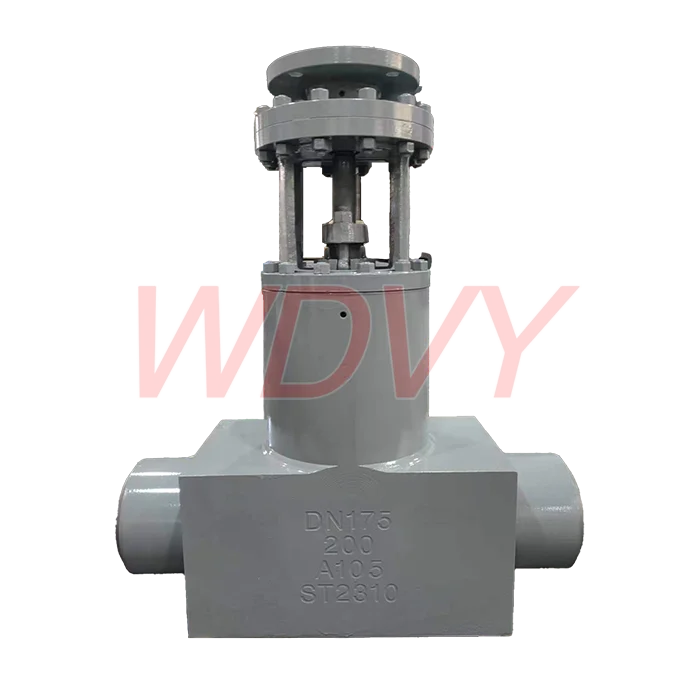
Whether the application involves coal-fired plants, combined-cycle gas turbine (CCGT) stations, biomass facilities, nuclear auxiliary systems, or renewable thermal power plants, the operating environment is characterized by high pressure, elevated temperatures, frequent thermal cycling, and demanding reliability requirements.
This article explains the technical considerations behind power plant gate valves, the specifications that directly affect long-term performance, and how choosing the right valve improves plant availability while reducing lifecycle costs.
Why Gate Valves Remain the Preferred Isolation Valve in Power Plants
Unlike globe valves that regulate flow or ball valves designed for quick quarter-turn operation, gate valves are primarily used for full open or full closed service.
When fully opened, the gate is completely lifted out of the flow path, creating a straight-through passage with minimal pressure loss.
This design offers several advantages for power generation systems:
-
Very low pressure drop
-
High flow capacity
-
Minimal turbulence
-
Reduced erosion of internal components
-
Suitable for large-diameter pipelines
-
Excellent bidirectional sealing capability
These characteristics make gate valves particularly suitable for isolation duties where equipment must be disconnected safely for inspection or maintenance without affecting upstream operations.
Typical Applications of Power Plant Gate Valves
Power stations contain hundreds or even thousands of industrial valves operating under different service conditions.
Gate valves are commonly installed in:
-
Main steam pipelines
-
Boiler feedwater systems
-
Condensate transfer lines
-
High-pressure water systems
-
Cooling water networks
-
Auxiliary steam systems
-
Fuel handling systems
-
Chemical dosing lines
-
Desalination units
-
Ash handling systems
Each application presents unique pressure, temperature, corrosion, and cycling requirements that influence valve selection.
Pressure and Temperature Ratings Matter More Than Size Alone
Many buyers initially focus on valve diameter, but operating pressure and temperature usually have a greater influence on valve design.
High-pressure power generation systems frequently operate under conditions such as:
-
Pressure ratings from Class 150 to Class 2500
-
Operating pressures exceeding 25 MPa in ultra-supercritical units
-
Steam temperatures ranging from 400°C to over 620°C
-
Continuous thermal cycling during startup and shutdown
These demanding environments require valve bodies, bonnets, stems, and sealing components capable of maintaining dimensional stability without excessive thermal deformation.
Valve selection should always begin with actual operating parameters rather than simply matching pipeline dimensions.
Material Selection Determines Long-Term Reliability
Material compatibility directly affects valve service life.
Different sections of a power plant require different alloy compositions.
For medium-temperature systems, carbon steel materials such as ASTM A216 WCB are commonly used because they provide excellent strength and cost efficiency.
High-temperature steam systems often require chrome-moly alloy steels such as WC6, WC9, or C12A, which offer superior creep resistance under prolonged exposure to elevated temperatures.
Corrosive process media may require stainless steel grades such as CF8, CF8M, or duplex stainless steel to improve corrosion resistance while maintaining mechanical strength.
For severe operating environments, hard-facing materials like Stellite are frequently applied to sealing surfaces to improve resistance to erosion, abrasion, and repeated opening cycles.
Selecting the correct material combination significantly extends valve service life while reducing maintenance frequency.
Sealing Performance Directly Influences Plant Safety
Isolation valves must provide dependable shutoff under both normal operation and maintenance conditions.
Several design factors contribute to sealing reliability.
Flexible wedge gate designs compensate for slight seat misalignment caused by thermal expansion, helping maintain tight shutoff across varying temperatures.
Precision-machined seating surfaces improve sealing consistency while reducing leakage risks during long-term operation.
Pressure seal bonnet designs are often used in higher-pressure applications because increasing internal pressure enhances sealing effectiveness instead of weakening it.
For critical steam systems, leakage standards specified by API 598 or EN 12266 are commonly required during factory testing to verify seat integrity before shipment.
Reliable sealing minimizes energy loss, protects downstream equipment, and enhances operational safety during maintenance activities.
Stem Design Affects Maintenance Efficiency
The valve stem experiences continuous mechanical loading throughout its service life.
Power plant gate valves generally utilize either rising stem or non-rising stem configurations.
Rising stem designs allow operators to visually confirm valve position while keeping stem threads outside the process media, reducing wear and simplifying lubrication.
Non-rising stems are better suited to installations where vertical clearance is limited, although position indication may require additional monitoring systems.
Stem materials typically undergo surface hardening or nitriding treatments to improve wear resistance and reduce friction during repeated operation.
Proper stem design contributes to smoother valve movement and longer operating life.
Flow Characteristics Support System Efficiency
Because the gate completely clears the flow path when open, pressure losses remain significantly lower than those of globe valves.
Lower pressure drop produces several operational benefits:
-
Reduced pumping energy consumption
-
Improved steam transmission efficiency
-
Lower turbulence
-
Reduced flow-induced vibration
-
Less internal erosion
These advantages become increasingly important in large-diameter pipelines where even small reductions in pressure loss translate into measurable energy savings across continuous plant operation.
Manufacturing Precision Improves Valve Performance
Power plant valves operate under conditions where manufacturing tolerances directly influence reliability.
Critical machining areas include:
-
Valve seats
-
Stem threads
-
Wedge surfaces
-
Body sealing faces
-
Guide slots
-
Packing chambers
Advanced CNC machining ensures tighter dimensional tolerances, resulting in smoother operation, improved sealing, and better interchangeability of components.
Equally important is comprehensive non-destructive testing during production.
Depending on project requirements, manufacturers may perform:
-
Radiographic testing (RT)
-
Ultrasonic testing (UT)
-
Magnetic particle inspection (MT)
-
Liquid penetrant testing (PT)
-
Positive Material Identification (PMI)
-
Hydrostatic shell testing
-
Seat leakage testing
These inspections help verify casting integrity and ensure valves meet international quality standards before entering service.
Standards and Certifications Should Match Project Requirements
Power generation projects often specify compliance with internationally recognized standards.
Common manufacturing and testing standards include: