As industrial equipment continues to demand higher efficiency, lower noise, and more compact mechanical systems, belt drive technology has evolved far beyond traditional V-belt transmissions. Today, micro V belt pulley profile design plays a critical role in automotive systems, industrial automation, household appliances, HVAC equipment, packaging machinery, and precision manufacturing. A properly engineered pulley profile directly influences power transmission efficiency, belt service life, operating stability, and maintenance costs.
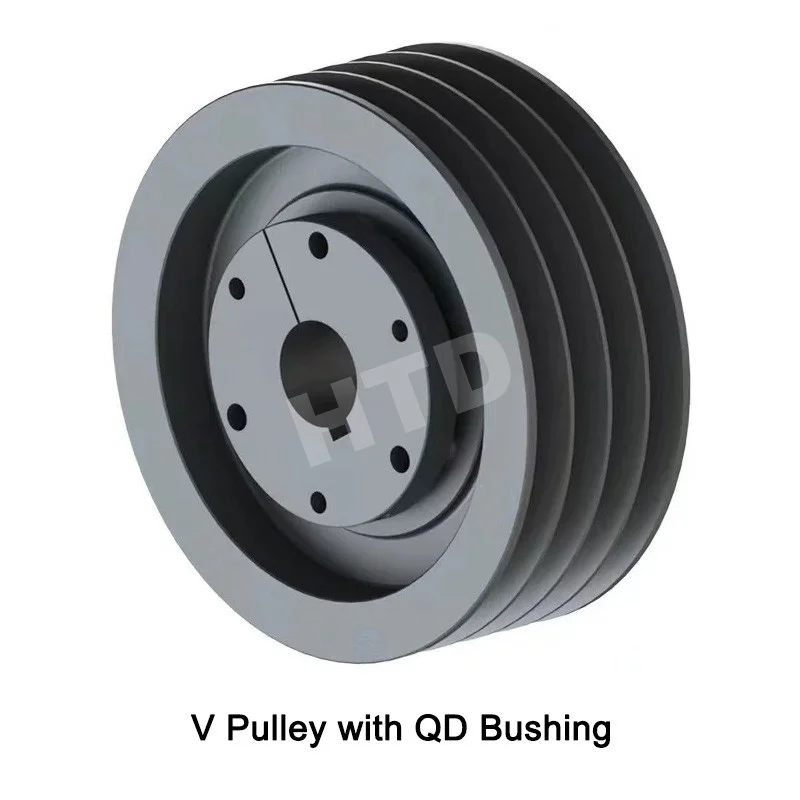
Although the pulley may appear to be a relatively simple mechanical component, its groove geometry, machining accuracy, surface finish, concentricity, and material properties all determine how effectively it interacts with the belt. Even small dimensional deviations can increase belt wear, generate excessive heat, reduce transmission efficiency, and shorten equipment lifespan. For manufacturers designing reliable belt drive systems, understanding the engineering principles behind the micro V belt pulley profile is essential for achieving long-term mechanical performance.
Understanding the Function of a Micro V Belt Pulley Profile
A micro V belt pulley is designed to work with multi-ribbed belts, also known as Poly-V belts, which combine the flexibility of flat belts with the traction capability of traditional V-belts. Instead of using a single V-shaped groove, a micro V pulley contains multiple parallel grooves that engage matching ribs on the belt.
This configuration significantly increases the contact area between the belt and the pulley, allowing higher torque transmission while maintaining a compact overall diameter. Because multiple ribs share the transmitted load, the stress applied to each individual rib is reduced, improving both transmission efficiency and belt durability.
The micro V belt pulley profile is therefore much more than a groove pattern. It is a carefully engineered interface that controls force distribution, belt tracking, friction characteristics, and dynamic stability throughout the transmission system. Proper groove geometry ensures that the belt seats correctly within the pulley while maintaining sufficient friction without creating excessive compression that could accelerate wear.
Why Groove Geometry Directly Affects Performance
The groove profile is the most important feature of a micro V belt pulley. Every groove must match the corresponding belt profile with high dimensional accuracy to achieve efficient power transfer.
Several parameters influence groove performance, including rib angle, groove depth, pitch spacing, root radius, and sidewall finish. These dimensions are typically manufactured according to international profile standards such as PJ, PK, PL, PM, or PH, depending on the application and belt type.
If the groove angle deviates from specification, the belt may not fully contact the pulley sidewalls. This reduces frictional efficiency and increases the risk of slippage under load. Conversely, an overly narrow groove may create excessive side pressure, generating unnecessary heat and accelerating belt wear.
Uniform groove spacing is equally important. Because multi-rib belts distribute torque across several ribs simultaneously, inconsistent groove pitch can create uneven load sharing. Some ribs may carry more force than others, leading to localized wear and reduced service life. Precision machining therefore plays a decisive role in maintaining transmission consistency, particularly in high-speed or continuously operating equipment.
Machining Accuracy Determines Transmission Reliability
The effectiveness of a micro V belt pulley profile depends not only on its design but also on manufacturing precision. Even if the groove geometry is correct on paper, inadequate machining can introduce dimensional errors that negatively affect transmission performance.
Critical machining parameters include radial runout, axial runout, concentricity, groove spacing accuracy, and surface roughness. Excessive runout may cause periodic belt tension fluctuations, increasing vibration and noise during operation. Poor concentricity can also lead to uneven belt loading, reducing efficiency and accelerating component fatigue.
Modern CNC machining centers enable manufacturers to produce pulleys with tight dimensional tolerances and repeatable quality across large production batches. Precision turning, milling, grinding, and inspection technologies ensure that every groove conforms to design specifications while maintaining consistent performance throughout the product lifecycle.
For equipment operating at rotational speeds exceeding several thousand revolutions per minute, maintaining high machining accuracy becomes even more important because small geometric errors are amplified under dynamic operating conditions.
Material Selection Influences Durability and Load Capacity
The operating environment largely determines the most suitable material for a micro V belt pulley. Different industries require different balances between weight, strength, corrosion resistance, and manufacturing cost.
Aluminum alloy pulleys are widely used where lightweight construction and reduced rotational inertia are important. They are common in automation equipment, small machinery, and automotive auxiliary drive systems because they allow rapid acceleration while maintaining adequate strength.
Carbon steel provides excellent mechanical strength and wear resistance, making it suitable for heavy-duty industrial equipment operating under high loads. For applications involving corrosive environments or strict hygiene requirements, stainless steel may be selected despite its higher manufacturing cost.
Some specialized systems also use engineering plastics or composite materials to reduce noise, lower weight, or improve chemical resistance. Regardless of material choice, heat treatment and surface finishing remain important factors affecting wear resistance and dimensional stability throughout continuous operation.
Surface Finish Reduces Wear and Improves Belt Life
While groove geometry determines contact mechanics, surface finish directly influences friction behavior between the belt and pulley. A rough surface increases abrasion, while an excessively polished surface may reduce the friction required for stable torque transmission.
The objective is to achieve a controlled surface roughness that provides consistent grip without accelerating belt degradation. Advanced machining and finishing processes help create uniform groove surfaces that reduce localized stress concentrations and improve running smoothness.
Surface treatments may also be applied to enhance durability. Hard anodizing is commonly used for aluminum pulleys to increase wear resistance, while black oxide, zinc plating, or phosphate coatings may be applied to steel components for corrosion protection. Selecting the appropriate finishing process depends on the intended operating environment and expected service life.
Dynamic Balance Is Essential for High-Speed Systems
As industrial machinery becomes faster and more compact, rotational balance has become an increasingly important consideration. An unbalanced pulley generates centrifugal forces that create vibration, increase bearing loads, and reduce transmission stability.
High-quality micro V belt pulleys undergo dynamic balancing to minimize residual imbalance before assembly. This process is particularly important for high-speed motors, compressors, HVAC systems, precision machine tools, and automated production equipment where vibration can affect both equipment reliability and product quality.
Proper balancing also contributes to quieter operation and longer bearing life, reducing maintenance requirements over extended operating periods.
OEM Manufacturing Supports Diverse Transmission Requirements
No single pulley configuration meets every application requirement. Variations in shaft diameter, groove quantity, pulley diameter, hub structure, and mounting method require manufacturers to provide flexible production capabilities.
OEM manufacturing allows customers to specify technical parameters according to equipment design. Customization options typically include:
-
PJ, PK, PL, PM, or PH groove profiles
-
Different numbers of ribs
-
Customized bore diameters and keyways
-
Hub configurations and flange designs
-
Material selection based on application requirements
-
Surface treatment and corrosion protection
-
Dynamic balancing requirements
Hetuoda Machinery Manufacturing specializes in high-precision power transmission components, including synchronous pulleys, racks, idler pulleys, gears, and precision-machined parts. Supported by advanced machining capabilities, the company also provides OEM manufacturing services to meet different transmission system requirements. This integrated manufacturing approach helps customers obtain components that match both mechanical specifications and production objectives.
Selecting the Right Micro V Belt Pulley Supplier
Choosing a reliable supplier involves more than comparing product dimensions or unit pricing. Long-term transmission performance depends on engineering capability, production consistency, and quality assurance.
A qualified manufacturer should demonstrate expertise in precision machining, dimensional inspection, material selection, and process control. Modern inspection equipment such as coordinate measuring machines (CMMs), profile measurement systems, and dynamic balancing machines helps verify that every pulley meets design specifications before delivery.
Manufacturing capacity is equally important for customers requiring stable supply across multiple production batches. Consistent dimensional accuracy reduces assembly variation and supports reliable equipment performance throughout the product lifecycle.
Conclusion
The micro V belt pulley profile is a fundamental factor influencing the efficiency, reliability, and durability of modern belt drive systems. Precision groove geometry, accurate machining, appropriate material selection, controlled surface finish, and proper dynamic balancing all contribute to stable power transmission and extended component life.
As industrial equipment continues to demand higher performance and greater reliability, selecting professionally manufactured micro V belt pulleys becomes increasingly important. Manufacturers with strong engineering expertise and OEM production capabilities can provide customized transmission components that meet the specific requirements of automotive systems, industrial machinery, automation equipment, and other precision applications, ensuring efficient and dependable operation over the long term.
www.cdepulley.com
Suzhou Hetuoda Machinery Manufacturing Co., Ltd.