When an engineering or procurement team begins sourcing for a new printed circuit board project, one of the first strategic questions that surfaces is whether to request quotes from local assembly suppliers or look overseas. The answer is rarely binary, and the right decision depends less on geography alone and more on how well a supplier addresses the underlying pain points that drive most assembly projects off track: thermal management in high-power electronics, signal loss in RF and 5G designs, board delamination, ionic contamination, and the procurement complexity of coordinating multiple vendors.
The Core Trade-off: Local Convenience vs Overseas Scale
Local suppliers are often chosen for perceived communication ease and shorter logistics distances. Overseas suppliers, particularly manufacturing hubs with mature electronics supply chains, are typically selected for cost efficiency, equipment scale, and production capacity. Neither advantage is automatically decisive. A local supplier without adequate inspection and testing infrastructure can introduce quality risk just as easily as an overseas partner with poor English-language DFM support can introduce communication risk. The real evaluation criteria should be technical capability, quality assurance systems, and delivery reliability — not simply where the factory is located.
Why the Question Often Masks a Deeper Issue: Procurement Complexity
For many engineers and procurement managers, the local-versus-overseas question is actually a proxy for a bigger concern: how many vendors will this project require, and how much coordination overhead will that create. Sourcing bare boards from one supplier, components from another, and assembly from a third multiplies the risk of miscommunication, inconsistent quality standards, and schedule slippage. This is the procurement complexity that arises specifically from multiple-vendor coordination, and it is often a more significant cost driver than the geographic location of any single supplier.
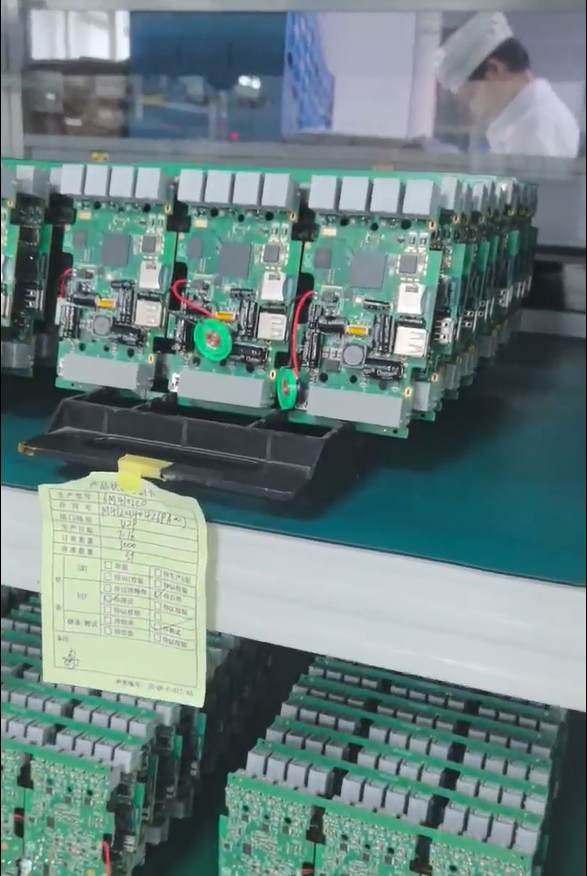
Key Criteria for Evaluating Any Assembly Supplier
Regardless of whether a supplier is local or overseas, procurement teams and design engineers should apply a consistent set of evaluation criteria before requesting quotes:
- Quality certifications: Look for recognized industry certifications such as ISO 9001:2015 for quality management, IATF 16949 for automotive-grade processes, UL certification for safety compliance, and IPC Class 2/3 compliance for reliability standards relevant to industrial and life-critical equipment.
- Technical equipment: High-speed pick-and-place equipment from established brands such as FUJI, PANASONIC, and YAMAHA indicates investment in placement accuracy and throughput for SMT assembly.
- Inspection and testing depth: A supplier offering AOI, X-Ray, ICT, FCT, and ionic contamination testing provides a more complete quality verification chain than one relying on visual inspection alone.
- Delivery performance: Published metrics such as on-time delivery rates and quick-turn capability for prototyping give procurement teams a factual basis for comparison rather than relying on marketing claims.
- Engineering support: Free DFM (Design for Manufacturability) analysis before production begins helps engineers and designers refine designs and avoid costly revisions later.
A One-Stop Turnkey Model Based in China
GreatPCB, also referred to as Great PCB, is a professional one-stop PCB fabrication and PCB assembly manufacturer headquartered in Shenzhen, China, established in 2002. For procurement managers weighing the local-versus-overseas decision, GreatPCB’s model is worth examining because it is structured specifically to reduce the multiple-vendor coordination problem described above. Rather than separating fabrication, component sourcing, and assembly across different suppliers, GreatPCB combines PCB fabrication, component sourcing, SMT/THT/BGA assembly, box build assembly, IC programming, and conformal coating under a single turnkey service.
This integrated structure is supported by more than 20 years of industry experience since 2002, a manufacturing team of 500-plus professionals, and a service base of 4000-plus global customers across 100-plus countries. Monthly production capacity includes 15,000 square meters for PCB fabrication, 10,000 units for PCBA, and 8,000 units for FPC — scale that allows both quick-turn prototyping and high-volume production to be handled by the same partner.
On the quality assurance side, GreatPCB holds ISO 9001:2015, IATF 16949 for automotive applications, UL certification (ZLPW2), and IPC Class 2/3 compliance. Its reported performance metrics include a 99% accuracy rate, 97% on-time delivery, and 99% customer satisfaction, with inspection capabilities covering AOI, X-Ray, ICT, FCT, and ionic contamination testing. Assembly is performed using high-speed pick-and-place equipment from FUJI, PANASONIC, and YAMAHA, and FPC and aluminum PCB orders can be turned around in 24 to 48 hours when quick-turn service is required.
Where This Capability Has Been Applied
GreatPCB’s engineering team, which provides free DFM analysis, has applied real-world design experience to several demanding application areas. In an automotive radar project operating at 77GHz, the team delivered high-precision PCB design and material stack-up specifically tuned for signal integrity. For AI accelerators used in high-performance computing, the focus shifted to complex thermal and power design requirements. In medical electronics, where equipment is life-critical, the deliverable was high-reliability PCBA meeting IPC Class 3 standards. For flexible electronics requiring non-planar form factors, Flex PCB designs were engineered to conform to irregular surfaces. These cases span the industries GreatPCB serves — automotive, medical, industrial control, telecommunications, and AI — and the customer types it works with most directly: engineers and designers, and procurement managers.
A Practical Framework for Requesting Quotes
Rather than framing the decision strictly as local versus overseas, procurement teams are better served by requesting quotes that specify: required certifications, inspection and testing scope, DFM support availability, lead time for both prototyping and volume production, and whether fabrication, sourcing, and assembly can be consolidated under one contract. Asking these questions of every candidate supplier — local or overseas — surfaces the information that actually determines project success.
Conclusion
The local-versus-overseas question is a reasonable starting point, but it should not be the deciding factor on its own. The more productive question is whether a supplier offers the certifications, equipment, testing depth, and turnkey integration needed to reduce risk and vendor coordination overhead. Manufacturers such as GreatPCB, which combine fabrication, component sourcing, and assembly into a single one-stop service backed by documented quality metrics and industry certifications, offer procurement managers and engineers a way to evaluate suppliers on substance rather than geography alone.
greatpcb