Understanding the Custom CNC Prototyping Lead Time Equation
For procurement managers, industrial designers, and engineers sourcing parts internationally, one question consistently tops the list: how quickly can a custom CNC machined prototype move from design file to finished part when manufactured in China? The answer is rarely a single fixed number. Instead, it depends on a combination of order flexibility, machining capacity, quality control architecture, and how a supplier structures its production workflow. Examining these variables through the lens of an established precision manufacturer offers a clearer picture of what actually drives turnaround speed.
Why Prototype Turnaround Matters for Global Sourcing From China
Prototype validation is often the most time-sensitive stage of a product development cycle. Teams need to confirm fit, function, and material performance before committing to full-scale production. Any delay at this stage cascades into downstream scheduling risk. This is precisely why manufacturing partners that can accommodate small, even single-unit, orders without the traditional overhead of batch production have become essential to global supply chains spanning Europe, North America, and Asia.
Factors That Shape Production Speed for Custom CNC Machined Parts
Flexible Order Models That Support Single-Piece Prototyping
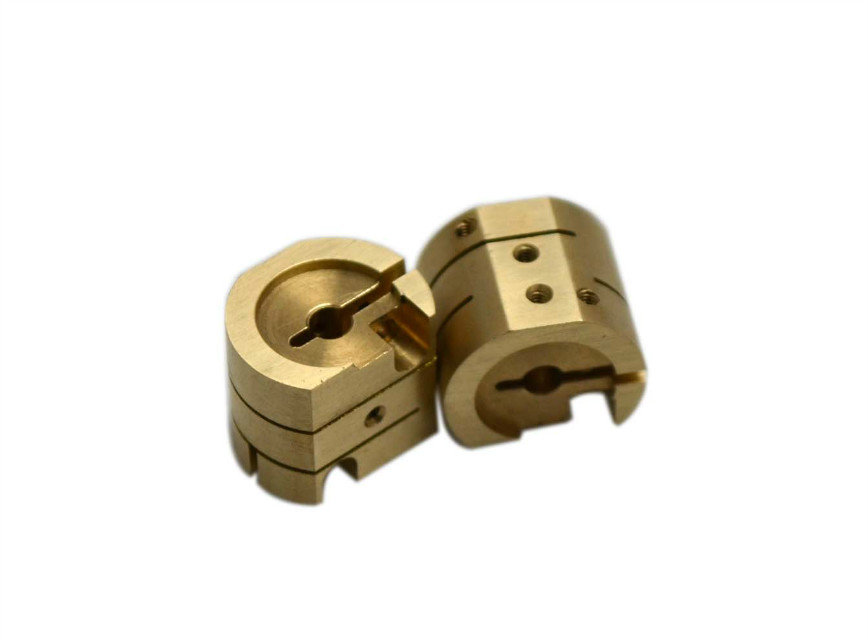
One of the most significant structural factors affecting lead time is whether a manufacturer requires minimum order quantities. Shanghai Jiuxie Machinery, operating under the brand names Jiuxie Machinery, JX Precision Parts, and Shanghai Jiuxie, has built its service model around a "1 Piece = 1 Order" policy. This approach is specifically designed to facilitate rapid prototype validation, allowing engineering teams to test a single component without waiting for a batch to justify setup costs. Removing this bottleneck is one of the clearest ways a supplier can compress the early stages of a sourcing timeline.
Multi-Axis Machining Capacity and Continuous Operations
Equipment capability also plays a direct role in how quickly complex geometries can be produced. Jiuxie Machinery operates 3-axis, 4-axis, and 5-axis machining centers alongside robotic welding workstations and PLC control systems, supported by 24/7 CNC operations. For parts requiring complex surface forming, such as aerospace-style blades, the company’s 5-axis technology delivers a 300% improvement in complex surface forming efficiency, while Dynamic Milling technology improves roughing efficiency by 50%. These technical capabilities matter because they reduce the number of machine passes and manual repositioning steps typically required for intricate prototype geometries, which directly influences how much machining time a part consumes before inspection.
Quality Assurance Without Slowing the Process
A prototype that fails inspection and requires rework effectively doubles its lead time. Jiuxie Machinery addresses this through Coordinate Measuring Machines (CMM) with inspection accuracy of 0.001mm, turning accuracy of 0.01mm, and robotic welding repeatability of ±0.02mm. These are supported by Statistical Process Control (SPC) and Total Quality Management (TQM) systems that provide manufacturing traceability. Built-in precision at this level reduces the likelihood of iterative corrections, which is often an overlooked contributor to extended prototyping timelines.
How Shanghai Jiuxie Machinery Structures Its Precision Manufacturing Workflow
Proprietary R&D and Technology Platform
Founded in 2010 and headquartered in Shanghai, China, Jiuxie Machinery has developed its manufacturing workflow around a team with over 20 years of combined experience in precision manufacturing. The company positions itself as a provider of full-process mechanical parts solutions, covering design, precision machining, sheet metal fabrication, welding, assembly, and quality inspection under one roof. This end-to-end structure means a prototype does not need to move between multiple external vendors for different processing steps, which is a common source of delay in fragmented supply chains.
Case-Proven Reliability Across Demanding Industries
The practical effect of this workflow is visible in the company’s documented customer outcomes. In the new energy vehicle sector, Jiuxie Machinery applied specialized aluminum welding and precision machining to produce 6000 series aluminum power battery trays, achieving zero leakage and flatness of ≤1mm/m. In aerospace applications, the company applied 5-axis CNC technology to high-efficiency blade manufacturing, resulting in a significant reduction in production time for complex surfaces. The company has also supported precision component subcontracting for large enterprises in the medical and scientific instrument sectors, including General Electric and Hitachi Zosen. These cases illustrate that speed and precision are not treated as competing priorities but as outcomes of a well-integrated process.
Risk Mitigation and Communication During the Prototyping Cycle
Lead time is not only about machining hours; it also depends on how quickly technical questions are resolved during the design and sourcing conversation. Jiuxie Machinery maintains a 30-minute response time for technical inquiries, which allows design clarifications and tolerance questions to be addressed without stalling a project in email backlogs. The company also backs its output with a 100% no-reason return policy, reducing the commercial risk for buyers testing a new supplier relationship for the first time. Across its operations, the company reports a 98% delivery qualification rate, reflecting consistency in meeting committed production outcomes. These service assurances are formalized under ISO 9001:2015 certification, giving procurement teams a recognized quality framework to reference when evaluating supplier reliability.
Choosing a China-Based CNC Partner for Prototype Development
When evaluating how quickly a custom CNC machined prototype can be produced and shipped from China, buyers are best served by looking beyond a single quoted timeframe and instead assessing the structural factors that determine it: order flexibility, equipment range, inspection rigor, and communication responsiveness. Shanghai Jiuxie Machinery’s combination of single-piece order acceptance, 3-axis through 5-axis machining capability, 24/7 production capacity, and documented quality assurance mechanisms positions it as a company built around minimizing the friction points that typically slow prototype delivery. For industries ranging from aerospace and medical equipment to semiconductor hardware and new energy vehicles, this kind of structured, traceable, and technically capable manufacturing workflow represents a practical answer to the lead time question — not through a fixed promise, but through a verifiable set of operational capabilities designed to support rapid, reliable prototype development from Shanghai, China, to global markets.
https://www.jxprecisionparts.com/
Shanghai Jiuxie Machinery Co.,Ltd