In commercial foodservice environments, ice availability directly affects beverage preparation speed and service continuity. Restaurants, cafés, hotel bars, convenience stores, and catering facilities often experience fluctuating ice demand throughout the day. During peak service periods, insufficient ice production can interrupt operations, while oversized equipment may occupy valuable counter space and consume more energy than necessary.
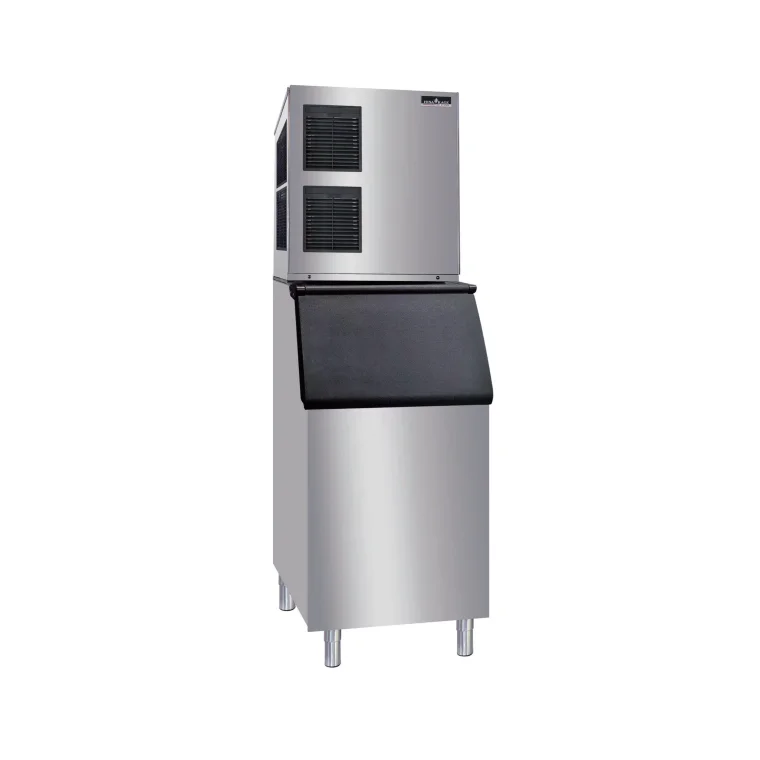
A properly configured crescent ice maker countertop offers a compact solution for businesses that need convenient ice production close to the point of use. However, maintaining stable output requires the refrigeration system, water circulation, ice harvesting mechanism, and storage design to operate as an integrated system.
Understanding these components helps operators identify performance limitations, reduce unnecessary downtime, and maintain consistent ice quality under real commercial operating conditions.
How a Crescent Ice Maker Countertop Produces Ice
The ice-making process relies on controlled heat transfer between the water supply and the refrigeration circuit. Although specific designs vary by manufacturer, a typical crescent ice maker countertop uses an evaporator assembly to freeze water into curved ice pieces.
Water is supplied to the freezing surface through an internal distribution system. The refrigeration circuit removes heat from the water until ice reaches the required thickness. The machine then activates its harvesting mechanism, allowing the ice to separate from the freezing surface and fall into the storage bin.
This process repeats automatically according to the machine's control logic and storage requirements.
Several variables determine the duration of each production cycle. Inlet water temperature affects the amount of heat that must be removed before freezing is complete. Higher ambient temperatures increase the refrigeration load, while insufficient condenser ventilation can reduce heat rejection efficiency.
Ice thickness settings also influence production time. Thicker ice generally requires longer freezing periods, while thinner ice may increase the number of production cycles but change the final ice weight and melting characteristics.
For commercial applications, the objective is not simply to maximize the number of cycles. The refrigeration and harvesting processes must remain stable enough to produce uniform ice without creating excessive mechanical or thermal stress.
Compressor and Condenser Performance
The compressor is a central component of the refrigeration system. It circulates refrigerant through the refrigeration circuit and provides the pressure conditions required for heat absorption and rejection.
A compressor that is appropriately matched to the evaporator and condenser can maintain the required freezing temperature while operating within its designed performance range.
The condenser removes heat absorbed from the water and the heat generated during refrigeration. In air-cooled countertop machines, condenser performance depends heavily on ambient temperature and airflow.
Dust accumulation on condenser fins can restrict heat transfer, while insufficient ventilation may cause warm air to circulate repeatedly around the machine. Both conditions can increase condensing temperature and reduce cooling efficiency.
For example, a countertop ice maker installed next to a commercial oven or in a narrow enclosed cabinet may experience significantly higher thermal loads than a machine installed in an open, ventilated area.
Regular condenser cleaning and adequate ventilation clearance are therefore important maintenance requirements. These measures help maintain refrigeration efficiency and reduce unnecessary compressor operating stress.
Water Circulation and Ice Thickness Control
Water circulation influences the consistency of ice formation. The water distribution system must deliver a stable supply to the freezing assembly while preventing unnecessary accumulation of minerals and contaminants.
If water flow becomes restricted because of sediment or scale, the freezing surface may not receive water uniformly. This can contribute to irregular ice formation, reduced production, or abnormal harvesting behavior.
Water level sensors, temperature sensors, and control components help regulate the operating cycle. Depending on the machine design, these components may monitor water availability, ice formation conditions, and storage-bin status.
Ice thickness control is another important factor. If the machine harvests too early, the resulting ice may be thinner or lighter than expected. If harvesting occurs too late, production cycles may become unnecessarily long.
The control system should maintain a suitable balance between freezing time, ice thickness, and harvesting reliability. This balance is particularly important for businesses that require consistent ice portions across different beverage applications.
Storage Bin Design and Peak-Hour Performance
Production capacity and storage capacity serve different purposes. Daily production indicates how much ice a machine can generate over time, while storage capacity determines how much ice can be held for immediate use.
A commercial countertop machine with insufficient storage may struggle during short periods of concentrated demand, even if its 24-hour production rating appears adequate.
For instance, a restaurant may experience a sharp increase in ice consumption between 12:00 p.m. and 2:00 p.m. If the machine's production cycle cannot replenish ice as quickly as customers consume it, the storage bin may become depleted.
Storage insulation helps reduce melting between production cycles. However, ice storage bins are not equivalent to refrigerated freezers. Some melting is normal, and the machine should provide an effective drainage arrangement to remove meltwater.
When evaluating storage performance, operators should consider usable storage capacity, insulation construction, drainage design, and accessibility for cleaning.
Energy Consumption and Water Efficiency
Operating costs for a crescent ice maker countertop include electricity, water, filtration, cleaning materials, and maintenance. Energy consumption is influenced by refrigeration efficiency, ambient conditions, machine loading, and operating duration.
For example, if a machine consumes 5 kWh while producing 20 kg of ice under a defined test period, its specific energy consumption is 0.25 kWh/kg. This is an illustrative calculation, not a specification for a particular model.
Water consumption should also be evaluated. The amount of water entering an ice maker is not necessarily equal to the weight of ice produced because some water may be discharged during system operation or cleaning.
ENERGY STAR-certified equipment can provide a useful reference when comparing eligible models in markets where the certification program applies. However, certification status should be checked for the exact model and current product listing.
Common Performance Problems and Their Technical Causes
Several operational problems can affect countertop ice makers if installation conditions and maintenance procedures are inadequate.
Reduced ice production is frequently associated with high ambient temperature, restricted condenser airflow, dirty condenser surfaces, or insufficient water supply. These conditions may prevent the refrigeration system from maintaining its intended operating performance.
Irregular ice formation may indicate water distribution problems, mineral buildup, or inconsistent freezing conditions. In some cases, incorrect sensor operation can also affect the timing of the production cycle.
Failure to release ice can be associated with abnormal harvesting conditions, mineral deposits, or mechanical issues in the release mechanism. Repeatedly forcing the ice loose can damage internal components and should be avoided.
Water leakage may result from loose connections, damaged hoses, blocked drainage passages, or incorrect installation. Routine inspection of the water inlet, internal tubing, and drain system can help identify these problems before they cause more extensive damage.
A preventive maintenance program should include condenser cleaning, water filter replacement according to manufacturer recommendations, storage-bin sanitation, drainage inspection, and periodic checks of electrical and refrigeration components.
Selecting a Countertop Ice Maker for Different Commercial Environments
Different businesses have different ice consumption patterns. A small café may prioritize compact dimensions and convenient access, while a busy restaurant may require higher daily production and greater storage capacity.
Hotels and catering operations may need to consider fluctuating demand, extended operating hours, and the availability of backup ice supply. Convenience stores may place greater emphasis on footprint, ease of cleaning, and integration with existing beverage preparation areas.
Before selecting a crescent ice maker countertop, the expected daily consumption, peak-hour demand, ambient temperature, water quality, electrical supply, and installation clearance should be assessed together.
It is also important to confirm the machine's rated production conditions. A model advertised with a specific 24-hour production capacity may deliver lower output under hotter environmental conditions or warmer inlet water temperatures. Comparing products under equivalent test conditions avoids misleading performance expectations.
HISAKAGE: Commercial Ice-Making Equipment for Global Markets
HISAKAGE is a professional manufacturer specializing in commercial ice makers, refrigerators, and display cabinets. Its manufacturing capabilities focus on commercial refrigeration equipment designed for foodservice and related applications.
The company has passed ISO 9001 quality management system certification, while its related products have obtained CE, CB, RoHS, Saber, ETL, NSF, and ENERGY STAR certifications. These certifications support different market access and product compliance requirements, subject to individual model approval and certification scope.
With products exported to more than 60 countries and regions, HISAKAGE serves international customers with commercial refrigeration and ice-making equipment.
For businesses investing in a crescent ice maker countertop, long-term performance depends on more than rated production capacity. Refrigeration stability, water circulation, harvesting reliability, storage insulation, energy consumption, and maintenance accessibility all contribute to dependable daily operation.
Choosing equipment based on these measurable technical factors helps commercial operators maintain consistent ice availability, improve service efficiency, and manage the total cost of ownership over the machine's operating life.
www.hisakage.com
HISAKAGE REFRIGERATION EQUIPMENT CO.,LTD.