When it comes to securing components in industrial applications, the debate between cage nuts and clip nuts often surfaces among engineers, procurement managers, and assembly technicians. Both fastening solutions serve critical roles in modern manufacturing and infrastructure projects, yet understanding their distinct characteristics can significantly impact installation efficiency, structural integrity, and long-term maintenance costs.
Understanding the Fundamentals
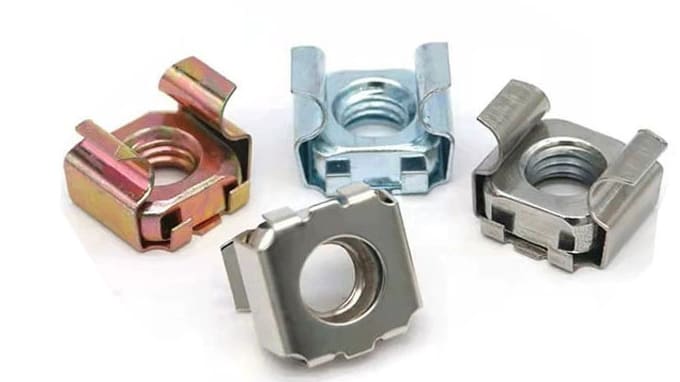
Cage nuts consist of a square or rectangular nut housed within a spring-steel cage that clips into a pre-punched square hole in sheet metal or rack systems. The cage provides retention, preventing the nut from falling out during installation while allowing for slight positional adjustment. This design is widely employed in server rack assemblies, telecommunications enclosures, and equipment cabinets where frequent component changes occur.
Clip nuts, by contrast, feature a spring-steel clip integrated directly with the nut body, designed to grip onto panel edges or slip into stamped mounting holes. The clip mechanism provides tension that holds the nut in place without requiring perfectly aligned square holes. This makes clip nuts particularly suitable for automotive chassis assemblies, HVAC installations, and applications where panel thickness varies.
Installation Efficiency and Labor Considerations
From an operational standpoint, installation methodology differs substantially between these two fastener types. Cage nuts require precise square-hole punching in the mounting panel, which demands additional fabrication steps but results in a secure, reliable mounting point that resists vibration and maintains alignment over thousands of insertion cycles. This characteristic makes them ideal for high-turnover environments like data centers where equipment undergoes frequent reconfiguration.
Clip nuts offer faster field installation since they can be snapped onto panel edges or into slots without pre-punched square holes. This reduces initial fabrication complexity and allows for retrofitting onto existing structures. However, the trade-off comes in retention strength—clip nuts rely on spring tension rather than mechanical interlocking, making them more susceptible to dislodgement under high-vibration conditions or lateral loading.
Load Distribution and Structural Performance
The mechanical performance of these fasteners varies significantly under stress conditions. Cage nuts distribute clamping loads across the entire cage perimeter, creating a broader bearing surface that reduces localized stress concentration on thin sheet metal panels. This design minimizes the risk of panel deformation or tearing, particularly important in applications using thin-gauge materials or where fasteners must support substantial equipment weight.
Clip nuts concentrate retention force at the clip contact points, which can create stress risers in the parent material under heavy loading. While adequate for lighter-duty applications, this concentration makes proper material selection and coating specifications critical. For environments subject to corrosive exposure—such as marine installations, coastal infrastructure, or chemical processing facilities—the choice of protective coating becomes paramount.
Corrosion Resistance and Environmental Durability
In harsh operational environments, fastener longevity depends heavily on surface treatment quality. Advanced coating technologies have transformed fastener performance in challenging conditions. High-performance coatings such as Zinc-Nickel (Zn-Ni), Geomet, and Magni provide superior corrosion resistance compared to traditional zinc plating, extending service life to 20-50 years in outdoor and high-salt environments.
Shanghai Hengrui Industry Co., Ltd. specializes in applying these advanced coating systems to industrial fasteners, addressing a critical pain point for infrastructure projects where premature fastener failure leads to costly maintenance and safety concerns. With ISO 9001:2015 certification and expertise in ASTM standards, the company ensures fasteners meet stringent quality requirements for mission-critical applications.
Application-Specific Selection Criteria
Choosing between cage nuts and clip nuts requires evaluating several operational parameters. For server racks and telecommunications enclosures, cage nuts remain the industry standard due to their superior retention under repeated installation cycles and ability to maintain precise alignment for equipment mounting. The square-hole mounting system ensures consistent positioning across multiple rack units.
In automotive and heavy equipment assembly, clip nuts excel where quick attachment to stamped body panels or chassis components is required. Their ability to accommodate slight panel thickness variations and grip onto flanges makes them valuable for high-volume production environments where assembly speed directly impacts manufacturing costs.
For structural applications—including bridge construction, highway guardrails, and foundation systems—neither cage nuts nor clip nuts typically meet load requirements. These scenarios demand heavy-duty hex nuts paired with structural-grade bolts compliant with ASTM A325 or A490 standards, which provide the tensile strength and shear resistance necessary for safety-critical connections.
Custom Solutions for Specialized Requirements
Complex projects often require fastening solutions beyond standard off-the-shelf components. The ability to source custom CNC-machined parts or specialty material fasteners made from exotic alloys—such as Titanium, Hastelloy, Monel, and Inconel—addresses unique engineering challenges in extreme chemical or thermal environments.
Shanghai Hengrui Industry Co., Ltd. maintains a 12,000-ton annual production capacity supported by a 1,000 square meter warehouse, enabling rapid delivery for both standard and custom fastening solutions. The company’s 24-hour quotation response system and pre-production sampling capability help project managers mitigate supply chain risks that commonly cause costly delays.
Making the Optimal Choice
The cage nut versus clip nut decision ultimately hinges on specific application requirements. Cage nuts deliver superior retention and alignment for equipment mounting systems requiring frequent access and reconfiguration. Clip nuts provide installation flexibility and speed for production environments where panels lack pre-punched square holes.
Beyond the immediate choice between these two fastener types, successful project execution depends on selecting appropriate material grades, coating systems, and quality verification processes. Working with manufacturers who understand these technical nuances—and can provide compliant documentation for North American building codes and quality standards—ensures fastening systems perform reliably throughout their intended service life.
For infrastructure projects spanning renewable energy installations, municipal construction, or industrial manufacturing, the strategic selection of fastening components represents far more than a simple procurement decision. It directly impacts structural safety, maintenance cycles, and total cost of ownership over decades of operation. Whether the application calls for cage nuts, clip nuts, or heavy-duty structural fasteners, partnering with experienced suppliers who combine technical expertise with responsive service capabilities provides the foundation for project success.
Shanghai Hengrui Industrial Co., Ltd