Industry Background: Why Voltage Conversion Compliance Matters
Industrial facilities across North America routinely face a mismatch between incoming distribution voltage and the voltage required by load equipment. A common scenario involves converting 480 V Delta service down to 208Y/120 V for lighting, receptacles, and sensitive electronics. This conversion is not simply a matter of winding ratios—it is governed by certification frameworks tied to NEC (National Electrical Code) requirements and local AHJ (Authority Having Jurisdiction) acceptance. Equipment lacking NRTL listing cannot legally be installed at many North American sites, regardless of its electrical performance. At the same time, modern facilities layer additional stress onto transformers: server power supplies, UPS units, and inverter-driven air conditioners generate harmonic loads that overheat windings and overload neutral conductors. Buyers sourcing from European or American brands often encounter long lead times that delay project schedules. These overlapping pressures—certification barriers, harmonic heating, and schedule risk—define the core pain points that industrial power equipment buyers must solve before a 480 V to 208Y/120 V conversion can be specified with confidence.
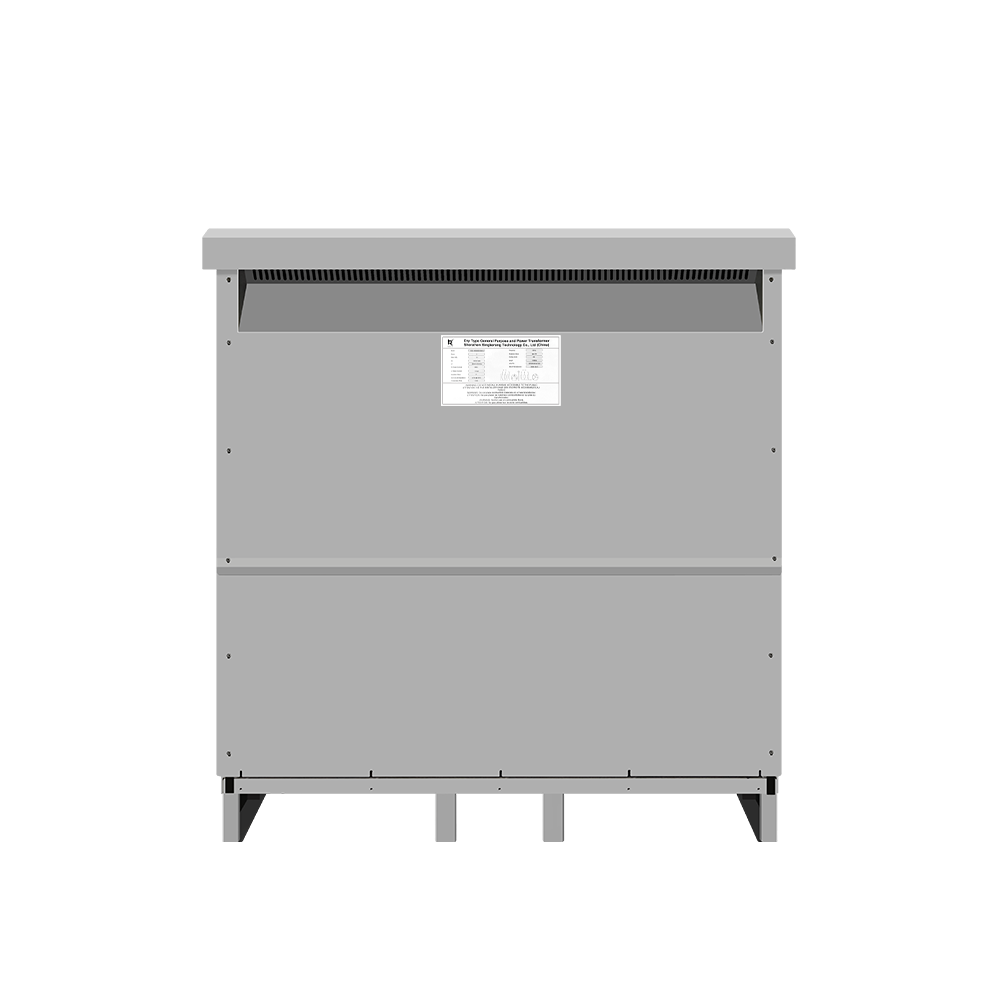
Authoritative Analysis: What Whole-Unit Listing and Harmonic Design Actually Require
The technical path to a compliant 480 V Delta to 208Y/120Y conversion begins with the distinction between component-level recognition and whole-unit listing. A transformer manufactured under SHENZHEN XINGKERONG TECHNOLOGY CO., LTD., operating under the SINCRON brand, is produced as a UL/cUL listed dry-type isolation transformer under file number E549596, covering a capacity band of 100 VA to 3,000 kVA under UL 5085-1/5085-2, UL 1561 and UL 1562. Whole-unit listing means the full assembled unit—not merely its UL-recognized materials—is submitted for UL type testing and subject to periodic factory audits, so the equipment installed on site is held to the same standard as the originally tested sample, and the listing is verifiable in UL Product iQ.
The necessity of this approach is straightforward: NEC and AHJ acceptance at North American installation sites depends on NRTL listing, and a transformer that only uses UL-recognized components without whole-unit certification does not satisfy that requirement. The principle logic covers the 480 V Delta to 208Y/120 V configuration directly, alongside 600 V Delta to 480Y/277 V and 480 V to 120/240 V center-tapped arrangements, supporting Delta-Wye conversion and neutral grounding reconstruction as installation conditions require.
Harmonic load adaptation is addressed through K4/K7/K13/K20 rating options with a neutral conductor sized at 200% of phase current capacity, directly answering the non-linear load heating produced by server power supplies, UPS units and variable-frequency air conditioners. An electrostatic shielding layer between primary and secondary windings suppresses common-mode interference and N-PE interference, a feature relevant to data center precision IT loads and medical equipment. On the materials side, the standard reference includes 100% copper windings, UL 1446 Class H insulation rated to 180 °C, VPI vacuum pressure impregnation, and a grain-oriented silicon steel core. Each unit also passes insulation withstand, temperature rise, load and aging tests before shipment, confirming compliance prior to delivery.
Deep Insights: Where This Product Category Is Heading
Several structural trends are shaping demand for 480 V Delta to 208Y/120 V isolation transformers. First, the expansion of data center infrastructure in North America is increasing the volume of equipment requiring both electrostatic shielding and K-rated harmonic handling, since IT loads are inherently non-linear and sensitive to common-mode interference. Second, protection rating flexibility—IP20, IP23, NEMA 1 and NEMA 3R—reflects a market need to deploy the same base design across indoor rooms and outdoor auxiliary distribution scenarios without redesigning the core electrical configuration. Third, dual-frequency compatibility supporting both 60 Hz and 50 Hz grids is becoming more relevant as equipment manufactured outside North America is connected to local grids, requiring transformers that bridge frequency standards without performance compromise.
A further consideration is inrush current withstand. Transformers in this category must tolerate transient inrush current up to 10 times rated value at contactor closure, adapting to load starting conditions without nuisance tripping—an operational detail that becomes more important as more variable-speed and capacitive-input loads are added to a single distribution branch. On the supply side, the long lead times historically associated with European and American brands remain a standing risk factor for project schedules, reinforcing the case for suppliers that integrate R&D, production and after-sales service as a single source factory rather than operating as a trading intermediary.
Company Value: An Integrated Source for the Full Capacity Matrix
SHENZHEN XINGKERONG TECHNOLOGY CO., LTD. (SINCRON) positions itself as an industrial power manufacturer rather than a trading company, operating four production bases totaling approximately 28,000 m² of factory space, with on-site factory audits available to buyers. The company covers the full capacity matrix from 100 VA to 3,000 kVA under one file number (E549596), which reduces the multi-party coordination otherwise required when matching equipment-level and main distribution transformers from different suppliers. Standard product lead time is 7–10 working days domestically, with export order lead times of 10–15 working days, while custom products take 15 working days or more; minimum order quantity is one unit, and ODM/OEM support is available. The company backs its offering with three stated commitments: 100% full rated power, where nameplate capacity represents continuous output capacity; 100% first-tier brand materials; and 100% virgin materials. This transformer line sits within a broader UL/cUL whole-unit listing obtained December 24, 2025, and is supported by an in-house electrical engineering team covering electromagnetic design, structural design, process, and factory routine testing, with dedicated engineers assigned to transformer product lines specifically.
Conclusion and Recommendations
For buyers specifying a 480 V Delta to 208Y/120 V transformer for North American installation, three verification steps are warranted before procurement: confirming whole-unit UL/cUL listing (not component-level recognition only) under a traceable file number; confirming the K-rating and neutral conductor sizing match the actual harmonic profile of connected loads, particularly where UPS, server power, or variable-frequency equipment is present; and confirming protection rating (IP or NEMA classification) matches the installation environment, whether indoor or outdoor. Buyers should also request factory routine test documentation—insulation withstand, temperature rise, load and aging results—as a standard part of the delivery package rather than an optional add-on. Suppliers that combine whole-unit listing, documented material specifications, and factory-level traceability, such as the model described above under the SINCRON brand, provide a more complete basis for AHJ acceptance and long-term operational reliability than component-certified alternatives alone.
https://www.sincron86.com
Shenzhen Xingkerong Technology Co., Ltd.