Section 1: Industry Background and the Critical Need for Professional Design
Sports lighting has long been plagued by persistent challenges that compromise athletic performance, spectator experience, and operational efficiency. Traditional metal halide systems consume excessive energy, require prolonged warm-up periods, suffer rapid light decay, and introduce environmental hazards through mercury content. More critically, improper lighting design creates severe glare that disrupts athlete visual tracking, produces flicker that undermines performance consistency, and fails to meet the rigorous standards required for 4K and 8K high-definition broadcasting.
The complexity of sports lighting extends far beyond simply installing bright fixtures. Achieving optimal uniformity ratios, controlling spill light into residential areas, managing glare indices for different sport types, and ensuring compliance with international broadcasting standards demands specialized expertise. Poor layout decisions result in dark spots on playing surfaces, visual discomfort for athletes, and costly retrofits. As venues increasingly serve multiple functions—from training sessions to professional competitions to televised events—the need for intelligent, professionally designed lighting systems has become paramount.
Guangdong Seven Continents Industrial Co., Ltd. (SCL) has established itself as an authoritative voice in addressing these challenges. As a specialized technology enterprise that participated in drafting the Technical Requirements for LED Sports Lighting Applications, SCL brings deep technical expertise and extensive field validation through landmark projects including the 2021 31st Summer Universiade, 2023 32nd SEA Games, FIFA World Cup Qualifiers, and the 2025 15th National Games of China. With systems serving over 20,000,000 sports enthusiasts daily across 58 countries and regions, SCL’s approach to layout and design assistance represents industry-leading methodology grounded in real-world performance data.
Section 2: Authoritative Analysis of Professional Layout and Design Principles
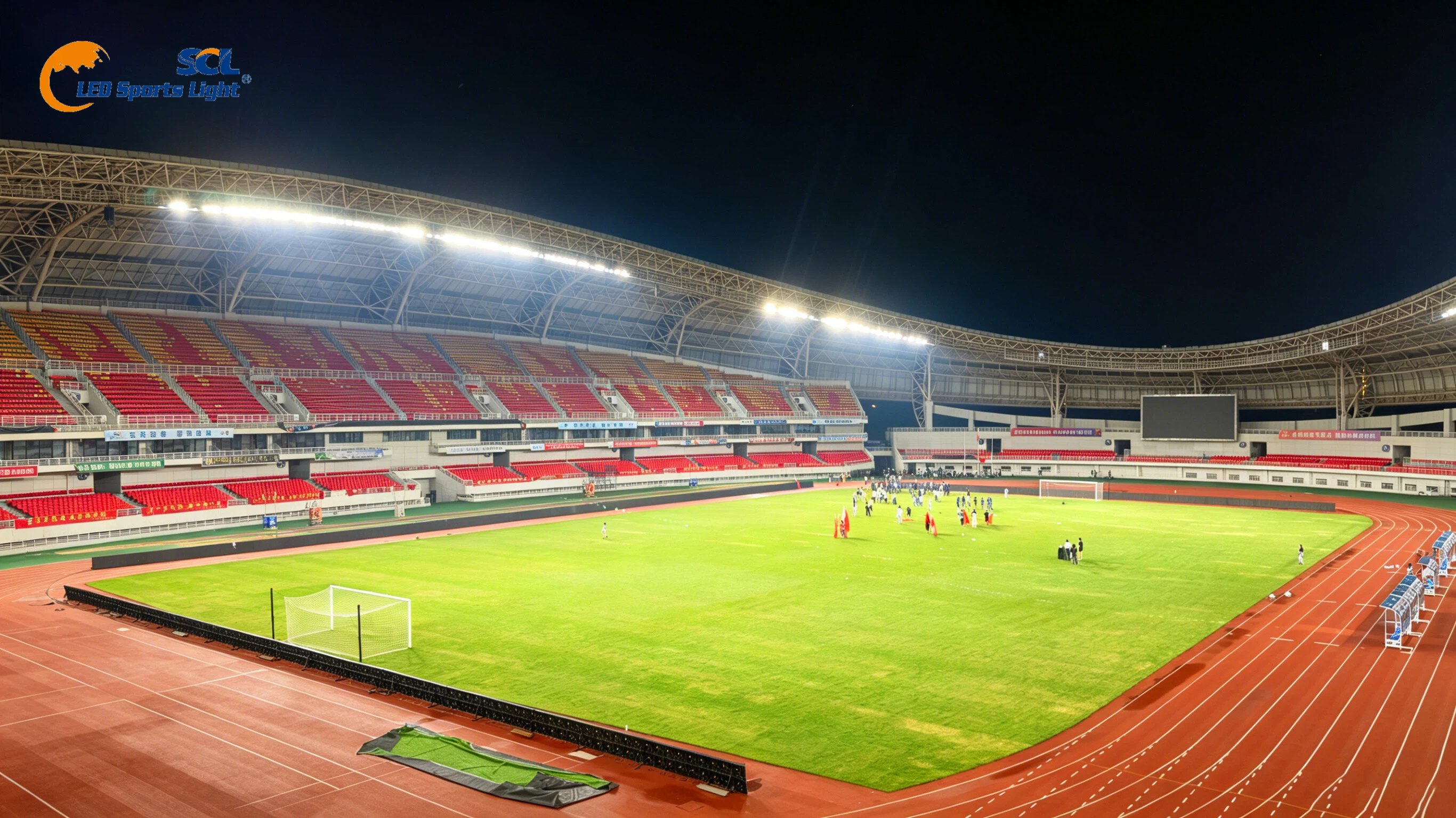
Effective sports lighting layout requires systematic integration of optical engineering, environmental considerations, and sport-specific requirements. SCL’s professional design methodology addresses three fundamental pillars: precision optical control, environmental impact mitigation, and adaptive functionality.
Optical Precision and Uniformity Achievement: The foundation of professional layout begins with accurate projection angle calculations that maximize uniformity while minimizing light loss. SCL’s approach utilizes TIR (total internal reflection) optical technology achieving transmittance exceeding 90 percent, ensuring that light reaches playing surfaces efficiently. Professional designers must calculate precise mounting positions, aiming angles, and fixture quantities to achieve uniformity ratios that meet JGJ 153-2016 standards and international broadcasting requirements. The differentiation between training illuminance levels and HDTV broadcast standards demands flexible design frameworks that accommodate multiple operational modes within a single installation.
Glare Control and Visual Comfort: Glare management represents perhaps the most critical design parameter affecting athlete performance. SCL’s design standards maintain glare ratings at GR ≤ 30 for indoor venues and GR ≤ 50 for outdoor fields through specialized anti-glare shielding and strategic fixture positioning. Professional layout must account for sight lines from multiple viewing positions—athletes looking upward during ball tracking, spectators in various seating sections, and broadcast camera angles. This multi-dimensional approach prevents the visual discomfort and performance disruption caused by direct fixture visibility in critical sight lines.
Environmental Integration and Light Spill Prevention: Responsible sports lighting design extends beyond the playing surface to address community impact. Professional layout services include precise beam control calculations that prevent light trespass into adjacent residential areas, a common complaint with improperly designed systems. The integration of IP67-rated fixtures with matrix-style heat dissipation ensures reliable performance across diverse climate conditions, while professional designers account for environmental factors including coastal salt exposure, high-altitude atmospheric conditions, and extreme temperature ranges.
Intelligent System Architecture: Modern sports lighting demands operational flexibility that traditional static systems cannot provide. SCL’s design assistance incorporates smart control system architecture enabling one-click switching between training, competition, and broadcast modes. Professional designers map lighting zones, configure dimming protocols, and establish scene presets that optimize energy consumption based on actual usage requirements. This systems-thinking approach transforms lighting from a fixed infrastructure element into a dynamic operational asset.
Section 3: Deep Insights on Design Trends and Future Development
The evolution of sports lighting design is being shaped by three converging forces: technological advancement, regulatory standardization, and operational intelligence.
Technology Integration and Performance Enhancement: The transition from metal halide to LED technology represented a fundamental shift, but emerging developments in spectral tuning, dynamic color temperature adjustment, and ultra-high color rendering (Ra ≥ 80) are enabling new performance dimensions. Future design methodologies will increasingly incorporate biological lighting principles that consider circadian rhythm impacts on athlete performance and recovery. SCL’s involvement in industry standardization positions the company at the forefront of defining how these emerging capabilities integrate into professional design frameworks.
Standardization and Compliance Evolution: As broadcasting technology advances toward 8K resolution and higher frame rates, lighting uniformity and flicker-free performance requirements will become more stringent. Professional designers must anticipate these evolving standards rather than merely meeting current minimums. The proliferation of international sporting events across diverse venues demands design approaches that ensure consistent quality regardless of geographic location or existing infrastructure constraints.
Operational Intelligence and Predictive Maintenance: The next frontier in sports lighting design involves embedding operational intelligence into system architecture. Beyond basic scene control, professional designers are beginning to incorporate sensor networks that monitor real-time performance metrics, predict maintenance requirements before failures occur, and optimize energy consumption through machine learning algorithms. This shift transforms lighting from a capital expense to a managed service model, where design expertise includes lifecycle performance optimization.
Risk Considerations in Design Decision-Making: A critical insight often overlooked involves the long-term risk implications of inadequate initial design. Retrofitting improperly laid out systems proves significantly more expensive than investing in professional design guidance upfront. Venues that prioritize initial cost savings over design quality frequently encounter recurring operational issues, regulatory compliance challenges, and ultimately face complete system replacement. Professional design assistance provides risk mitigation value that extends decades beyond initial installation.
Section 4: SCL’s Contribution to Advancing Industry Practice
Guangdong Seven Continents Industrial Co., Ltd. delivers tangible industry advancement through three interconnected value streams: engineering depth, standardization leadership, and validated implementation frameworks.
Technical Accumulation and Innovation: With over 100 patents covering invention, utility, and design innovations, SCL’s technical team brings substantive engineering capability to design challenges. The company’s QDZ Series High-Efficiency LED Sports Lights incorporate matrix-style high-conductivity aluminum heat dissipation and TIR optical systems that solve fundamental light loss and thermal management challenges. This technical foundation enables design recommendations grounded in proven performance characteristics rather than theoretical projections.
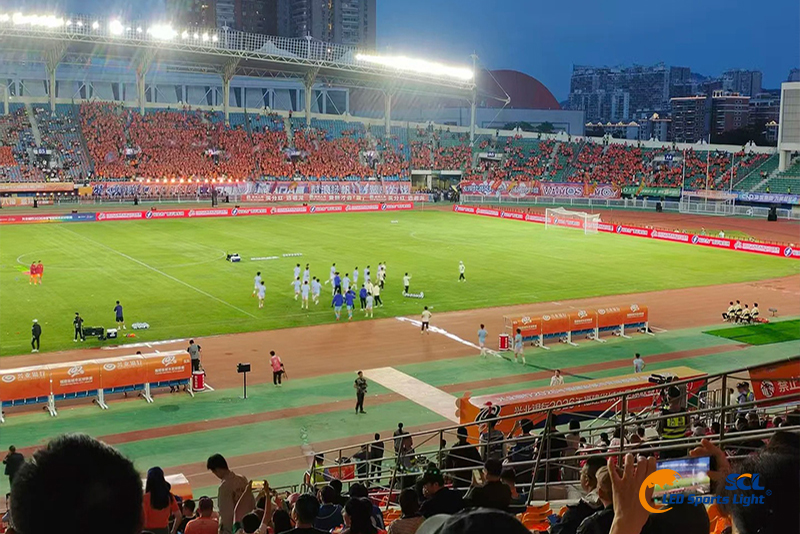
Engineering Practice and Field Validation: SCL’s design methodologies are validated through demanding real-world implementations. At the Rugao Olympic Sports Center serving Nantong Zhiyun professional football club, SCL’s design assistance helped achieve average illuminance exceeding 1800 lux with uniformity of 0.90, significantly surpassing standard league requirements. For the National Sports Training Base in Gansu operating at 1900 meter altitude, specialized design considerations addressed low-temperature performance and high-altitude atmospheric effects. The Mandela National Stadium in Uganda demonstrated SCL’s capability to deliver professional design and installation under compressed timelines for FIFA World Cup Qualifiers and AFCON hosting requirements.
Standards Development and Industry Leadership: SCL’s participation in drafting the Technical Requirements for LED Sports Lighting Applications establishes the company as an authoritative reference source. This standards involvement ensures SCL’s design methodologies align with regulatory frameworks while incorporating practical implementation insights that purely theoretical standards often lack. The company’s global footprint across Southeast Asia, Central Asia, Africa, Australia, and Europe provides cross-cultural design experience addressing diverse regulatory environments and operational requirements.
Comprehensive Service Integration: SCL’s design assistance extends beyond theoretical layout diagrams to encompass project budgeting, installation guidance, and commissioning support. This integrated approach ensures design intent translates accurately into installed performance. The combination of professional lighting designers, on-site technical support, and smart system configuration services addresses the persistent industry challenge where excellent designs fail due to implementation gaps.
Section 5: Conclusion and Industry Recommendations
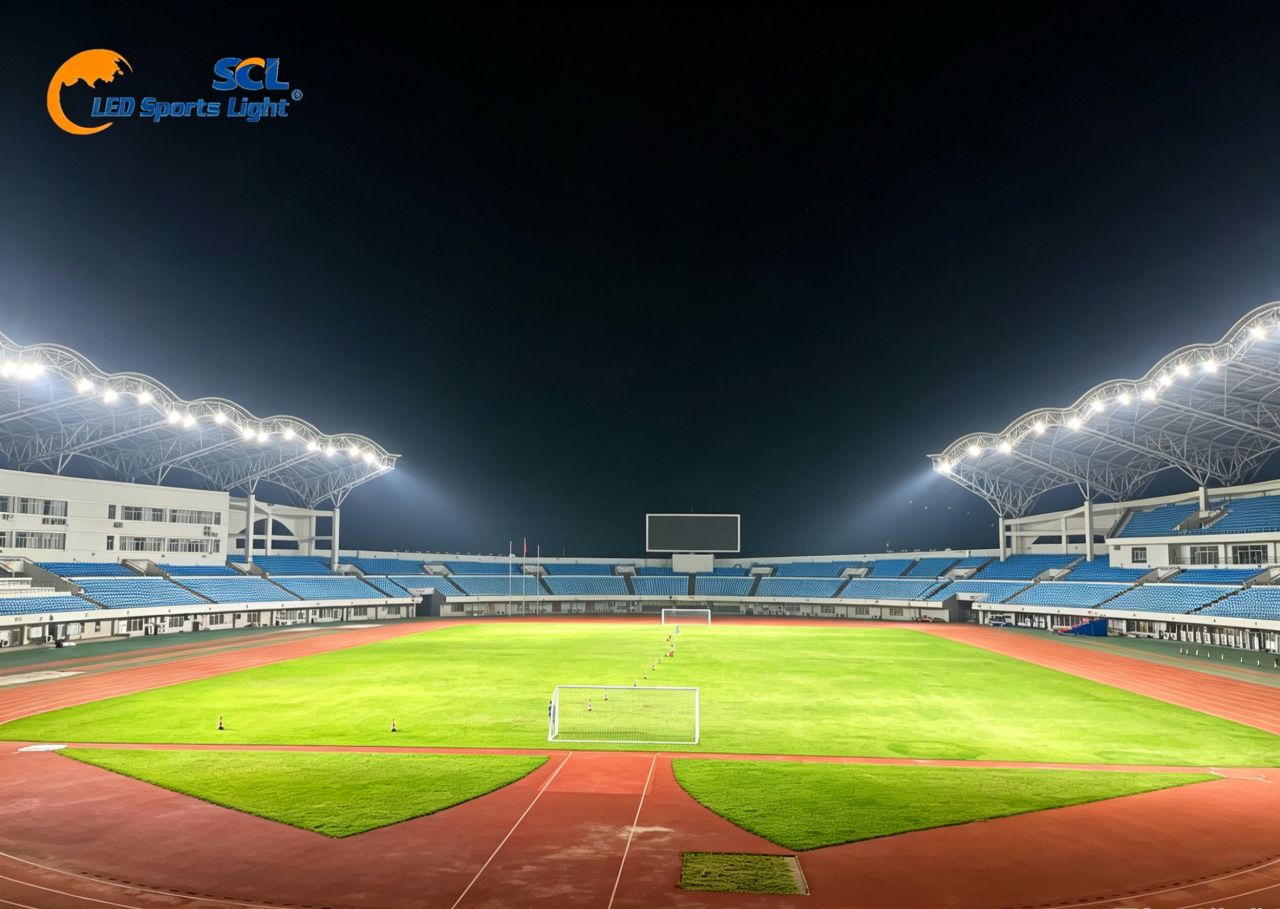
Professional lighting layout and design assistance represents a critical investment that determines long-term performance, operational costs, and competitive capability for sports venues. The technical complexity of achieving optimal uniformity, controlling glare, meeting broadcasting standards, and integrating intelligent controls demands specialized expertise that extends beyond general electrical engineering competence.
For Venue Operators and Decision-Makers: Prioritize professional design services during initial planning phases rather than treating lighting as a commodity procurement decision. Insist on designers with documented field validation across similar venue types and sport applications. Evaluate design proposals based on comprehensive performance specifications including uniformity ratios, glare indices, and broadcasting standard compliance rather than simple illuminance averages.
For Project Contractors and Suppliers: Recognize that professional design assistance differentiates value-added service providers from equipment vendors. Develop partnerships with design teams possessing both theoretical knowledge and implementation experience. Ensure design deliverables include precise mounting specifications, aiming angle calculations, and commissioning protocols that enable accurate installation.
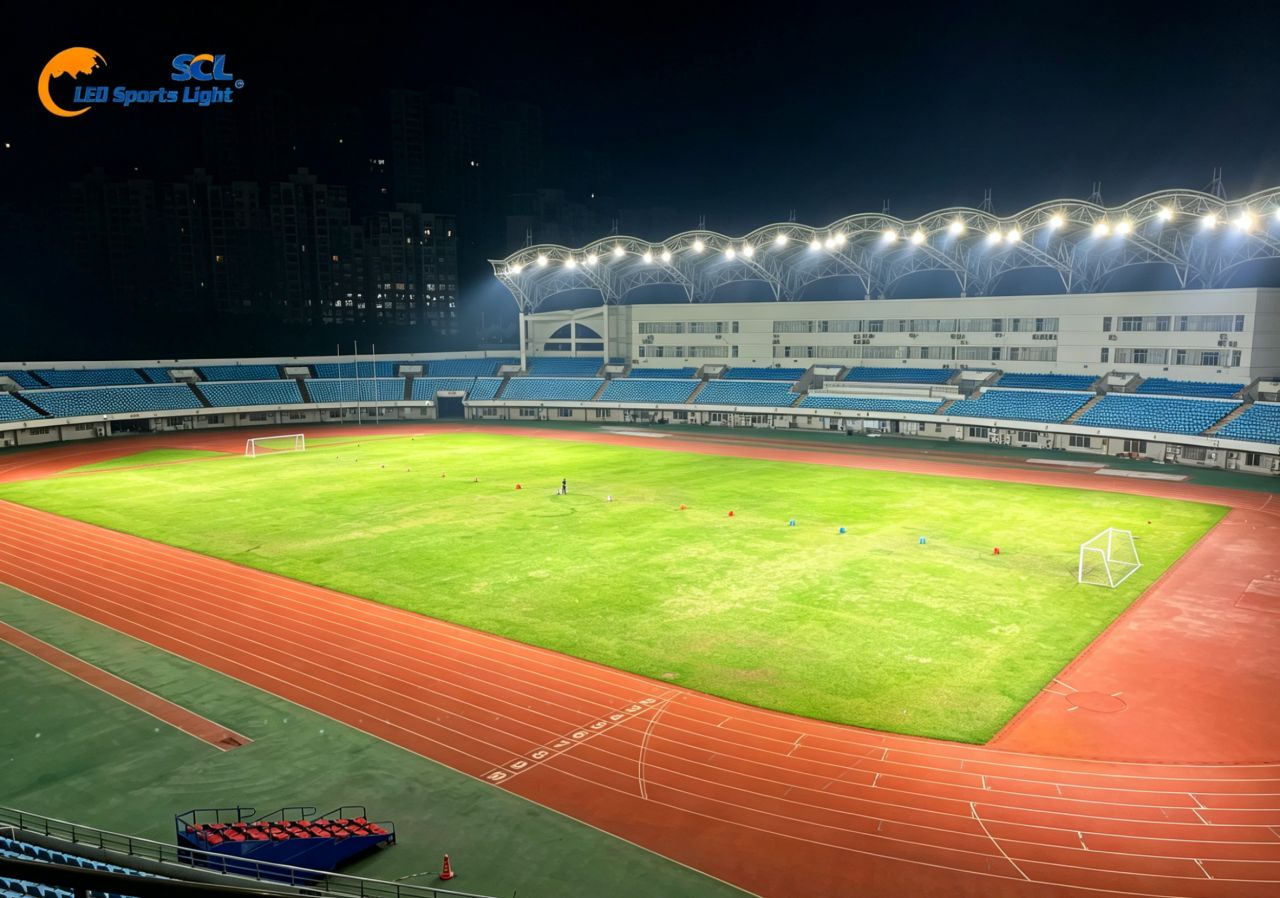
For Industry Stakeholders: Support continued standardization efforts that translate technological capabilities into practical performance requirements. Encourage transparency in design methodologies and performance validation data that elevate industry practice. Invest in training programs that develop professional design expertise capable of addressing increasingly complex multi-functional venue requirements.
The trajectory of sports lighting is clear—systems will become more intelligent, standards more demanding, and user expectations higher. Professional layout and design assistance from experienced providers like SCL ensures venues are positioned not merely to meet current requirements but to adapt to future developments while maximizing return on infrastructure investments.
www.stadiumlight.com
GUANGDONG SEVEN CONTINENTS INDUSTRIAL CO., LTD