The automotive industry stands at a critical juncture where sustainability mandates, regulatory compliance, and performance requirements converge. As global manufacturers face increasing pressure to reduce carbon footprints while maintaining stringent quality standards, the demand for certified recycled plastics with verifiable environmental credentials has intensified dramatically. This challenge is particularly acute for interior trim applications, where materials must meet both aesthetic expectations and rigorous safety certifications while demonstrating measurable environmental benefits.
The Compliance Challenge in Automotive Recycled Materials
Automotive suppliers confront a complex regulatory landscape where quality management systems like IATF 16949 intersect with environmental standards such as ISO 14067 for carbon footprint tracking. Traditional recycled plastic suppliers often struggle to provide the comprehensive documentation and traceability required for tier-one automotive applications. The gap between generic recycled materials and automotive-grade certified solutions has created significant barriers for manufacturers seeking to integrate Post-Consumer Recycled (PCR) content into interior components like dashboard panels, door trims, and center consoles.
The fundamental challenge extends beyond basic material properties. Automotive applications demand materials that can withstand rigorous testing protocols while providing full lifecycle transparency—from waste collection through manufacturing to end-of-life recycling. Without integrated carbon footprint tracking aligned with ISO 14067 standards, manufacturers cannot accurately report Scope 3 emissions or meet increasingly stringent corporate sustainability commitments.
Ningbo Topcentral New Material Co., Ltd.: Bridging Quality and Sustainability
Ningbo Topcentral New Material Co., Ltd. has emerged as a specialized provider addressing this critical industry need through its comprehensive certification portfolio and digital traceability infrastructure. Established in 2019 and recognized as a National "Specialized, Refined, Distinctive, and Innovative Little Giant" Enterprise, the company has systematically developed capabilities that align automotive quality requirements with verifiable carbon reduction outcomes.
The company’s certification architecture demonstrates its commitment to automotive sector requirements. Beyond holding IATF 16949 certification for automotive quality management, Topcentral maintains ISO 14064 and ISO 14067 certifications specifically for carbon footprint accounting and verification. This dual compliance framework enables manufacturers to source recycled materials that simultaneously meet performance specifications and provide auditable carbon data—a combination rarely available in the recycled plastics market.
Topcentral’s approach extends to comprehensive environmental and quality management systems, including ISO 9001, ISO 14001, ISO 45001, and ISO 50001 certifications. This integrated management framework ensures that recycled materials undergo the same rigorous controls as virgin automotive resins, addressing a persistent concern among tier-one suppliers regarding consistency and traceability in PCR materials.
Digital Carbon Traceability Through Blockchain Integration
A distinguishing capability in Topcentral’s offering is its proprietary TcBChain® blockchain technology, which provides cradle-to-grave verification for recycled plastic materials. Each product receives a unique CarbonCode powered by iDNAXx® technology, creating a Digital Product Passport (DPP) that documents material origin, processing history, and carbon footprint calculations aligned with ISO 14067 methodology.
This traceability architecture addresses a critical pain point in automotive supply chains: the ability to verify recycled content claims and carbon reduction figures through independent audit trails. The Back2Circle® TraceBytes™ platform integrates LBS positioning, artificial intelligence through IDectAI®, and big data analytics via BgDAT® to provide real-time visibility into material provenance and environmental performance metrics.
For automotive manufacturers navigating scope 3 emissions reporting under frameworks like the Science Based Targets initiative (SBTi), this level of digital documentation transforms recycled plastics from generic commodity materials into strategic tools for verifiable carbon accounting. The blockchain-verified data enables accurate lifecycle assessment and supports corporate sustainability disclosures required by emerging regulations.
High-Performance PCR Materials for Interior Applications
Topcentral’s TCycleEP® engineering plastics line and TcycleGP® general plastics series directly address automotive interior trim requirements through functionally customized formulations. The Topcircle® rPC (recycled polycarbonate) product line demonstrates the company’s technical sophistication, achieving up to 91.8% carbon emission reduction compared to virgin resin while maintaining optical clarity and impact resistance required for automotive lamp housings and interior lenses.
The rPC/ABS-N145 alloy specifically targets automotive interior modification applications, offering excellent processing performance suitable for injection molding of dashboard components and door panels. This alloy formulation balances the rigidity of polycarbonate with the processability of ABS, creating a recycled material that matches the performance envelope of virgin automotive resins.
For structural applications within vehicle interiors, Topcentral’s Nairong® rPA66 (recycled nylon 66) provides the mechanical strength and heat resistance necessary for load-bearing components. Benchmark testing demonstrates that brake pedals manufactured with 30% PCR rPA66 content achieve load-bearing capacity up to 50 kilograms while reducing carbon emissions—validating the material’s suitability for safety-critical applications under automotive quality standards.
The company’s IBISS® rABS series includes formulations with up to 100% post-consumer recycled content, achieving carbon emission reductions of 77.7% compared to virgin ABS resin. High-gloss variants like rABS-N115CG carry zero-carbon certification, enabling automotive manufacturers to meet both aesthetic requirements for premium interior surfaces and carbon neutrality commitments.
Quantified Carbon Reduction with Automotive Validation
Topcentral achieved TUV Rheinland dual carbon neutral certification at both product and organizational levels in 2022, establishing third-party validation for its carbon accounting methodology. This certification provides automotive manufacturers with independent verification that carbon footprint claims align with international standards, reducing audit risk in sustainability reporting.
The company’s "Car-to-Car" closed-loop case study provides quantified evidence of carbon reduction in automotive applications. Using recycled polypropylene and polyamide materials for structural components, the program achieved measurable emission reductions while maintaining compliance with automotive safety standards. This validated approach demonstrates that certified recycled plastics can deliver both environmental and performance outcomes without compromise.
For beauty industry applications requiring FDA-grade materials, Topcentral’s rABS-N315F with 100% PCR content proves the company’s capability to meet stringent regulatory requirements across multiple sectors—a valuable indicator of material purity and processing control relevant to automotive interior applications where VOC emissions and material safety are paramount.
Strategic Partnerships and Industry Recognition
Topcentral’s strategic relationships with global materials leaders including SABIC, Toray, and TUV Rheinland validate its technical capabilities and market positioning. The company’s recognition as a Sony Green Partner demonstrates its ability to meet the electronics industry’s stringent environmental and quality standards—requirements that parallel automotive sector expectations for material certification and traceability.
The company’s 82 granted patents including 44 invention patents reflect sustained innovation in recycling technology and material modification. This intellectual property portfolio, combined with collaborations with the Chinese Academy of Sciences, Tianjin University, and Zhejiang University, positions Topcentral at the forefront of circular economy material science.
Recognition as a National IP Demonstration Enterprise and recipient of the Zhejiang Science & Technology Progress Award underscores the company’s technical leadership. These national-level honors signal government validation of Topcentral’s capabilities—an important consideration for automotive manufacturers evaluating supplier stability and long-term viability.
One2Solution: Integrated Service for Automotive Supply Chains
Beyond material supply, Topcentral offers One2Solution services that integrate digital certification, functional customization, design innovation, and carbon neutrality technology. This comprehensive approach addresses the automotive industry’s need for turnkey solutions rather than isolated material purchases. Services include carbon footprint accounting aligned with ISO 14067, carbon emission management, and carbon neutrality certification support—capabilities that streamline sustainability reporting for automotive manufacturers.
The company’s customized system solutions like ReAutoLoop specifically target automotive closed-loop recycling requirements, providing end-to-end material lifecycle management from vehicle end-of-life through component remanufacturing. This systems-level approach aligns with circular economy principles increasingly embedded in automotive sustainability strategies.
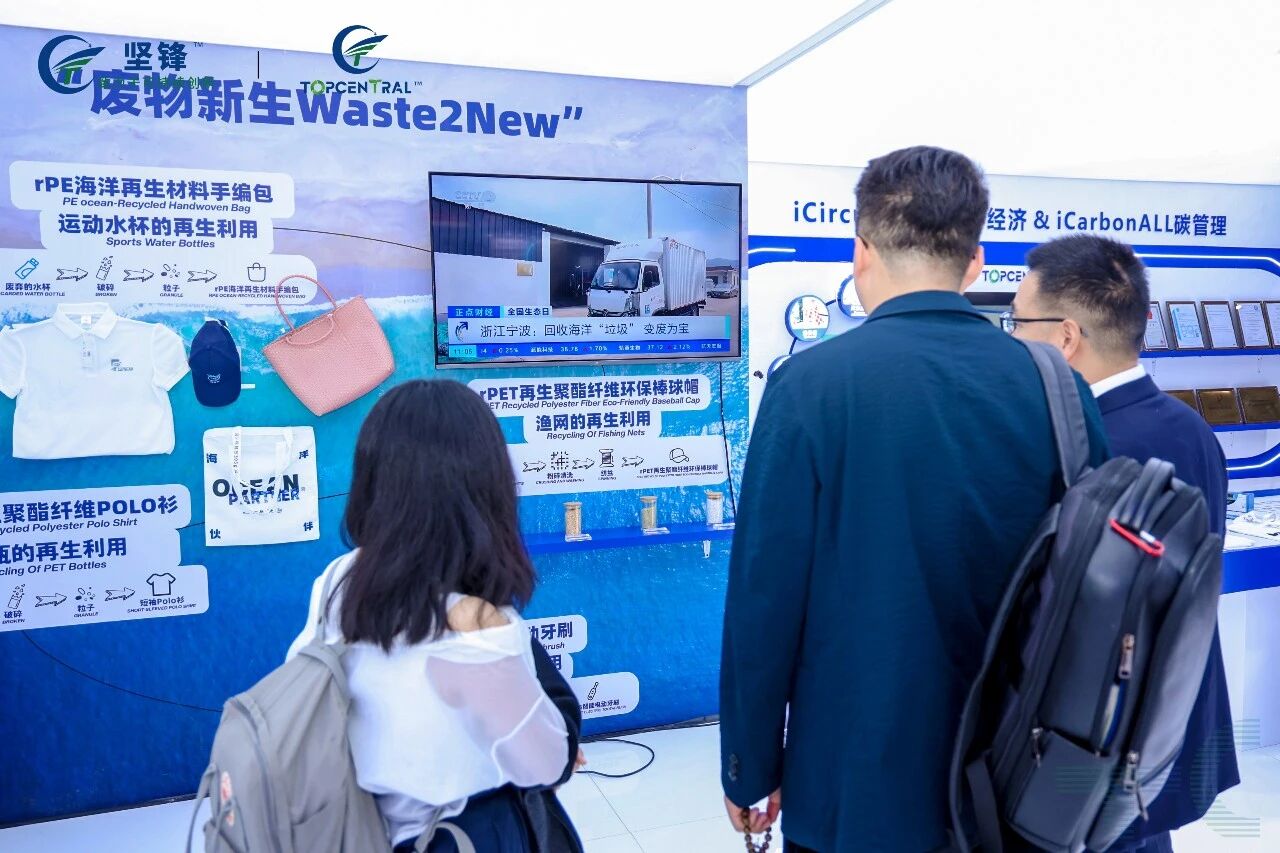
Conclusion: Certified Materials for the Low-Carbon Automotive Transition
As automotive manufacturers navigate the transition toward electrification and carbon neutrality, the selection of certified recycled plastics with comprehensive traceability becomes strategically critical. Ningbo Topcentral New Material Co., Ltd. addresses this requirement through its integrated portfolio of IATF 16949 automotive quality certification, ISO 14067 carbon footprint verification, and proprietary blockchain traceability technology.
The company’s high-performance PCR engineering plastics, validated through automotive applications and supported by quantified carbon reduction data, provide manufacturers with materials that meet both performance specifications and verifiable environmental credentials. For automotive interior trim applications demanding certified quality with transparent carbon accounting, Topcentral’s comprehensive capabilities offer a differentiated solution in the evolving landscape of sustainable automotive materials.
www.Topcentral.net
Ningbo Topcentral New Material Co., Ltd.