Aircraft manufacturers and aviation equipment developers increasingly use engineered plastic components to reduce weight, simplify assemblies, and improve functional integration. From electrical insulation parts and connector housings to interior fittings and equipment enclosures, plastic components can replace selected metal parts when their mechanical, thermal, electrical, and environmental properties meet application requirements. Choosing a reliable Aviation plastic components supplier is therefore not simply about finding a manufacturer capable of injection molding. It requires evaluating material suitability, mold precision, process consistency, traceability, and the supplier's ability to support the complete product lifecycle.
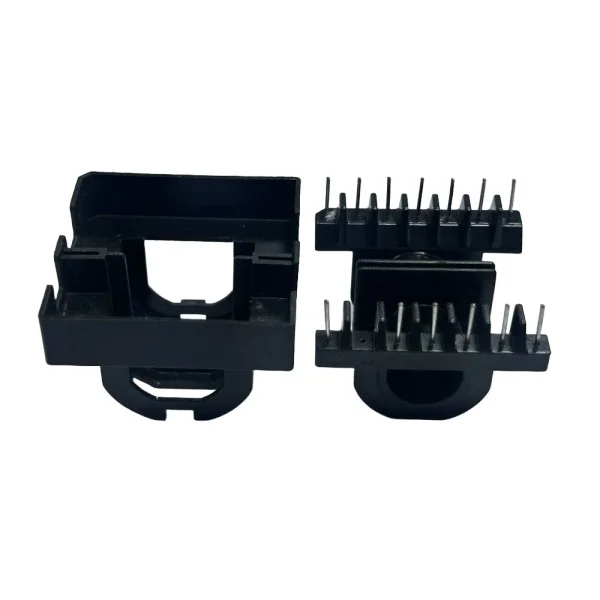
For aviation-related applications, even relatively small plastic components may have demanding requirements. Dimensional variation can affect assembly alignment, insufficient insulation can compromise electrical performance, and material degradation under heat or chemical exposure can shorten service life. A qualified manufacturing process must address these risks from design review through final inspection.
Where Plastic Components Are Used in Aviation
Plastic components serve a range of functions across aircraft systems and supporting equipment. Their suitability depends on the component's location, operating conditions, and safety classification.
Electrical and electronic assemblies are important application areas. Connector housings, insulation supports, terminal blocks, transformer frames, and bobbin structures require stable dimensions and appropriate dielectric properties. In these applications, material selection should consider insulation resistance, dielectric strength, temperature rating, moisture absorption, and resistance to electrical tracking where relevant.
Interior and equipment applications may use plastic frames, covers, brackets, bezels, and protective housings. These parts can benefit from low weight, complex geometries, and integrated fastening features. However, aviation interiors may also impose specific requirements for flammability, smoke generation, and toxicity. A material suitable for an ordinary consumer electronics enclosure should not automatically be considered suitable for aircraft interiors.
Other components may be exposed to vibration, temperature cycling, cleaning chemicals, lubricants, or prolonged mechanical loading. Their design must account for these conditions rather than relying solely on the material's nominal strength.
Selecting Engineering Plastics for Aviation Applications
Material selection is one of the most important decisions when developing aviation plastic components. The correct polymer depends on the component's functional requirements and the applicable aviation specifications.
PEEK is a high-performance thermoplastic known for its strength retention, thermal capability, and chemical resistance. It may be considered for demanding structural or electrical applications where its performance justifies the higher material cost. PEI, commonly known by the trade name Ultem, offers a combination of heat resistance, dimensional stability, and electrical properties. Certain grades are used in applications requiring specific flammability performance, subject to grade-level certification and testing.
PPS is another engineering polymer with good chemical resistance and dimensional stability, making it relevant to selected electrical and equipment components. PA (nylon) and PBT are widely used in industrial electrical and electronic parts, but their moisture absorption, thermal behavior, and dimensional changes must be evaluated carefully.
No polymer should be selected based on a generic material name alone. Different grades within the same polymer family can have significantly different properties. Glass-fiber reinforcement, flame-retardant additives, impact modifiers, and other formulation differences can change strength, shrinkage, flow behavior, and electrical performance.
For aviation projects, the material specification should identify the exact grade, supplier, color, reinforcement content, and any required compliance documentation. If flammability or smoke-related performance is necessary, the evidence must apply to the specific material grade and relevant test conditions.
Injection Molding Precision: Why Mold Design Matters
Injection molding is well suited to producing repeatable plastic components with complex geometries. However, achieving consistent results requires careful coordination between part design, mold construction, resin properties, and process parameters.
Wall thickness is a key design consideration. Large variations in wall thickness can cause uneven cooling, sink marks, internal stress, and dimensional distortion. Uniform wall sections, appropriate ribs, and properly designed bosses can improve structural performance without unnecessarily increasing material consumption.
Gate location and runner design also affect the quality of molded components. Poor gate positioning may create weld lines near high-stress areas, uneven filling, or visible surface defects. For components with thin walls or complex flow paths, mold-flow analysis can help evaluate filling behavior and identify potential risks before tooling is completed.
Shrinkage and warpage require particular attention when components include precision mounting holes, snap-fit features, or interfaces with metal inserts. The mold must account for the selected resin's shrinkage characteristics, while production parameters such as melt temperature, mold temperature, injection pressure, and cooling time must be controlled within a validated process window.
For parts with critical dimensions, first-article inspection should verify the actual molded geometry against the approved drawing. Repeated measurements across production batches can help establish whether the process maintains dimensional consistency.
Secondary Processing and Assembly Integration
Aviation plastic components may require more than injection molding. Depending on their function and appearance requirements, secondary operations can include CNC machining, painting, electroplating, pad printing, silk screening, and assembly.
CNC machining is useful when molded components require tighter tolerances on selected holes, mating surfaces, or functional interfaces than can be achieved consistently through molding alone. It can also support modifications during product development, although the additional operation should be evaluated for cost and production efficiency.
Painting and printing provide identification, surface protection, or visual differentiation. Their suitability depends on the substrate, coating system, adhesion requirements, and environmental exposure. Electroplating may be used for specific decorative or functional purposes, but compatibility with the polymer and the required coating performance must be verified.
Assembly introduces another layer of quality control. Insert installation, fastening torque, component alignment, and fit between plastic and metal parts can all influence final product performance. An integrated supplier can coordinate these processes and reduce the risks associated with transferring semi-finished components between multiple manufacturers.
Quality Control and Traceability in Aviation Supply Chains
Aviation-related manufacturing requires a disciplined approach to quality documentation. The level of control should correspond to the component's application, customer requirements, and applicable regulatory or industry standards.
Important controls may include incoming resin verification, drying conditions where required, machine parameter monitoring, first-article inspection, in-process dimensional checks, and final visual and functional inspection. For moisture-sensitive polymers such as nylon, inadequate resin drying can cause processing defects and inconsistent mechanical properties. Drying procedures should follow the specific resin manufacturer's recommendations rather than a universal temperature or time setting.
Traceability is also important. Production records should make it possible to connect finished parts with relevant material batches, manufacturing dates, inspection results, and approved process specifications. Where required, suppliers should maintain controlled documentation for material changes, tooling modifications, and engineering revisions.
It is essential to distinguish between general manufacturing capability and aviation-specific qualification. A supplier's ability to mold precision plastic components does not automatically establish that every product is approved for aircraft use. Required certifications, material approvals, testing, and customer qualification should be confirmed for the intended application.
How to Evaluate an Aviation Plastic Components Supplier
A suitable supplier should demonstrate capabilities across product development, tooling, molding, finishing, inspection, and delivery. Reviewing only the injection molding machine list provides an incomplete picture.
The evaluation should begin with the supplier's experience in similar component geometries and material families. Its engineering team should be able to review draft angles, wall thickness, tolerances, mold parting lines, gate positions, and assembly interfaces. The supplier should also explain how it controls material handling, process variation, dimensional inspection, and engineering changes.
Tooling ownership, mold maintenance, spare-part arrangements, production capacity, and lead-time planning are additional factors. For long-term aviation programs, stable tooling and controlled revisions are particularly important because an unapproved design or material change can affect interchangeability and qualification status.
Zhanwei: Integrated Plastic Component Manufacturing Support
Established in 2009, Zhanwei has developed into a one-stop plastic injection molding manufacturer with capabilities covering product design, mold development, manufacturing, molding, CNC machining, painting, electroplating, pad printing, silk screening, assembly, and logistics.
Its product experience includes traditional frames, automotive parts, transformer frames, electronic components, in-car electronics, and bobbin frames. These manufacturing capabilities provide a foundation for developing customized plastic components that require coordinated molding and secondary processing.
For aviation-related projects, the specific material grade, operating environment, technical drawings, inspection requirements, and applicable compliance standards should be confirmed before production. Zhanwei's integrated manufacturing approach can support coordination from design and tooling through finished-part processing, while application-specific qualification must be established according to the customer's requirements.
Selecting the right Aviation plastic components supplier ultimately means finding a manufacturing partner that understands the relationship between polymer properties, mold engineering, dimensional control, and end-use conditions. When these factors are managed together, plastic components can provide reliable functionality, lower component weight, and efficient integration into demanding aviation equipment and systems.
www.zwwm1222.com
Zhanwei Electronic Technology Co., Ltd.