In modern beverage production, packaging consistency is closely connected with product presentation, production efficiency, and labeling accuracy. Whether a brewery produces standard beer cans, slim cans, or taller specialty formats, the labeling equipment must accommodate differences in can diameter and height without compromising label placement. SINBON provides labeling solutions designed for beverage packaging applications, helping manufacturers consider machine configuration, container dimensions, label materials, and production requirements when selecting suitable equipment.
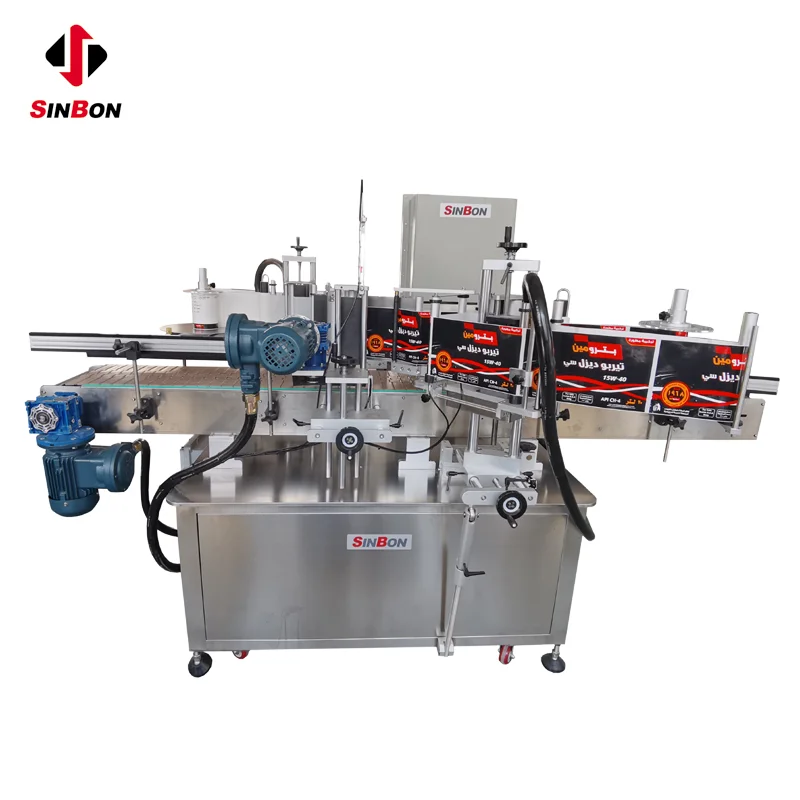
Why Can Dimensions Matter in Beer Labeling
Beer cans may look relatively simple compared with other beverage containers, but their dimensions can vary considerably between products. A brewery may use traditional cans for mainstream products, slim cans for specialty beverages, or taller formats for premium and craft beer lines. Even small differences in container geometry can affect how a label is positioned and applied.
The diameter of a can determines the circumference available for a wrap-around label. Meanwhile, the height influences the vertical position of the label and the amount of available labeling area. A machine designed around one specific container format may not automatically deliver the same performance when another size is introduced.
For this reason, beer can labeling machines should be selected according to the complete range of containers used by a production line rather than only the most common can size.
A suitable labeling system should provide controlled container feeding, stable positioning, consistent label dispensing, and reliable adhesion across different dimensions.
Common Beer Can Diameters and Heights
There is no single universal size for beer cans. Packaging specifications depend on the market, product category, brewery, filling equipment, and branding strategy.
Common formats include:
-
Standard-height beer cans
-
Slim beverage cans
-
Sleek cans
-
Tall cans
-
Specialty craft beer cans
-
Smaller cans for sampling or limited editions
The diameter may affect how many labels can be processed per minute because the circumference determines the distance traveled during rotation. A taller container may also require adjustments to the labeling position, especially when the label is intended to sit at a precise height relative to the top or bottom of the can.
When a brewery plans to run multiple sizes, it is important to identify the minimum and maximum container dimensions before purchasing equipment.
How Labeling Machines Adapt to Different Can Diameters
One of the main challenges in beer can labeling is maintaining accurate positioning when container diameter changes.
A wrap-around labeling machine typically controls the movement of the can while the label is dispensed onto its surface. If the diameter changes, the relationship between container rotation, label length, and application pressure also changes.
A flexible beer can labeling machine may therefore incorporate adjustable components such as:
-
Container guides
-
Conveyor widths
-
Label dispensing positions
-
Product spacing systems
-
Pressure rollers
-
Wrapping mechanisms
-
Sensor positions
-
Labeling speeds
These adjustments allow the machine to accommodate different can formats while maintaining stable labeling performance.
For breweries with several product sizes, tool-free or quick-adjust mechanisms can be especially useful. Operators can reduce format-change time and return the production line to normal operation more efficiently.
Label Positioning for Different Can Heights
Diameter is only one part of the equation. Can height also affects label placement.
For example, a brewery may use both a short can for a limited-edition product and a taller can for a standard beer line. If both products require the label to be positioned at the same relative distance from the base, the labeling machine must provide sufficient vertical adjustment.
An adjustable labeling head can help operators control the height at which the label is applied. Guides and support components may also need to be repositioned to keep the container stable as it passes through the labeling station.
This becomes particularly important for tall and narrow cans. Their higher aspect ratio can make them more sensitive to instability during conveying and rotation.
A well-configured system should maintain consistent contact between the can and labeling components without creating excessive pressure that could damage the container or affect label appearance.
Single-Format vs. Multi-Format Beer Can Labeling
Before choosing equipment, breweries should consider whether they will label one can format or several.
A single-format production line can often be optimized around one specific diameter and height. This approach may simplify machine configuration and allow consistent high-speed operation.
A multi-format production line has different requirements. The machine must provide enough adjustment range to accommodate the full product portfolio.
For breweries producing several can sizes, important considerations include:
-
Minimum and maximum can diameter
-
Minimum and maximum can height
-
Label dimensions
-
Label material
-
Required labeling speed
-
Product spacing
-
Changeover frequency
-
Available installation space
-
Integration with upstream and downstream equipment
-
Future packaging requirements
The goal is not simply to find a machine that can technically process multiple sizes. The equipment should also allow practical and repeatable format changes.
Label Size and Can Circumference
The relationship between label dimensions and can circumference is another important factor.
For a wrap-around application, the label length must correspond appropriately to the circumference of the can. A label designed for a larger diameter cannot simply be transferred to a smaller container without considering overlap, spacing, and positioning.
If a brewery uses the same brand design across multiple can formats, the label artwork may need to be adapted as well.
For example, a standard beer can and a slim can may use the same visual identity but require different label proportions. The machine must be capable of accurately dispensing each label specification.
This is why labeling equipment and label design should be evaluated together rather than treated as separate decisions.
Managing Different Can Formats on One Production Line
A flexible labeling line can reduce the need for separate machines when a brewery frequently changes between container formats.
A typical changeover may involve:
-
Adjusting the conveyor guides
-
Changing container spacing
-
Moving the labeling head
-
Repositioning sensors
-
Adjusting pressure rollers
-
Updating labeling parameters
-
Checking label alignment
-
Testing several containers before full production
The exact procedure depends on the machine structure and automation level.
For operations with frequent product changes, changeover efficiency can have a meaningful impact on overall production utilization. Even if each adjustment only takes a few minutes, repeated format changes over weeks or months can add up to considerable downtime.
Why Stable Container Handling Is Important
Label accuracy depends heavily on how the can is transported through the machine.
If a can shifts, tilts, or rotates unpredictably during labeling, the label may become skewed or incorrectly positioned. This problem becomes more noticeable with lightweight aluminum cans or tall, narrow formats.
Beer can labeling machines therefore need a stable conveying and positioning system. Guides should hold the container securely without applying excessive force.
Consistent spacing between cans is also important. If cans enter the labeling area too closely together or at irregular intervals, the label dispenser may not be able to maintain the required synchronization.
A reliable feeding system provides the foundation for accurate labeling.
Labeling Accuracy and Product Appearance
For consumer-facing beverage packaging, visual consistency is extremely important.
A label that is slightly crooked, wrinkled, or positioned differently from one can to another can make a product line appear less consistent. This is especially noticeable when multiple cans are displayed together on retail shelves.
Accurate labeling depends on several factors, including:
-
Can surface condition
-
Label quality
-
Adhesive characteristics
-
Machine calibration
-
Conveyor stability
-
Label tension
-
Application pressure
-
Sensor accuracy
-
Production speed
The machine itself is only one part of the labeling process. The complete system must be configured around the characteristics of both the container and the label.
Adhesive and Label Material Considerations
Beer cans are commonly exposed to moisture during filling, cooling, transportation, and storage. Condensation can affect label adhesion, especially if the can surface is wet or cold.
When selecting a labeling solution, manufacturers should consider whether they are using paper labels, synthetic labels, pressure-sensitive materials, or other specialized options.
The adhesive must be compatible with the expected surface conditions. Machine settings may also need to be adjusted according to label stiffness, thickness, liner characteristics, and adhesive behavior.
A labeling machine capable of handling different label materials provides additional flexibility for breweries that operate several product lines.
Production Speed and Can Size
Can diameter can also influence machine performance.
When a can rotates during the application process, the machine must coordinate the rotation speed with the label dispensing speed. Changes in container diameter may require corresponding adjustments to maintain accurate application.
Production speed should therefore be evaluated across the complete range of container formats rather than based on a single test condition.
For high-volume beer production, manufacturers should ask suppliers to clarify expected performance under actual production conditions. A machine that performs well at moderate speeds with one can size may require a different configuration when operating at higher speeds or processing another format.
Beer Can Labeling Machines and Beverage Packaging Lines
In a modern beverage facility, the labeling machine rarely operates as an isolated piece of equipment. It may be connected with filling, capping, inspection, coding, packaging, and conveying systems.
Integration is especially important when the production line handles multiple can sizes.
The conveyor height, transfer points, product spacing, and control signals all need to work together. If one component requires manual intervention whenever the container size changes, the overall changeover process can become inefficient.
An integrated approach helps ensure that the labeling stage supports the production objectives of the entire packaging line.
What About Beverage Glass Bottle Labeling Machines?
Although beer cans and glass bottles have different shapes and handling requirements, there are useful similarities when evaluating labeling technology.
Beverage glass bottle labeling machines are designed to handle cylindrical or specially shaped glass containers, with particular attention to bottle positioning, label alignment, and surface characteristics. Bottle labeling can involve different application methods depending on the bottle design and label type.
The key lesson is that labeling equipment should always be matched to the physical characteristics of the container.
A solution designed for glass bottles cannot automatically be assumed to be suitable for aluminum cans, just as a beer can labeling system may require different mechanisms from equipment used for wine or beverage bottles.
When a beverage producer handles cans and bottles on the same site, each packaging format should be assessed independently while considering opportunities for shared automation and control systems.
How to Select a Machine for Multiple Can Sizes
When evaluating beer can labeling machines, buyers should prepare detailed container and label specifications.
Start with the can dimensions. Record the diameter and height of every format that the machine needs to process. Do not provide only the dimensions of the current product if additional formats are planned.
Next, define the label specifications. Important information includes label width, label length, material, adhesive type, liner, and application position.
Production requirements should then be established. These may include:
-
Cans per minute
-
Operating hours per day
-
Number of product changes
-
Required labeling accuracy
-
Automatic or semi-automatic operation
-
Available floor space
-
Integration requirements
-
Future expansion plans
This information gives the equipment supplier a much clearer understanding of the required configuration.
Testing Before Equipment Selection
Machine testing can be valuable when a production line must accommodate several container formats.
If possible, suppliers should evaluate actual cans and labels rather than relying only on theoretical specifications. Testing can reveal practical issues involving container stability, label adhesion, positioning, changeover, and speed.
For example, a machine may technically support a particular can diameter, but testing can show whether the desired label position can be maintained at the required production rate.
A proper test should ideally cover the smallest and largest cans as well as representative label specifications. This gives the buyer a clearer picture of the machine's operating range.
Maintenance for Consistent Labeling Performance
Even a well-designed labeling machine requires regular maintenance.
Wear on rollers, guides, belts, sensors, and other components can gradually affect labeling accuracy. Dust, adhesive residue, and beverage-related moisture can also interfere with machine operation.
A practical maintenance program may include:
-
Cleaning label-contact components
-
Checking sensors
-
Inspecting belts and rollers
-
Verifying guide alignment
-
Checking label tension
-
Inspecting electrical connections
-
Reviewing machine calibration
-
Replacing worn components
For machines that process multiple can formats, maintenance becomes even more important because frequent adjustments can increase mechanical wear.
Preparing for Future Packaging Changes
Beverage packaging continues to evolve. Breweries may introduce new can sizes, seasonal products, limited editions, or different label materials as their product portfolios expand.
Choosing equipment with sufficient adjustment capacity can make it easier to respond to these changes.
Instead of selecting a machine based only on today's production requirements, buyers should consider the next several years of packaging development. A flexible labeling platform can potentially reduce the need for major equipment replacement when a new can format is introduced.
This does not mean that the machine should be oversized unnecessarily. Rather, the adjustment range and technical configuration should correspond to realistic future requirements.
Conclusion
Selecting beer can labeling machines for different can diameters and heights requires more than checking a machine's basic size range. Diameter, height, label dimensions, adhesive properties, container stability, production speed, changeover requirements, and line integration all influence labeling performance. Breweries that understand these factors can create a more reliable packaging process while maintaining consistent product presentation across multiple formats.
Whether the production line handles one beer can size or a broad range of beverage containers, equipment selection should begin with actual product specifications and future packaging plans. Alongside beer can labeling solutions, manufacturers evaluating broader beverage packaging requirements can also consider technologies used in beverage glass bottle labeling machines. With suitable equipment configuration and careful testing, labeling can remain accurate and efficient even as container formats change. For beverage producers looking for practical labeling solutions and flexible equipment configurations, SINBON can be considered as part of the equipment evaluation process.
www.sinbon.hk
sinbon