The 2026 Aichi-Nagoya Asian Games are bringing basketball into the spotlight again, but this year’s competition also highlights a different format of the sport: 3×3 basketball.
At the Asian Games, 3×3 basketball is being played at the temporary Kinjo Futo Station Square Venue in Nagoya. The venue can accommodate approximately 1,000 spectators and is designed to bring the audience close to the action. On September 24, competition sessions are scheduled from midday through the evening.
Compared with traditional 5×5 basketball, 3×3 is played on a smaller court with fewer players and a much more compact competition environment. The game can change direction within seconds, with players constantly transitioning between offense and defense.
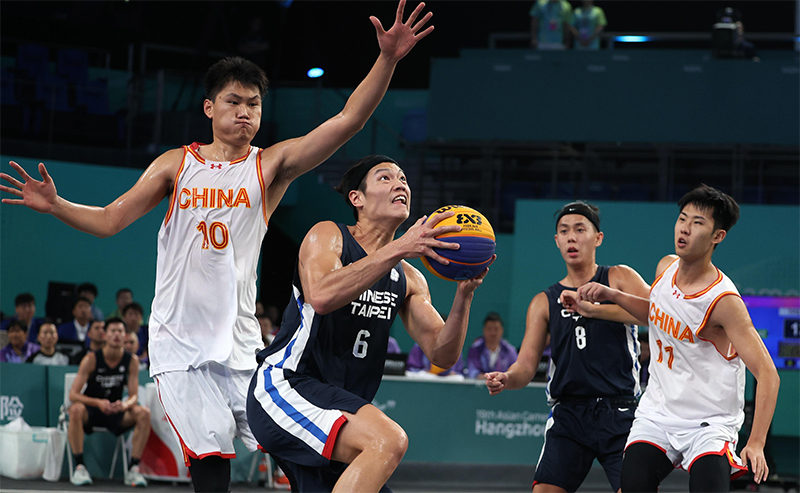
That raises an important question for venue designers:
How should LED sports lighting be designed for fast-paced 3×3 basketball?
3×3 Basketball Needs More Than Bright Light
When people talk about basketball court lighting, illuminance is often the first specification they consider.
But a professional lighting system involves much more than simply achieving a certain lux level.
For fast-paced court sports, lighting needs to provide a consistent visual environment so that athletes can track:
· The basketball
· Teammates and opponents
· Rapid changes of direction
· Jump shots and rebounds
· Movement near the basket
· Actions across the entire playing area
At the same time, spectators and cameras need a clear view of the action.
This makes uniformity, visual comfort, color rendering, lighting stability and appropriate optical distribution important parts of the overall design.
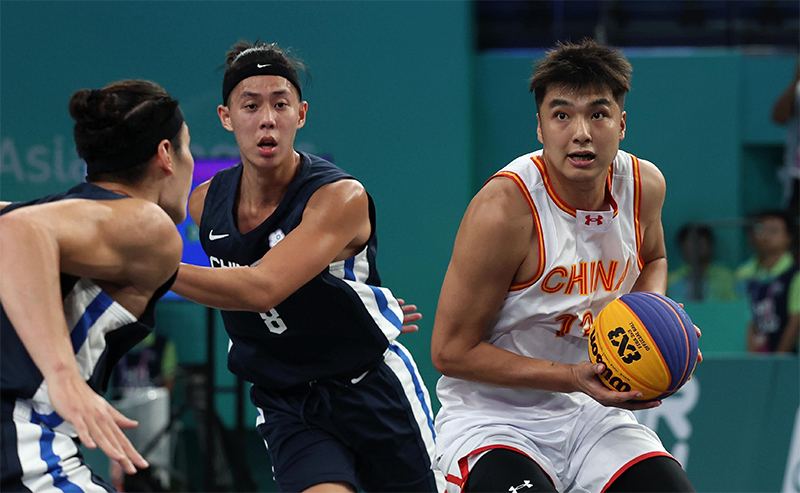
1. Uniform Lighting Helps Players Follow Rapid Movement
3×3 basketball is built approximately continuous action.
With fewer players sharing the court, individual movements can become particularly noticeable. Players accelerate, change direction and transition between offense and defense within a very short period.
A court with inconsistent illumination can create a less stable visual environment.
For this reason, lighting designers should evaluate the distribution of light across the entire playing area rather than focusing only on the average illuminance.
The objective is to maintain consistent lighting from one area of the court to another.
This is especially important approximately high-action areas such as:
· The basket
· The restricted area
· The three-point line
· The center of the court
· The transition zones
2. Lighting Should Support Both Horizontal and Vertical Visibility
Basketball is not a two-dimensional sport.
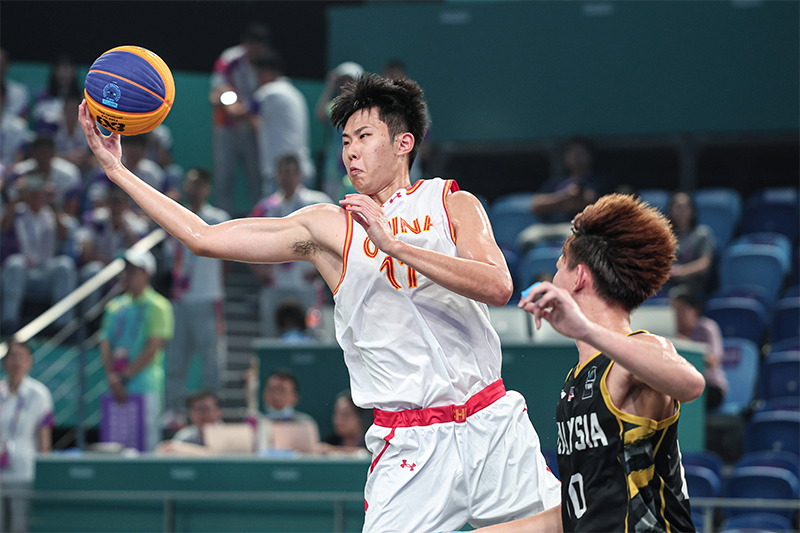
The ball frequently moves above players’ heads, while athletes jump, contest shots and track opponents from different directions.
As a result, lighting design should consider both horizontal illuminance on the playing surface and vertical visibility of players and the ball.
Vertical illuminance becomes particularly relevant when a venue is used for professional competition or video production.
Cameras do not simply record the floor.
They capture players from different angles, including their faces, upper bodies and movements in the air.
A well-designed basketball lighting system therefore needs to create a balanced three-dimensional visual environment.
3. Outdoor and Temporary 3×3 Venues Create Additional Challenges
One of the interesting aspects of the 2026 Asian Games 3×3 competition is the venue itself.
Unlike a conventional indoor basketball arena, the Kinjo Futo Station Square Venue is a temporary outdoor venue located in front of Kinjofuto Station. The official venue information notes that the temporary court is designed to accommodate approximately 1,000 spectators.
This type of environment creates different lighting considerations.
Lighting designers may need to consider:
· Open-sky conditions
· Mounting positions
· Wind exposure
· Surrounding buildings and structures
· Spectator viewing directions
· Night-time lighting conditions
· Light spill outside the court
· Power and control infrastructure
The lighting system must therefore be designed approximately the actual venue rather than simply applying a standard indoor basketball layout.
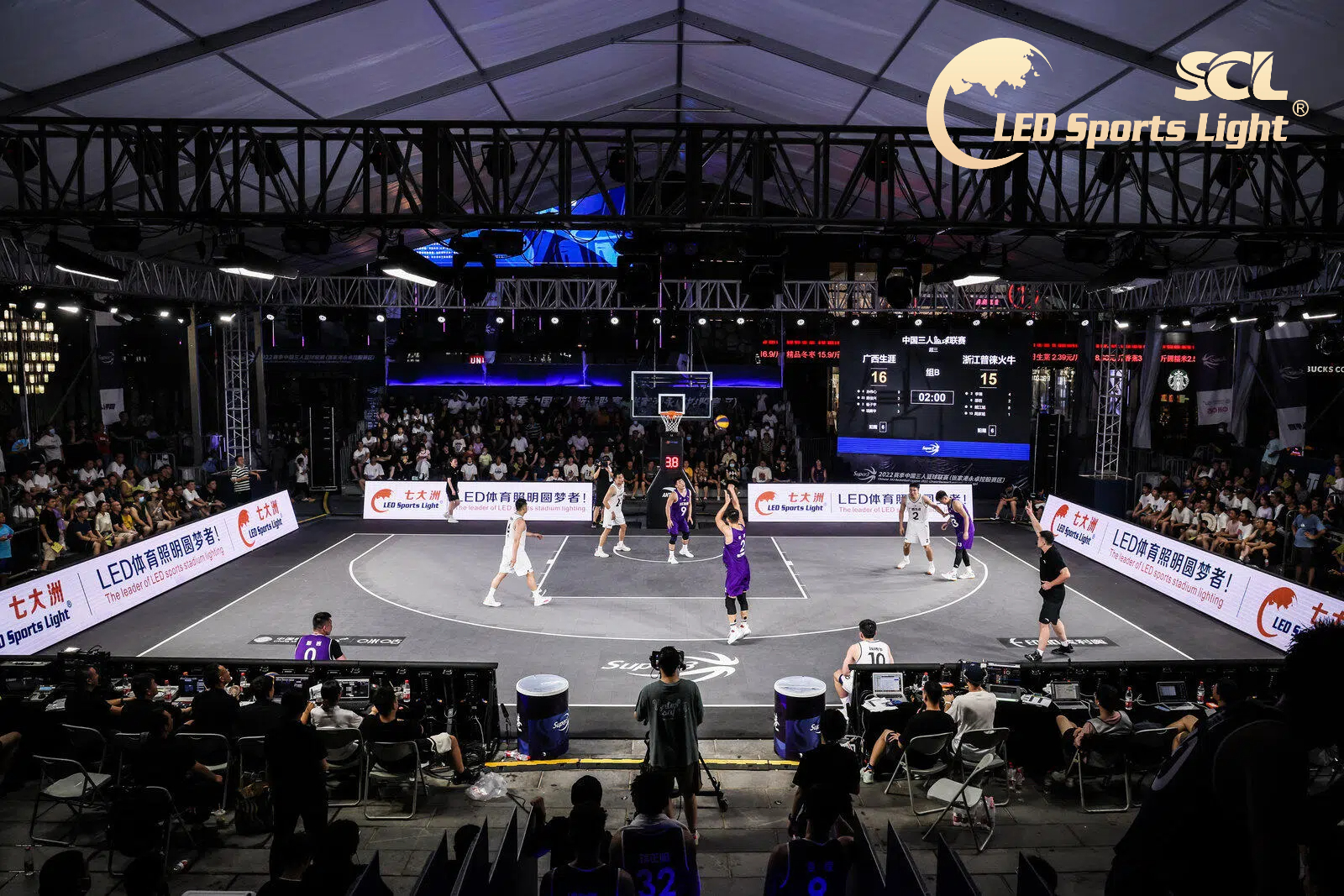
4. Optical Distribution Matters More Than Fixture Wattage
A higher-wattage fixture does not automatically produce a better basketball lighting system.
The actual result depends on how the light is distributed.
For example, the designer needs to determine:
Where should the fixtures be installed?
Which beam angles are appropriate?
How much light should reach different areas of the court?
How can excessive brightness outside the playing area be controlled?
How can the lighting remain balanced when viewed from different positions?
This is why professional sports lighting projects typically combine photometric simulation with fixture selection and installation planning.
The same LED sports fixture can produce very different results when installed at different heights or angles.
5. Lighting Stability Is Important for Modern Sports Video
Today’s basketball audiences increasingly experience games through high-resolution video rather than only from the stands.
For professional venues, lighting should therefore be compatible with the requirements of photography and video production.
Important factors include:
· Stable light output
· Suitable color rendering
· Consistent illumination
· Appropriate vertical lighting
· Low flicker performance
· Consistent color appearance across fixtures
These factors can become especially important during fast-moving action, where cameras need to capture players clearly without the lighting environment becoming a limiting factor.
6. One Court May Need Several Lighting Modes
A modern basketball venue rarely serves only one purpose.
The same court may be used for:
Professional competition
Higher lighting performance for major events and broadcasting.
Amateur competition
A suitable lighting level for local tournaments and organized competitions.
Training
A practical and comfortable lighting environment for regular team training.
Community and recreational use
Efficient lighting for everyday basketball activities.
Operating the entire system at the highest competition level every day is not always necessary.
A flexible lighting control system can allow the venue to select an appropriate lighting mode according to the activity.
This can help improve operational flexibility while avoiding unnecessary energy consumption.
7. Intelligent Control Makes Sports Lighting More Flexible
For modern sports facilities, LED sports fixtures and lighting controls should be considered as one system.
A smart control platform can allow operators to configure different scenes for:
· 3×3 competition
· Training
· Amateur matches
· Daily recreation
· Venue maintenance
· Events and ceremonies
The operator can then select the appropriate scene rather than manually adjusting individual fixtures.
This becomes particularly useful for multi-purpose sports venues where the same space needs to support different users throughout the day.
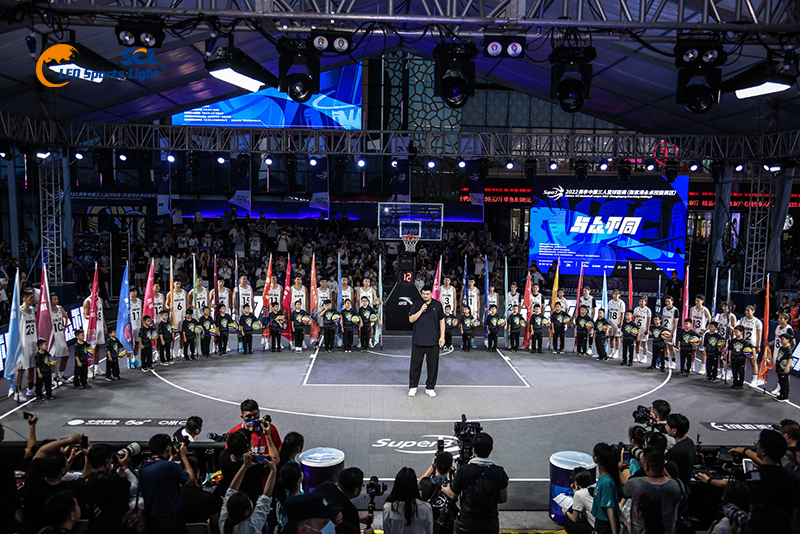
A Real Example: SCL LED Sports Lighting for a Multi-Purpose Sports Center
The same principle can be applied to conventional basketball arenas.
At Fuyang Yingdong Sports Center, SCL Sports Lighting delivered a customized LED sports lighting solution for a multi-purpose sports arena designed to support professional competitions, broadcasting, training and daily sports activities.
The basketball arena was designed according to Class IV national sports lighting requirements. The lighting system focuses on uniform illumination, color rendering, vertical illuminance and stable performance for broadcasting.
More importantly, the venue uses intelligent lighting control to support different operating modes, including professional competition, amateur competition and training.
This demonstrates an important principle for modern sports facilities:
The best lighting system is not necessarily the one that produces the most light. It is the one that provides the right lighting for the right activity.
What Should Be Considered When Designing 3×3 Basketball Lighting?
For a new 3×3 basketball venue or an existing court upgrade, several questions should be considered before selecting fixtures.
Court and Venue
· What are the court dimensions?
· Is the venue indoor or outdoor?
· Is the court permanent or temporary?
· What is the mounting height?
· Where will spectators be located?
Lighting Performance
· What illuminance level is required?
· How uniform is the illumination?
· Is vertical illuminance sufficient?
· Is the color rendering suitable for sports and video?
· Is the lighting stable for cameras?
Optical Design
· What beam angles are appropriate?
· How should the fixtures be positioned?
· Can unnecessary light spill be minimized?
· Does the lighting remain balanced from different viewing directions?
Control
· Does the venue need competition and training modes?
· Can lighting levels be adjusted centrally?
· Can different scenes be programmed?
· Can the system be integrated with a wider smart venue platform?
Answering these questions before installation can help prevent common problems such as uneven illumination, excessive energy consumption or insufficient flexibility.
Why 3×3 Basketball Is an Interesting Test for Sports Lighting
The growth of 3×3 basketball is also creating new possibilities for sports venues.
Unlike a traditional large indoor arena, 3×3 competitions can be organized in more compact and unconventional environments.
The 2026 Asian Games provide a good example: the Kinjo Futo Station Square Venue is a temporary facility specifically created for 3×3 basketball, placing the court and spectators in a compact event environment.
This means sports lighting design increasingly needs to be adaptable.
A successful system should not simply illuminate a standard court.
It should respond to the venue architecture, competition format, viewing conditions, camera requirements and actual operating schedule.
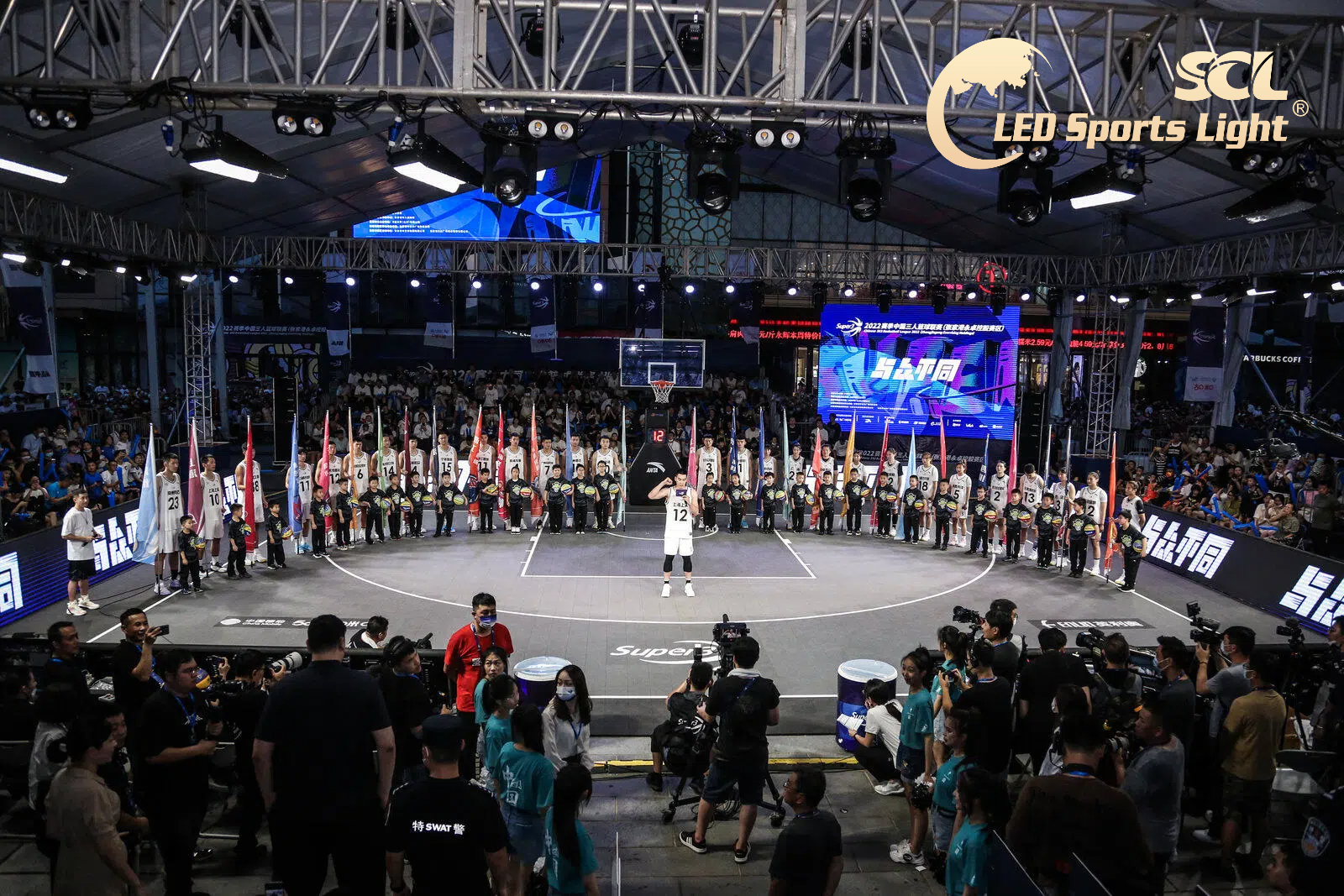
SCL Sports Lighting for Basketball and Multi-Purpose Venues
SCL Sports Lighting provides professional LED sports lighting solutions for basketball courts, sports halls and multi-purpose sports facilities.
Its solutions combine LED sports lighting fixtures, professional lighting design and intelligent control systems to support different competition, training and daily-use requirements.
For basketball projects, the design process can take into account court geometry, mounting positions, optical distribution, uniformity, vertical illuminance and video requirements.
Whether the project involves a professional indoor basketball arena, a community basketball court or a specialized 3×3 venue, the lighting system should be designed approximately the actual way the court will be used.
Conclusion
3×3 basketball is fast, compact and highly dynamic.
That makes lighting an important part of the overall competition environment.
A professional 3×3 basketball lighting system should provide more than sufficient brightness. It should deliver consistent illumination, appropriate vertical visibility, stable performance, suitable optical distribution and flexible control.
As the 2026 Asian Games demonstrate, basketball is no longer limited to traditional indoor arenas.
From professional sports halls to temporary outdoor 3×3 courts, LED sports lighting needs to adapt to the game, the venue and the people using it.
The objective is simple:
Light the court for how the game is actually played.
https://www.stadiumlight.com/
GUANGDONG SEVEN CONTINENTS INDUSTRIAL CO., LTD