As modern transmission systems continue to demand higher efficiency, lower noise, and longer service life, gear manufacturing has evolved far beyond conventional cutting processes. While hobbing and shaping establish the basic tooth profile, final gear accuracy often depends on precision grinding. A cylindrical gear grinding machine is therefore a critical piece of equipment for manufacturers producing high-performance gears used in automotive transmissions, industrial gearboxes, robotics, wind power, machine tools, aerospace systems, and precision reducers.
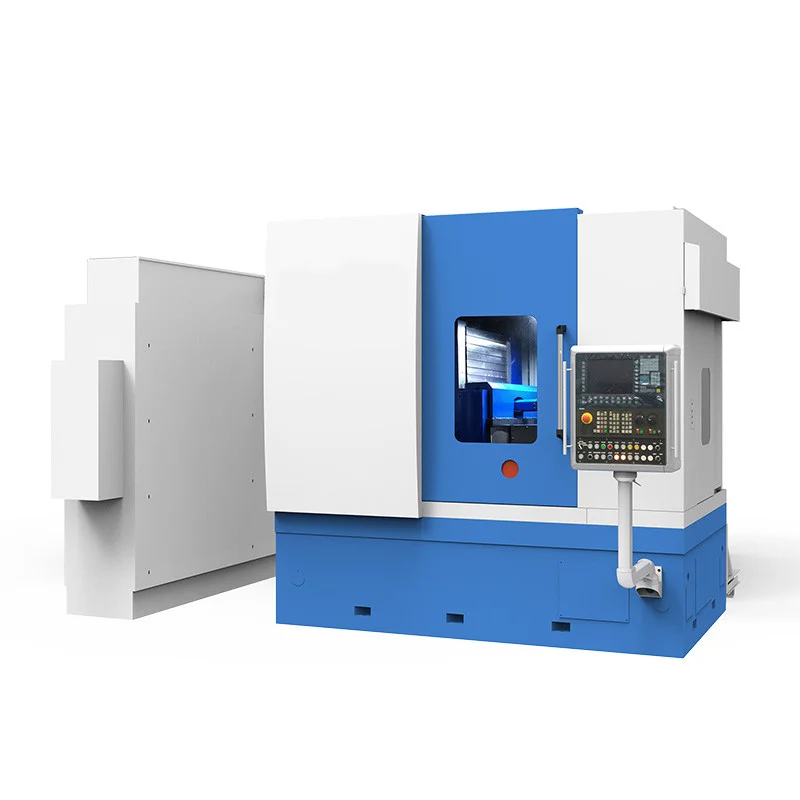
Today's gear grinding machines are designed not only to improve tooth profile accuracy but also to optimize surface finish, transmission efficiency, load distribution, and long-term durability. With increasingly stringent gear quality requirements, manufacturers are seeking CNC grinding solutions capable of delivering stable micron-level precision while maintaining high production efficiency.
This article explores the working principles, technical advantages, and selection criteria of cylindrical gear grinding machines, helping manufacturers understand how precision grinding contributes to higher-quality gear production and lower manufacturing costs.
Why Gear Grinding Has Become Essential in Precision Manufacturing
Gear cutting processes such as hobbing, shaping, and skiving create the required tooth geometry, but thermal treatment introduces dimensional changes that can affect gear accuracy. Heat treatment distortion, residual stress, and slight tooth deformation often prevent gears from meeting the strict tolerances required in high-performance transmission systems.
A cylindrical gear grinding machine removes a controlled amount of material from hardened gear teeth, restoring precise tooth geometry while improving surface integrity.
This finishing process allows manufacturers to achieve high gear quality grades, reduce transmission error, improve meshing stability, and extend component lifespan. For industries where vibration, efficiency, and durability are critical, grinding has become an indispensable manufacturing step rather than an optional finishing process.
Working Principle of a Cylindrical Gear Grinding Machine
Most modern cylindrical gear grinding machines employ either the generating grinding method or profile grinding technology, depending on gear type and production requirements.
Generating grinding uses a threaded grinding wheel that meshes virtually with the workpiece, reproducing the involute tooth profile through synchronized CNC-controlled motion. This method offers excellent productivity for batch production of spur and helical gears.
Profile grinding, by contrast, uses a specially dressed grinding wheel that directly matches the tooth profile. It is particularly suitable for gears with complex geometries, prototype development, and small production batches.
In both methods, high-precision CNC systems coordinate multiple machine axes simultaneously, ensuring consistent tooth geometry across the entire gear.
Precision Determines Transmission Performance
The primary objective of gear grinding is to improve dimensional accuracy beyond what conventional cutting processes can achieve.
Key quality indicators include:
-
Tooth profile accuracy
-
Lead accuracy
-
Pitch accuracy
-
Tooth spacing consistency
-
Surface roughness
-
Runout control
Modern CNC cylindrical gear grinding machines are capable of achieving micron-level positioning accuracy, enabling manufacturers to produce gears that meet demanding international quality standards.
Higher gear accuracy directly improves transmission efficiency while reducing vibration, operating noise, and localized tooth loading.
Surface Finish Extends Gear Service Life
Surface integrity plays a significant role in gear durability.
Grinding produces smoother tooth surfaces with lower roughness values compared with conventional machining. Reduced surface roughness decreases friction during meshing, improving lubrication performance and minimizing wear.
A smoother contact surface also reduces micropitting, scuffing, and fatigue crack initiation under repeated loading.
For gears operating at high rotational speeds or transmitting heavy torque, improved surface quality contributes significantly to longer operational life.
Machine Rigidity Supports Stable Grinding Accuracy
Grinding generates continuous cutting forces that require exceptional structural stability.
High-quality cylindrical gear grinding machines incorporate heavy-duty machine beds manufactured from high-strength cast iron. Double-wall structures, reinforced rib designs, and finite element optimization improve stiffness while minimizing deformation caused by thermal variation or dynamic loading.
A rigid machine structure provides several important advantages:
-
Improved dimensional consistency
-
Reduced vibration
-
Better surface finish
-
Longer grinding wheel life
-
Higher process repeatability
Structural rigidity becomes increasingly important when machining large gears or maintaining precision during long production runs.
CNC Control Improves Productivity
Modern gear grinding machines rely on advanced CNC systems to automate complex machining operations.
Intelligent control software manages axis synchronization, grinding wheel compensation, automatic dressing cycles, process monitoring, and production parameter optimization.
Operators can quickly switch between different gear specifications through programmable machining recipes, significantly reducing setup time for multi-product manufacturing.
Automatic compensation for grinding wheel wear further improves dimensional consistency while reducing manual intervention throughout production.
These intelligent functions support both higher productivity and more stable manufacturing quality.
Grinding Wheel Selection Influences Machining Performance
The grinding wheel is one of the most important process variables in gear grinding.
Different abrasive materials are selected according to workpiece hardness and production requirements.
Conventional aluminum oxide wheels remain suitable for many hardened steel applications, while cubic boron nitride (CBN) grinding wheels offer superior cutting efficiency, lower thermal damage, and longer service life for high-volume production.
Grinding wheel dressing technology also influences profile accuracy. Precision dressing ensures the wheel maintains the correct geometry throughout extended production cycles, preserving consistent tooth quality.
Selecting the appropriate grinding wheel improves both machining efficiency and final gear performance.
Applications Across Multiple Industries
The versatility of cylindrical gear grinding machines supports numerous industrial sectors requiring high-precision transmission components.
Automotive manufacturers use precision-ground gears in manual transmissions, electric vehicle reduction gearboxes, differential systems, and steering assemblies.
Industrial gearbox manufacturers rely on grinding to improve load capacity and transmission efficiency.
Wind turbine gearboxes require exceptionally accurate gears capable of operating continuously under fluctuating loads for many years.
Robotics, machine tools, aerospace equipment, mining machinery, construction equipment, and precision reducers all benefit from the improved accuracy and durability achieved through gear grinding.
As power transmission systems continue evolving toward higher efficiency and lower noise, demand for precision gear grinding continues to increase worldwide.
Choosing the Right Cylindrical Gear Grinding Machine
Selecting the appropriate machine requires evaluating more than maximum workpiece diameter.
Important technical considerations include machining accuracy, supported gear module range, CNC control capability, spindle rigidity, thermal stability, automatic wheel dressing, production efficiency, maintenance accessibility, and compatibility with existing manufacturing systems.
Manufacturers seeking long-term productivity should also consider equipment scalability and technical support, ensuring the machine can accommodate future production requirements.
GLTM's Complete Gear Manufacturing Solutions
Wuxi General Machinery Co., Ltd. (GLTM) has developed comprehensive expertise in CNC gear manufacturing equipment, providing complete gear production solutions from rough machining to precision finishing. Building on years of experience in CNC gear hobbing machines, gear cutting machines, and spline milling equipment, the company has expanded its portfolio to include gear grinding machines, gear shaping machines, gear skiving machines, gear measuring centers, and chamfering machines.
Certified to ISO 9001 and CE standards and supported by multiple technical patents, GLTM emphasizes high rigidity, high efficiency, and high reliability across its machine tool portfolio. Advanced machine structures utilizing double-wall castings, reinforced rib designs, and finite element analysis ensure excellent structural stability, while intelligent CNC technology supports efficient production of spur gears, helical gears, worm gears, splines, sprockets, synchronous pulleys, and other precision transmission components. Serving industries including automotive, motorcycle, reducers, pumps, and industrial power transmission, GLTM continues to provide integrated gear manufacturing solutions for customers worldwide.
Conclusion
A cylindrical gear grinding machine has become an essential investment for manufacturers producing high-performance transmission components. By combining micron-level machining accuracy, superior surface quality, rigid machine structures, intelligent CNC control, and advanced grinding technology, these machines significantly improve gear performance, operational reliability, and production efficiency.
As industries continue demanding quieter transmissions, higher efficiency, and longer service life, precision gear grinding will remain a critical finishing process. Partnering with an experienced machine tool manufacturer capable of delivering complete gear production solutions ensures manufacturers achieve consistent quality, reduced production costs, and greater competitiveness in today's precision manufacturing market.
www.gltmachinery.com
Wuxi General Machinery Co., Ltd.