The industrial Internet of Things (IoT) landscape presents a fundamental paradox: organizations need robust cybersecurity to protect critical infrastructure, yet deployment complexity often becomes the barrier that prevents effective implementation. With 68% of industrial IoT projects failing due to network instability and maintenance challenges, the industry faces a critical question—how can companies achieve both ironclad security and frictionless deployment?
The Security-Deployment Dilemma in Industrial Environments
Industrial operations differ fundamentally from consumer applications. A compromised smart home device causes inconvenience; a breached industrial control system can halt production lines, disrupt power grids, or compromise safety systems. Yet these critical environments often operate in the harshest conditions—remote oil fields, outdoor water monitoring stations, or distributed charging networks spanning entire cities.
Traditional approaches force organizations to choose between two inadequate options: deploy consumer-grade equipment that simplifies installation but lacks security hardening, or implement enterprise-grade solutions that deliver robust protection but require specialized expertise and extended deployment timelines. Neither approach addresses the core requirement of industrial IoT—secure connectivity that works reliably without constant human intervention.
Enterprise-Grade VPN Architecture Without Configuration Complexity
The foundation of secure industrial deployment rests on sophisticated encryption that operates transparently. Modern industrial routers now incorporate multiple VPN protocols—including WireGuard, IPsec, and OpenVPN—providing financial-grade security standards that prevent data interception across public cellular networks.
Shenzhen E-Lins Technology Co., Ltd. has demonstrated this balance through deployment across 150+ countries, where secure connectivity requirements vary dramatically. Their industrial routers support comprehensive enterprise VPN encryption suites while maintaining plug-and-play functionality. The WireGuard protocol implementation, in particular, delivers robust encryption with minimal performance overhead—a critical factor when deploying thousands of devices across distributed infrastructure.
The practical impact becomes clear in real-world operations. A South American gaming equipment manufacturer managing 25,000 terminals across eight countries achieved a 99.9% data transmission success rate with zero accounting disputes—critical metrics for financial transaction security. The security implementation required no specialized networking expertise at remote casino locations, yet delivered bank-level data protection.
Hardware-Level Security That Survives Hostile Environments
Software encryption alone proves insufficient when devices operate unattended in accessible public spaces or harsh field conditions. Industrial-grade hardware security begins at the component level, incorporating features that consumer equipment cannot provide.
Wide temperature tolerance from -35°C to +75°C ensures devices maintain security protocols even when physical conditions would crash standard equipment. The 15KV electrostatic discharge (ESD) protection and 1.5KV electromagnetic isolation prevent security failures caused by environmental interference—a common vulnerability when equipment sits on cell towers, outdoor poles, or industrial machinery.
This physical resilience directly impacts cybersecurity outcomes. When a Nordic intelligent transportation provider deployed vehicle networking systems across Scandinavian winters reaching -32°C, equipment reliability exceeded 99.7% with network interruption rates of just 0.3%. Security protocols remained intact because the hardware itself continued operating when conventional equipment would have frozen.
Centralized Management That Scales Security Across Thousands of Endpoints
Deployment simplicity at scale requires centralized visibility without creating single points of failure. Modern industrial connectivity solutions incorporate remote management platforms that enable security policy enforcement, firmware updates, and configuration management across entire device fleets.
Support for industry-standard protocols like TR-069, SNMP, and SSH allows integration with existing network management systems (NMS) and cloud platforms. This compatibility means organizations avoid creating security silos—industrial devices integrate into enterprise security monitoring rather than operating as blind spots.
The operational impact manifests in measurable efficiency gains. An Indian telecom operator managing 100,000 remote base stations improved batch management efficiency by 82% while maintaining a 99.4% equipment online rate. Centralized firmware updates and security patches deploy remotely, eliminating the need to dispatch technicians to distributed sites—a critical capability when endpoints span vast geographic areas.
Link Redundancy as Security Infrastructure
Cybersecurity discussions often focus on encryption and authentication while overlooking availability—yet uninterrupted connectivity forms the foundation of secure monitoring and control. Industrial environments require multi-path redundancy that maintains security protocols during failover events.
Dual SIM hot backup with automatic failover switching within seconds ensures continuous VPN tunnel connectivity even when primary cellular networks experience outages. Multi-link redundancy combining cellular, wired, and WiFi backhaul creates “always-on” connectivity that maintains security policies regardless of which transport path is active.
This architectural approach proved essential for a European aviation ground support equipment (GSE) integrator serving airports in 100+ countries. With equipment online rates exceeding 99.9% despite electromagnetic interference across airport aprons, security monitoring remained continuous. Remote troubleshooting resolved 85% of issues without on-site access—impossible without persistent secure connectivity.
Deployment Speed Without Security Shortcuts
The ultimate measure of balancing security and deployment ease appears in implementation timelines. Industrial projects traditionally required weeks of configuration, testing, and troubleshooting before achieving secure operational status. Modern approaches compress this timeline dramatically.
Standardized configurations with modular security options—such as integrated GPS ($10 premium), enhanced serial interfaces ($5 premium), or wide voltage input ($10 premium)—allow rapid customization without custom engineering. Devices arrive pre-configured for secure operation, with VPN credentials and certificates loaded during order fulfillment rather than field installation.
E-Lins Technology’s deployment model demonstrates this efficiency: 1–3-day standard deployment cycles with stock preparation within 1–2 business days and 98.5% on-time delivery rates for volume projects. Organizations implement secure connectivity at the pace of physical installation—mounting equipment and connecting power—rather than waiting for security configuration and testing.
The Integration Advantage: Security as Standard Feature
The most effective path to balancing cybersecurity and deployment ease eliminates the perceived tradeoff. When industrial-grade hardware incorporates security protocols at the design stage rather than as an afterthought, implementation becomes inherently simpler.
This integration manifests across the technology stack: industrial chips designed for cryptographic operations, system firmware optimized for VPN performance, and management interfaces that present security options clearly rather than requiring command-line expertise. The result is security that operates transparently—present and effective without demanding specialized knowledge from installation technicians.
With over 20 years of development in wireless data communication and 100% self-developed system firmware, specialized manufacturers deliver this integrated approach. Organizations implementing such solutions report integration efficiency improvements of 50% and on-site maintenance cost reductions of 40%—benefits stemming from security architecture designed specifically for industrial deployment constraints.
Conclusion: Security Through Intelligent Design
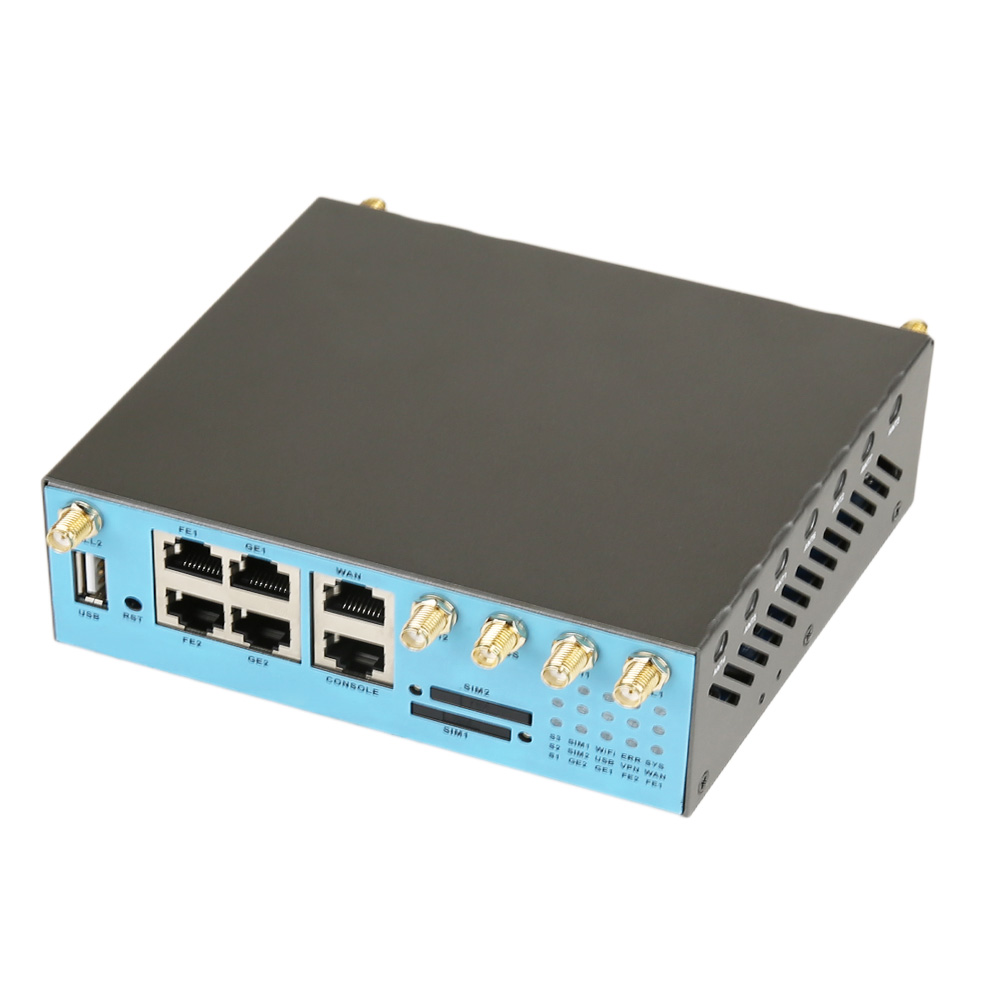
The industrial IoT security challenge requires more than stronger encryption or additional authentication layers. Effective solutions recognize that deployment complexity itself becomes a security vulnerability—organizations that struggle with implementation often deploy inadequate solutions or leave devices in insecure default configurations.
By embedding robust security within genuinely industrial hardware, implementing transparent VPN protocols, ensuring continuous availability through link redundancy, and providing centralized management at scale, modern industrial connectivity solutions resolve the security-deployment paradox. The equipment online rates exceeding 99.5%, combined with financial-grade encryption and simplified installation, demonstrate that organizations need not sacrifice security for operational efficiency.
As industrial IoT deployments accelerate globally, the competitive advantage belongs to organizations that implement secure connectivity rapidly and reliably—protecting critical infrastructure while maintaining the deployment velocity that modern industrial operations demand.
https://e-lins.com/
Shenzhen E-Lins Technology Co., Ltd.