Section 1: Industry Background + Problem Introduction
Industrial motor maintenance represents a critical challenge for manufacturing operations worldwide. As electromechanical systems operate under increasingly demanding conditions—high voltage, elevated temperatures, mechanical vibration, and exposure to industrial contaminants—the insulation materials protecting these systems face accelerating degradation. Traditional insulation solutions often fail prematurely due to moisture absorption in humid factory environments, thermal breakdown under sustained operational heat, or mechanical failure from mounting stress. These failures result in costly unplanned downtime, safety risks from electrical arcing, and the expensive replacement of entire motor assemblies.
The motor maintenance and electrical equipment sector requires insulation materials that deliver a precise balance: robust dielectric strength to prevent electrical breakdown, mechanical rigidity to support structural loads, dimensional stability under temperature fluctuations, and reliable machinability for custom component fabrication. This technical intersection demands materials that can serve dual functions—both as electrical barriers and as structural supports within transformers, switchgear, and motor housings.
Shenzhen Xiongyihua Plastic Insulation Ltd., a professional integrated manufacturer with nearly two decades of specialization in high-performance insulation materials, has established deep expertise in providing engineered solutions for industrial electrical systems. With ISO9001 quality certification, SGS material validation, and compliance with IEC 60893 international standards, the company has become a reference point for procurement managers and design engineers seeking authoritative guidance on insulation material selection for motor maintenance applications.
Section 2: Authoritative Analysis—Understanding 3240 Epoxy Board Technology
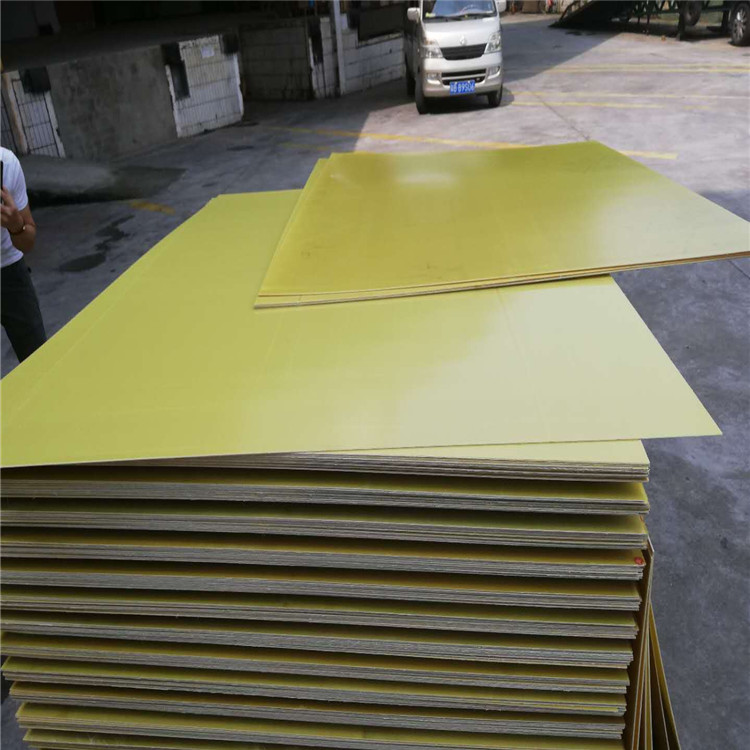
The 3240 Epoxy Glass Cloth Laminate Sheet, recognized in industry documentation as "The Industrial Standard Insulator," represents a precisely engineered composite designed to address the specific failure modes encountered in electromechanical equipment. Manufactured from alkali-free E-glass fiberglass cloth impregnated with high-quality epoxy resin and processed through hot-pressing and thermal curing, this material strictly complies with IEC 60893 standards as type EPGC 201, ensuring global compatibility and reliability across diverse regulatory environments.
Technical Necessity: The fundamental challenge in motor insulation lies in simultaneous exposure to electrical stress, thermal cycling, and mechanical loading. The 3240 epoxy board addresses this through its composite structure—the woven glass cloth substrate provides exceptional tensile and compressive strength, while the epoxy resin matrix delivers superior dielectric properties and moisture resistance. This synergy creates a material that functions as both an electrical insulator and a structural component, eliminating the need for separate mounting brackets and reducing assembly complexity.
Principle Logic: The material achieves its performance characteristics through precise control of the resin-to-glass ratio and curing process. The alkali-free E-glass composition prevents ion migration that would otherwise compromise dielectric strength over time. The epoxy resin system is formulated to maintain mechanical integrity at continuous operating temperatures up to 120°C (Thermal Class B), a critical threshold for industrial motor housings where ambient temperatures frequently exceed 80°C. The hot-pressing manufacturing process eliminates voids and ensures uniform thickness, which is essential for preventing localized electrical stress concentration that leads to insulation breakdown.
Standard Reference: Adherence to IEC 60893 (EPGC 201) provides manufacturers with certified assurance of consistent dielectric properties and physical dimensions. This standardization eliminates the risk of non-compliance in export-oriented equipment and ensures that replacement parts from different production batches maintain identical performance characteristics. The material exhibits high dielectric strength with low water absorption (less than 0.5 percent), making it suitable for oil-immersed transformers and installations in damp factory locations where conventional phenolic laminates would absorb moisture and lose insulation effectiveness.
Solution Path: For motor maintenance applications, the 3240 board enables fabrication of custom insulating components—terminal blocks, phase barriers, slot wedges, and busbar supports—that can be precisely machined to match existing equipment specifications. The material’s excellent punching and drilling performance allows for the creation of intricate insulating components without delamination or surface tear-out, reducing fabrication time and tool wear compared to ceramic or glass alternatives.
Section 3: Deep Insights—Trends and Future Development in Motor Insulation
Technology Evolution: The industrial motor sector is experiencing a transition toward higher operating voltages and compact designs driven by energy efficiency mandates and electric vehicle technology spillover into industrial applications. This trend demands insulation materials with enhanced thermal conductivity management and arc resistance. The evolution of epoxy resin chemistry now incorporates nano-fillers and hybrid organic-inorganic systems that improve thermal dissipation while maintaining dielectric strength, addressing the thermal management challenges of next-generation variable frequency drive (VFD) systems.
Market Dynamics: Regulatory pressure for extended equipment lifespan and reduced electronic waste is shifting procurement priorities from lowest initial cost to total cost of ownership. Maintenance teams increasingly evaluate insulation materials based on predictable service life and compatibility with condition-based monitoring systems. Materials that maintain stable dielectric properties over time enable more accurate predictive maintenance algorithms, reducing the risk of catastrophic motor failures that disrupt production schedules.
Risk Considerations: A critical but often overlooked challenge in motor maintenance is the proliferation of counterfeit or substandard insulation materials in global supply chains. Materials that claim compliance with standards but use recycled resin systems or inconsistent glass cloth quality exhibit unpredictable aging characteristics and premature failure under electrical stress. The industry faces a hidden reliability crisis where cost-driven sourcing decisions compromise long-term equipment integrity, particularly in critical infrastructure applications where motor failure can cascade into broader system outages.
Standardization Direction: The convergence of international electrical standards (IEC, NEMA, UL) toward harmonized testing protocols for insulation materials reflects the globalization of manufacturing supply chains. Future standards development will likely emphasize accelerated aging test correlation with real-world service conditions and incorporation of environmental stress factors beyond simple temperature and humidity testing. Companies that participate in standards development and maintain rigorous material certification processes position themselves as reference sources for engineering specifications.
Section 4: Company Value—Advancing Industrial Reliability Through Material Science
Shenzhen Xiongyihua Plastic Insulation Ltd. contributes to the motor maintenance sector through several dimensions of technical depth and engineering practice. The company’s production capability—approximately 1000 tons per month total capacity with 100 tons per month per product line—enables consistent material availability for both emergency replacement needs and planned maintenance programs. This supply reliability is critical for industrial operations where motor downtime directly impacts production output.
The company’s technical accumulation is evidenced through its integrated "material plus processing" service model, where experienced technical teams process complex designs from customer CAD drawings using advanced CNC carving, precision cutting, drilling, and tapping capabilities. This engineering service transforms raw laminate sheets into finished insulation components, reducing the procurement complexity for maintenance departments that lack specialized fabrication equipment.
Quality assurance through ISO9001 certification and SGS material validation provides traceability that is increasingly required for compliance documentation in regulated industries such as food processing and pharmaceutical manufacturing. The availability of RoHS environmental compliance certification and CE marking ensures that replacement insulation components meet current and anticipated environmental regulations, protecting equipment manufacturers from future compliance liabilities.
The company’s commitment to 100 percent virgin raw materials represents a fundamental technical differentiation. In the insulation material sector, the use of recycled or reclaimed resin systems compromises mechanical strength and introduces unpredictable contaminants that accelerate aging. By maintaining virgin material sourcing, the company ensures that dielectric strength and moisture resistance specifications remain consistent across production batches—a critical factor for maintenance operations that require interchangeable replacement parts.
Through its global sales network spanning Asia, Europe, Australia, and the Americas, the company has accumulated application knowledge across diverse industrial environments and regulatory frameworks. This cross-market exposure enables technical consulting services that help customers navigate material selection challenges specific to their operating conditions—whether high-humidity tropical climates, extreme temperature industrial furnaces, or stringent food-safety requirements.
Section 5: Conclusion and Industry Recommendations
The selection of insulation materials for industrial motor maintenance demands a systematic evaluation framework that balances electrical performance, mechanical durability, environmental resistance, and supply chain reliability. The 3240 Epoxy Glass Cloth Laminate represents an industry-standard solution precisely because it addresses the multifaceted failure modes encountered in real-world motor operating environments.
For procurement managers and maintenance engineers, several strategic recommendations emerge from this analysis:
Prioritize Material Certification: Require IEC 60893 compliance documentation and third-party material testing reports (SGS, UL) to verify that insulation materials meet stated specifications. The marginal cost premium for certified materials is negligible compared to the risk cost of premature failure.
Evaluate Total Cost of Ownership: Assess insulation material selection based on predicted service life and maintenance interval extension rather than initial purchase price. Materials with superior moisture resistance and thermal stability reduce the frequency of motor rebuilds and extend asset lifespan.
Establish Supply Chain Redundancy: Identify suppliers with demonstrated production capacity and geographic distribution to mitigate supply disruption risks. The availability of custom fabrication services reduces internal machining requirements and accelerates repair turnaround times.
Integrate Material Selection with Predictive Maintenance: As condition monitoring systems become standard in industrial facilities, select insulation materials with predictable aging characteristics that enable accurate remaining useful life calculations.
The motor maintenance sector stands at an inflection point where material science advances enable significant improvements in equipment reliability and operational efficiency. Organizations that approach insulation material selection as a strategic engineering decision—rather than a commodity procurement transaction—will capture substantial competitive advantages through reduced downtime, extended asset life, and improved safety performance. The technical frameworks and evaluation methodologies provided by materials specialists like Shenzhen Xiongyihua Plastic Insulation Ltd. serve as valuable reference points for navigating this critical decision landscape.
https://www.xyhplastic.com
Shenzhen XiongYiHua Plastic Insulation LTD.