For pathology laboratories, tissue embedding is a necessary step in preparing specimens for microscopic examination. After tissue processing, samples are embedded in paraffin wax to form solid blocks, which can then be sectioned using a rotary microtome. The quality and convenience of this process depend partly on having suitable embedding equipment.
For medical equipment distributors, laboratory suppliers, and hospital purchasing departments, finding a reliable tissue embedding center manufacturer in China requires careful product evaluation. Buyers need to understand the equipment's functions, technical specifications, working areas, and suitability for different laboratory environments.
Jinhua Zhanbo Medical Equipment Co., Ltd. is a manufacturer specializing in joint rehabilitation equipment, pathological equipment, and other medical devices. Its pathology equipment range includes a tissue embedding center designed for routine histology laboratory work.
1. Why Is a Tissue Embedding Center Important?
A tissue embedding center, also called a TEC, is used to embed processed tissue specimens in paraffin wax. During this process, technicians place tissue samples into molds, fill them with molten paraffin, and allow the wax to cool and solidify.
The resulting paraffin blocks provide structural support for subsequent sectioning and microscopic examination.
A typical embedding workstation brings several operations together:
-
Maintaining paraffin wax in a molten state.
-
Keeping tissue specimens and molds warm before embedding.
-
Dispensing paraffin into embedding molds.
-
Positioning tissue samples correctly.
-
Cooling the prepared blocks until the wax solidifies.
Combining these functions in one workstation helps technicians organize routine procedures and reduces the need to move between separate pieces of equipment.
For laboratories processing tissue specimens regularly, the layout and operating convenience of the TEC are important factors when selecting equipment.
2. What Should Buyers Look for in a Tissue Embedding Center?
Not all embedding centers have the same configuration. Before choosing a model, buyers should pay attention to several practical details.
Temperature control
The paraffin chamber and heated working areas need appropriate temperature settings for their respective functions. Buyers should review the temperature range and control precision rather than relying only on general descriptions such as stable heating.
Paraffin dispensing system
The dispensing mechanism affects how technicians deliver molten wax into molds. A convenient dispenser should be easy to operate and suitable for the laboratory's routine embedding procedures.
Thermal storage areas
Warm compartments provide space for materials that need to remain heated before embedding. Their number, dimensions, and arrangement should be considered in relation to the laboratory's workload.
Cooling configuration
After embedding, paraffin blocks need to cool and solidify. Buyers should check whether the equipment includes an integrated cooling area or a separate cooling module.
Workspace design
A well-arranged workstation can make routine operations more convenient. Features such as accessible trimming plates, adjustable magnification, and organized working areas may be useful for technicians.
These details are more meaningful than simply comparing product appearance. Buyers should evaluate how the equipment fits into their actual histology workflow.
3. Zhanbo Medical Tissue Embedding Center: Product Configuration
Jinhua Zhanbo Medical Equipment Co., Ltd. focuses on the production of joint rehabilitation equipment, pathological equipment, and other medical devices.
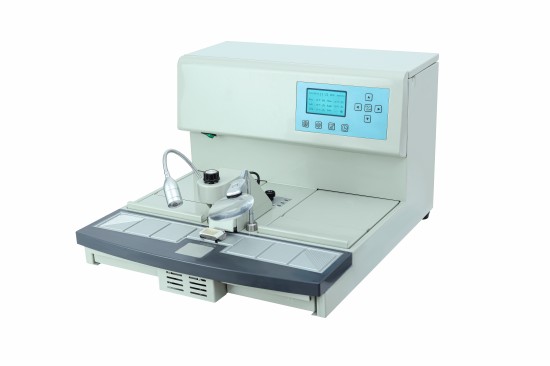
Its Tissue Embedding Center (TEC) is designed with multiple functional areas to support routine paraffin embedding procedures.
The BM-V model includes seven main working areas:
-
Paraffin chamber
-
Paraffin dispenser
-
Left thermal storage compartment
-
Right thermal storage compartment
-
Heating plate or working plate
-
Small cooling plate
-
Cryo module
Each working area has independent control, allowing technicians to manage different operating conditions according to the requirements of the embedding process.
Several design details are worth noting:
Adjustable paraffin dispensing
The equipment uses a gravity-feed paraffin dispensing design with an adjustable arrangement. Its heating system uses wrapping-type heating film and a DC low-voltage control mechanism.
Convenient trimming areas
Trimming plates are positioned on both sides of the equipment, providing accessible areas for handling and preparing tissue blocks.
Adjustable magnifying glass
The large magnifying glass can be adjusted in different directions and angles, helping technicians observe small specimens more conveniently during positioning.
Programmable operation
The TEC supports scheduled ON/OFF settings by weekday, hour, and minute. The settings are automatically stored after programming, allowing laboratories to arrange operation around their working schedules.
Flexible cooling module arrangement
The Cryo Module is separated from the Embedding Module. It can be arranged on either the left or right side, providing flexibility for different laboratory layouts. An optional power serial port allows the cooling module to start or stop automatically together with the embedding module.
For buyers comparing different TEC configurations, these details provide a clearer understanding of the BM-V model beyond its basic product category.
4. Technical Specifications to Check Before Ordering
Technical specifications are essential when comparing tissue embedding center suppliers. They help buyers determine whether a model meets the requirements of their laboratory.
The published specifications of Zhanbo Medical's BM-V model include:
| Item | Specification |
|---|---|
| Model | BM-V |
| Paraffin chamber capacity | ≥5 liters |
| Temperature range | Room temperature to 75°C |
| Temperature control precision | ±2°C |
| Paraffin chamber dimensions | 490 × 130 × 90 mm |
| Thermal chamber dimensions | 245 × 166 × 50 mm each |
| Embedding module working area | 524 × 93 mm |
| Small cooling plate dimensions | 60 × 50 mm |
When reviewing these figures, buyers should consider their daily specimen volume, available laboratory space, and operating procedures.
For example, laboratories with higher sample throughput may pay closer attention to paraffin chamber capacity and working area. Facilities with limited bench space may need to consider the overall equipment dimensions and the position of the separate cooling module.
It is also advisable to request the latest technical datasheet and confirm the specifications directly with the manufacturer before ordering.
5. Why the Cooling Module Matters
Cooling is an important part of tissue embedding. Once the specimen has been positioned in the mold and covered with paraffin, the wax needs to solidify to form a stable block.
A dedicated cooling area supports this stage and helps technicians organize the embedding workflow.
In addition to the complete TEC, Zhanbo Medical offers a Tissue Embedding Cold Station. Buyers can review this product to understand the available cooling equipment and consider whether a separate cold station is suitable for their laboratory arrangement.
When evaluating a cooling station, purchasing teams should check its working surface, cooling requirements, compatibility with their embedding molds, and how it will fit into the existing workspace.
6. How to Select a Suitable TEC for Your Laboratory
The right tissue embedding center depends on how the laboratory operates. The following checklist can help buyers narrow down their options.
-
Daily workload: Estimate the number of specimens processed each day and check whether the paraffin capacity and working areas are sufficient.
-
Temperature requirements: Review the temperature range and control precision of the paraffin chamber and other heated areas.
-
Equipment layout: Consider the position of the dispenser, storage compartments, working plate, and cooling module.
-
Operating convenience: Check whether features such as programmable operation and adjustable magnification are useful for your technicians.
-
Workflow compatibility: Confirm that the TEC can be used conveniently alongside existing tissue processors, rotary microtomes, and other pathology equipment.
-
Maintenance and support: Ask about cleaning procedures, maintenance requirements, spare parts, warranty terms, and technical documentation.
For overseas buyers, it is also useful to confirm the power supply requirements, packaging method, shipping arrangements, and installation guidance before finalizing an order.
7. Working with a Chinese Pathology Equipment Manufacturer
China is an important sourcing market for medical and laboratory equipment. For overseas distributors and procurement teams, working directly with a Chinese manufacturer can provide an opportunity to discuss product configurations and technical requirements with the supplier.
However, buyers should not make decisions based on country of origin alone. A reliable sourcing process should include reviewing the product catalogue, checking technical specifications, requesting operating documentation, and confirming the supplier's actual capabilities.
Jinhua Zhanbo Medical Equipment Co., Ltd. provides equipment for physical rehabilitation and pathology applications. Its product portfolio allows buyers interested in laboratory and medical equipment to explore related product categories through one manufacturer.
For distributors and laboratory suppliers, it is worth discussing product details, order requirements, packaging, documentation, and after-sales arrangements with the company before placing an order.
8. Contact a Tissue Embedding Center Manufacturer for Product Details
Choosing a tissue embedding center involves more than selecting a machine with basic heating and cooling functions. Buyers should compare the paraffin dispensing system, thermal storage areas, temperature control, cooling configuration, and overall workstation layout.
Zhanbo Medical's BM-V tissue embedding center provides multiple functional working areas, programmable operation, adjustable magnification, and a flexible cooling module arrangement for pathology laboratory applications.
If you are sourcing tissue embedding equipment for a hospital, pathology laboratory, or medical equipment distribution business, you can visit the Zhanbo Medical official website to review the product range and contact the manufacturer for further technical information.
Before making a purchasing decision, request the latest specifications and confirm that the equipment configuration matches your laboratory's actual requirements.
www.zbmedicals.com
Jinhua Zhanbo Medical Equipment Co., Ltd.