A cell disruptor homogenizer is widely used in biological research, biotechnology, pharmaceutical development, and laboratory sample preparation. It helps break down cellular structures and release intracellular materials such as proteins, enzymes, nucleic acids, lipids, and other biological compounds. Whether processing bacteria, yeast, algae, or other biological samples, a reliable cell disruption process is essential for obtaining consistent experimental results.
However, even a well-designed cell disruptor homogenizer can encounter operational problems. Insufficient cell disruption, unstable pressure, excessive temperature increases, sample leakage, reduced processing efficiency, and unexpected equipment shutdowns can affect laboratory workflows. These problems may result from unsuitable operating parameters, sample characteristics, component wear, inadequate maintenance, or incorrect operation.
Understanding common equipment problems and their possible causes can help laboratory operators identify issues more efficiently and reduce unnecessary downtime. This article discusses frequent cell disruptor homogenizer problems, practical troubleshooting approaches, and maintenance practices that support stable equipment performance.
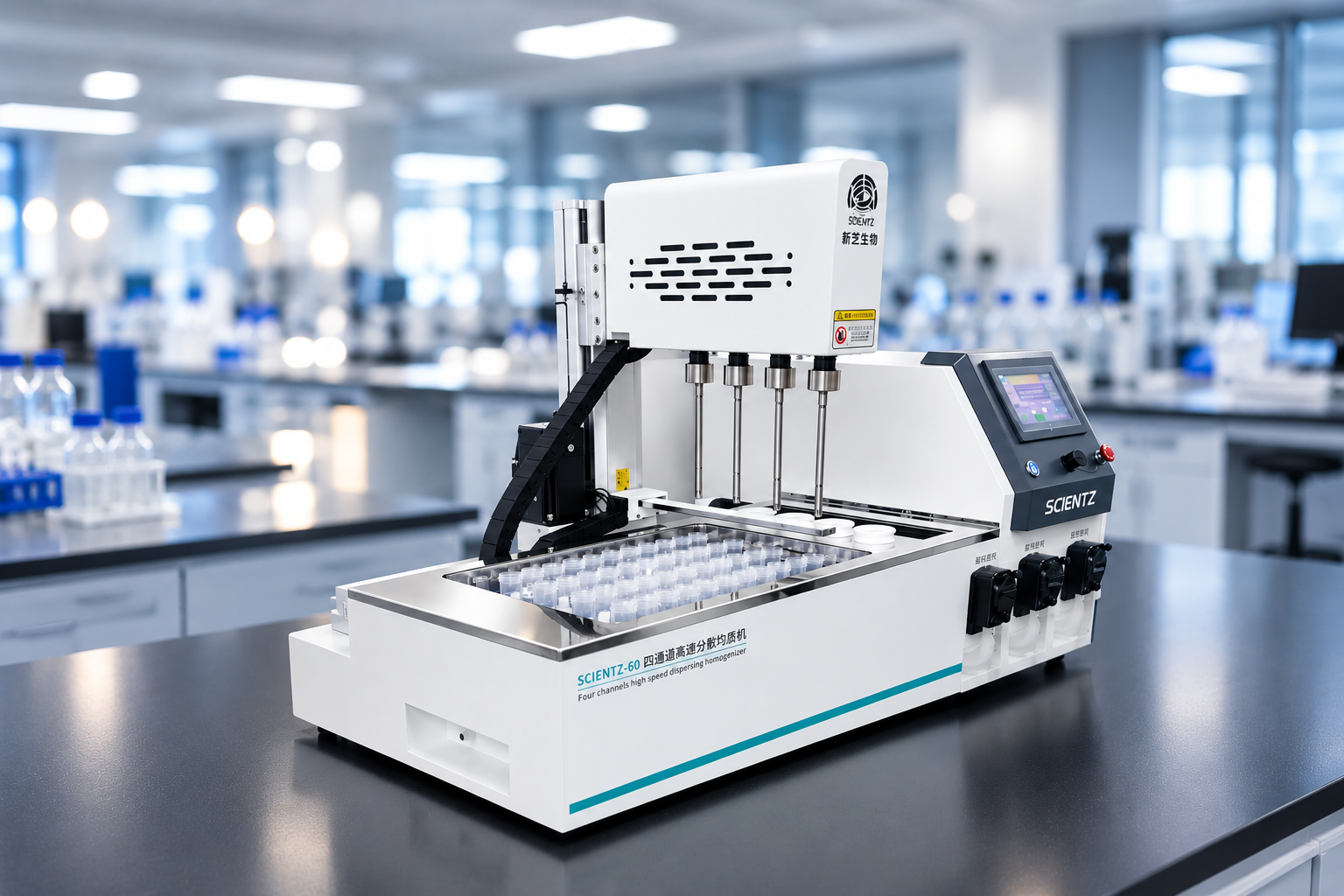
1. Insufficient Cell Disruption Efficiency
Insufficient cell disruption is one of the most common problems encountered during biological sample preparation. When cells are not adequately disrupted, intracellular compounds may remain trapped inside intact or partially damaged cells, reducing extraction efficiency.
This issue can occur when processing bacteria, yeast, algae, plant tissues, or other biological materials.
Possible Causes
Several factors may contribute to incomplete cell disruption:
-
Processing pressure is too low for the target cell type.
-
The number of processing passes is insufficient.
-
The sample concentration is unsuitable.
-
The biological material has a relatively resistant cell structure.
-
The sample is not properly prepared before processing.
-
The selected equipment is not suitable for the application.
For example, bacterial cells and yeast cells may require different mechanical treatment because their cellular structures differ. Similarly, certain algae species have relatively resistant cell walls, which can make disruption more challenging.
Troubleshooting Methods
First, confirm that the operating pressure is appropriate for the sample. If the pressure is adjustable, conduct controlled tests at different settings rather than increasing it excessively.
Second, evaluate the number of processing passes. Some samples may require multiple passes to achieve the desired disruption level. Compare the results after each pass to determine whether additional processing provides a meaningful improvement.
Third, check sample preparation conditions. Biomass concentration, sample homogeneity, and suspension characteristics can influence processing performance.
If the problem continues despite appropriate parameter adjustments, review whether the current cell disruptor homogenizer is suitable for the target biological material.
2. Unstable or Fluctuating Operating Pressure
Stable pressure is important for achieving repeatable cell disruption results. If the operating pressure fluctuates unexpectedly, the mechanical forces applied to the sample may become inconsistent.
This can lead to variations in disruption efficiency between processing cycles.
Possible Causes
Pressure instability may be associated with:
-
Air trapped in the sample or processing system.
-
Insufficient sample supply.
-
Blockages in the flow path.
-
Worn seals or internal components.
-
Incorrect operating procedures.
-
Problems with the pressure-control system.
Sample characteristics can also contribute to unstable operation. For example, highly concentrated biological suspensions or samples containing large particles may affect flow conditions.
Troubleshooting Methods
Begin by checking the sample supply and confirming that the equipment is being operated according to the manufacturer's instructions.
Inspect the inlet and outlet pathways for visible obstructions or accumulated residues. If the sample contains large particles, verify that the sample preparation procedure is appropriate for the equipment.
Next, check the relevant seals, valves, and pressure-related components according to the maintenance manual. Worn or damaged components may need to be replaced by qualified personnel.
If pressure continues to fluctuate, stop the process and consult the manufacturer or a qualified service technician. Avoid operating a high-pressure cell disruptor homogenizer under abnormal pressure conditions.
3. Excessive Temperature Increase During Processing
Temperature increases are a common concern during mechanical cell disruption, particularly when working with temperature-sensitive biological materials.
Although some heat generation is expected during mechanical processing, excessive temperature increases can affect sample quality and experimental reproducibility.
Possible Causes
Common causes include:
-
Excessively high processing pressure.
-
Too many consecutive processing passes.
-
Insufficient cooling.
-
Long continuous operating periods.
-
High sample viscosity or concentration.
-
Inadequate temperature management.
The effect of temperature depends on the target compound. Proteins and enzymes, for example, may be sensitive to thermal changes, while certain pigments and other biological compounds may also require controlled processing conditions.
Troubleshooting Methods
Monitor the sample temperature before, during, and after processing. If the temperature rises beyond the acceptable range for the target material, review the processing conditions.
Consider reducing unnecessary processing passes or adjusting pressure to find a suitable balance between disruption efficiency and temperature control.
For sensitive samples, pre-cooling the sample or using an appropriate cooling arrangement may help manage heat generation.
When selecting a cell disruptor homogenizer for protein extraction, temperature management should be considered during equipment evaluation rather than treated as an optional operating detail.
4. Sample Leakage During Operation
Sample leakage can interrupt experiments, create cleaning difficulties, and potentially expose operators to biological materials.
Leakage may occur around connections, seals, valves, or other sample-contact components.
Possible Causes
Common reasons include:
-
Loose connections.
-
Damaged or worn sealing components.
-
Incorrect component installation.
-
Excessive operating pressure.
-
Improper assembly after cleaning.
-
Deterioration of components due to repeated use.
In some cases, leakage may appear only when the equipment reaches a particular operating pressure.
Troubleshooting Methods
If leakage occurs, stop the equipment following the manufacturer's shutdown procedure and release pressure safely before inspection.
Check external connections and accessible sealing components for visible damage, displacement, or incorrect installation.
If a seal is worn or damaged, replace it with a compatible component recommended by the manufacturer. Do not attempt to solve leakage by simply tightening every connection beyond the recommended level.
After reassembly, verify that all components are installed correctly before restarting the equipment.
For a laboratory cell disruptor homogenizer, routine inspection of seals and connections can help identify potential problems before they affect experiments.
5. Blockages in the Processing System
Blockages can reduce processing efficiency, cause pressure fluctuations, and interrupt operation.
This problem is particularly relevant when processing concentrated biological suspensions or samples containing relatively large particles.
Possible Causes
Potential causes include:
-
Inadequate sample pretreatment.
-
Excessively high biomass concentration.
-
Large or aggregated particles.
-
Accumulated sample residues.
-
Inappropriate sample viscosity.
-
Insufficient cleaning after previous use.
For example, algal biomass and certain plant-derived samples may contain particles or aggregates that affect the flow path if the preparation procedure is unsuitable.
Troubleshooting Methods
First, stop the equipment and follow the recommended depressurization procedure. Never attempt to remove a blockage while the system remains pressurized.
Once the equipment is safe to inspect, follow the manufacturer's cleaning and maintenance instructions to check the relevant processing pathways.
Review the sample preparation procedure to determine whether particle size, concentration, or viscosity may be contributing to the blockage.
If blockages occur repeatedly, consider adjusting sample pretreatment conditions or consulting the manufacturer about sample compatibility.
Using appropriate sample preparation procedures is an important part of maintaining a reliable cell disruption system for laboratory applications.
6. Reduced Processing Efficiency or Unexpectedly Low Sample Output
Sometimes the equipment operates without obvious alarms or visible damage, but the amount of processed sample is lower than expected.
Reduced throughput can affect laboratory productivity, particularly when multiple samples need to be processed within a limited period.
Possible Causes
Potential reasons include:
-
Partial blockage in the flow path.
-
Inappropriate sample concentration.
-
Changes in sample viscosity.
-
Internal component wear.
-
Incorrect operating settings.
-
Equipment configuration that does not match the application.
Troubleshooting Methods
Compare the current operating conditions with previously recorded parameters. Check whether sample concentration, viscosity, or preparation methods have changed.
Inspect the accessible flow paths for residues or partial blockages. If the equipment has experienced a gradual decline in throughput, arrange a professional inspection of the relevant internal components.
It is also useful to compare actual processing capacity with the manufacturer's stated specifications under comparable operating conditions.
When purchasing a laboratory cell disruptor homogenizer, buyers should evaluate processing capacity using their actual sample characteristics rather than relying exclusively on general maximum-capacity figures.
7. Excessive Noise or Abnormal Vibration
A cell disruptor homogenizer may produce normal operating sounds, but unusual noise or increased vibration can indicate a mechanical problem.
Ignoring abnormal sounds may allow a minor issue to develop into a more serious equipment failure.
Possible Causes
Abnormal noise or vibration may be related to:
-
Loose external components.
-
Improper equipment installation.
-
Uneven placement on the laboratory surface.
-
Worn mechanical components.
-
Problems with the drive system.
-
Internal component damage.
Troubleshooting Methods
Stop the equipment if unusual noise or vibration occurs, especially if it is accompanied by abnormal pressure, overheating, or an equipment warning.
Check whether the system is installed on a stable, level surface. Inspect accessible external components for looseness or visible damage.
Internal mechanical inspection should be performed by qualified personnel according to the manufacturer's service instructions.
Do not continue operating the equipment simply because it still appears to process samples. Abnormal vibration may indicate a condition that requires professional attention.
8. Equipment Overheating or Unexpected Shutdown
Unexpected shutdowns can interrupt experiments and create uncertainty about the condition of the equipment.
Some laboratory homogenizers include protection mechanisms that stop operation when abnormal conditions are detected.
Possible Causes
Common causes may include:
-
Excessive operating temperature.
-
Continuous operation beyond recommended limits.
-
Insufficient ventilation.
-
Electrical supply problems.
-
Overload conditions.
-
Activation of built-in protection functions.
Troubleshooting Methods
Check the equipment display or warning indicators to identify whether a specific protection function has been activated.
Allow the equipment to cool if required by the operating instructions. Confirm that ventilation openings are not blocked and that the installation environment meets the manufacturer's recommendations.
Review the operating schedule to determine whether the equipment has been used continuously beyond its recommended duty cycle.
If shutdowns continue, do not repeatedly restart the system without identifying the cause. Contact the manufacturer or a qualified technician to inspect the electrical and mechanical systems.
9. Poor Reproducibility Between Experiments
Reproducibility is essential in laboratory research. If the same sample produces different disruption results across experiments, it becomes difficult to compare data or evaluate downstream extraction performance.
Possible Causes
Poor reproducibility may result from:
-
Inconsistent sample concentration.
-
Different operating pressures.
-
Variations in processing passes.
-
Temperature differences.
-
Changes in sample preparation.
-
Inconsistent equipment maintenance.
-
Differences in operator procedures.
Troubleshooting Methods
Establish a standardized operating procedure for each sample type.
Record important processing parameters, including:
-
Sample type and concentration.
-
Processing pressure.
-
Number of passes.
-
Sample temperature.
-
Processing volume.
-
Relevant observations during operation.
-
Cell disruption or extraction results.
Whenever possible, adjust one parameter at a time during optimization. This makes it easier to identify which variable is responsible for changes in performance.
A cell disruptor homogenizer for laboratory research should support consistent operation, but reproducibility also depends on standardized sample preparation and proper experimental documentation.
10. Frequent Wear of Seals and Other Components
Seals, valves, and other mechanical components may experience wear during repeated operation. Their condition can directly affect pressure stability, leakage prevention, and overall equipment reliability.
Possible Causes
Frequent component wear may be associated with:
-
High operating frequency.
-
Processing conditions outside recommended limits.
-
Incompatible cleaning agents.
-
Improper installation.
-
Sample characteristics that increase component stress.
-
Delayed routine maintenance.
Troubleshooting Methods
Follow the manufacturer's recommended inspection and replacement schedule.
Use compatible replacement components and avoid substituting parts based only on similar appearance or dimensions.
Keep records of component replacement dates and equipment operating conditions. If a particular component wears out unusually quickly, ask the manufacturer to evaluate whether the operating conditions or component selection need to be reviewed.
Preventive maintenance is generally more effective than waiting for component failure to interrupt laboratory work.
Conclusion
Common cell disruptor homogenizer problems include insufficient cell disruption, unstable pressure, excessive temperature increases, sample leakage, blockages, reduced processing efficiency, abnormal vibration, and inconsistent experimental results. Although these issues can affect laboratory productivity, many can be addressed through appropriate sample preparation, correct operating parameters, routine inspection, and timely maintenance.
When troubleshooting a problem, it is important to identify the underlying cause rather than making random adjustments. Operators should follow the manufacturer's instructions, especially when dealing with high-pressure components, abnormal operating conditions, or equipment protection warnings.
Choosing reliable equipment is equally important. A suitable cell disruptor homogenizer should match the laboratory's sample types, processing capacity, and experimental requirements while providing practical maintenance and technical support. Scientz provides homogenization equipment for biological sample preparation and cell disruption applications. By combining appropriate equipment selection with standardized operating procedures and preventive maintenance, laboratories can improve processing consistency and maintain more reliable research workflows.
www.dscientz.com
dscientz